Reading Is an Adventure – Wings Fall 2025

A cover of a book

Reading Is an Adventure


From Grandview to Sunnyside, Yakima to Toppenish, you’ll see the banners: “READING IS AN ADVENTURE / LEER IS UNA AVENTURA”.

They’re on the fences at Catholic Charities Housing, displayed at Yakima Neighborhood Health Services, and seen throughout the Granger and West Valley school districts.

They’re promoting Yakima Valley Partners in Education’s (YVPE) continued initiative to improve educational outcomes for all youth from “cradle to career.”

What catches the eye, especially if you’re five or six years old, is the cute, gleeful-looking cartoon hamster springing into the air next to the words. She’s clearly delighted with the whole idea.

Named “Houdini,” this little critter has become the YVPE’s learning ambassador — and kids around the Valley know her for promoting the enjoyment and benefits of reading.

This year, she’s helping promote the partnership’s newest product: a board game and parent guidebook focused on making reading even more of an adventure.
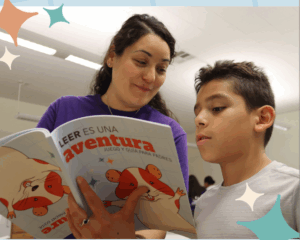
A person and a child reading a book

A parent and her child read Reading Is An Adventure together

In the game, appropriately titled “Reading Is An Adventure,” young readers use colorful stickers to traverse the gameboard. The board features cartoon drawings of Houdini’s hamster wheel, her favorite foods — sunflower seeds and carrots — and a pathway with squares to be advanced for every 20 minutes a day a child reads.

The game’s parent guide is “designed to help you and your child get the most out of reading together,” explains the introduction. “[It] gives you the tools to lead your child through skill- building exercises that increase fluency and comprehension, expand vocabulary, and help them learn how to sound out words phonically.”

Parents and their children both benefit: Adults get a few tips on ways to help their kids read more fluidly and with greater comprehension, and young readers gain confidence in reading.

Its development comes out of a dedicated partnership between YVPE and Yakima Valley Libraries, whose community resource professionals are reading challenge experts.

Printed in the summer, the game was introduced beginning in August in Sunnyside, Granger, and Mabton, with planned distribution later expanding to the lower Yakima Valley, then the upper Valley.

ASSOCIATING READING WITH FUN

Houdini is seen on banners and signage; in walking/visiting mascot form at schools and community buildings; and, most ubiquitously, in the book written about her — Houdini Was.

Written and published 15 years ago by White Bluff Elementary teacher Christan Connors and her second-grade students as a tribute to their classroom pet, the book has captivated thousands of children.

Two years ago, Connors’s parents, Ken and Sharon Smith, bought the publishing rights from Scholastic so they could have the book reproduced with Spanish added to the English text. They printed 500 copies, distributing them to schools and other organizations in the Yakima Valley.

Bilingual copies of Houdini Was are in libraries, schools, health centers, and other community access points throughout the Valley.

In addition to the bilingual version of the game and the parent guide — painstakingly translated into Spanish by Yakima Valley Library Services Director Francisco Garcia Ortiz, Ph.D., and Lorena Legorreta, Heritage’s Food Security Community Liaison, YVPE organizers also hope to have the Reading Is An Adventure parent guide printed in Ichishkíin.

Just as Houdini Was books have received wide local distribution, 10,000 copies of the game and parent guide are being distributed this fall via many of the same partnering organizations, including Yakima Valley Libraries, community centers, financial institutions, and schools.

LITERACY STRATEGY FOCUSES ON COMMUNITY

As YVPE literacy efforts continue, the group has been implementing a community-based approach, said Suzy Diaz, Heritage’s Collective Impact Director for YVPE. That means looking more closely at how reading can be promoted within the community to support what is already being taught in schools.

To make that community focus happen, YVPE organizers work with those community- serving organizations that want to make books available to patrons via book kiosks. Five kiosks throughout the Valley hold as many as 100 books each; some have copies of Houdini Was, but mostly they’re books of all types, intended for young readers aged five to 12, all donated by literacy partners such as Save the Children. The kiosks are refilled regularly to meet patronage needs.

YVPE extends a portion of the funding it’s received, including that from major financial supporter The Ballmer Group, to Yakima Valley Libraries, whose role in supporting YVPE initiatives has grown.

“As reading promotion experts, Yakima Valley Libraries’ involvement has been key,” Diaz said.

READING CHALLENGES AND APP HELP FAMILIES TRACK

Yakima Valley Libraries’ focused reading challenges continue to increase reading participation among young children in the Valley. This summer’s challenge followed on the heels of what was a successful reading challenge over the winter holidays, said Sully Gama, Community Engagement and Impact Officer with Yakima Valley Libraries.

Children’s reading challenge progress is tracked via an app called “Beanstack,” which allows reading experts to gauge the number of active readers and total minutes logged.

There were 225 total active readers and almost 100,000 total minutes logged in the winter challenge, according to Gama. The highest participation was with early elementary students, which is the most crucial and targeted group for effective literacy growth.
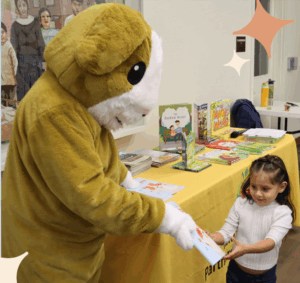
A person in a mascot costume hands a book to a child

Houdini” hands a book to a young girl

GAMIFYING THE READING PROCESS

From the winter challenge’s results, YVPE and YVL organizers determined — and dreamed about — what children’s reading focus would come next. The concept of something “really interactive” kept coming up.

“David kept saying, ‘Let’s gamify this,’ Diaz said, referring to David Wise, vice president of Advancement and Marketing at Heritage. “He knew if we could figure out how to make this a game that kids and adults could play together, we’d really get some energy and engagement going.”

Diaz reached out to Xu Fang, Ph.D., Assistant Professor for the Teacher Preparation Program in Heritage’s College of Education. Diaz asked her, “If we could develop a parent guide to support healthy reading habits, what would that look like?”

“What’s typical and familiar to school-based communities is reading 20 minutes a day for maybe 30 days, after which students submit some kind of verification, and receive some kind of reward,” Diaz said. “That’s what we decided to do.”

For the game’s parent handbook, Fang developed a sort of “academic toolkit” consisting of the types of practices that have been proven to work best in encouraging young readers.

“The game makes forming healthy and productive habits really doable,” Diaz said.

ENHANCING PARENTS’ INFLUENCE
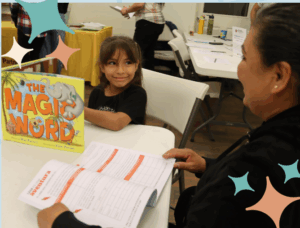
A mother and her child sit at a table while her child who's holding a book smiles at her

A young girl reads part of a book to her mother

The power of reading, a fuzzy little character that touches hearts and the imagination, and now “gamifying” reading takes commitment, Diaz said.

“It does take a village, and that’s what YVPE really is. It’s the people who believe and keep working at this. Along with YVPE’s many member organizations and the significant support from individuals, the perspective and impact of Yakima Valley Libraries have been truly meaningful.

“We all want kids to be engaged, and we all want parents to feel confident about their roles, which makes children more likely to feel confident and able to enjoy reading.

“We want them to spend quality time together, and we’re giving them more and more ways to do that.

“It’s an opportunity for parents and students to be engaged and involved in reading together in a way that’s fun and friendly,” Diaz said. “An enhanced parent-child experience enhances a child’s reading experience.

“And it’s parents who ultimately have the most influence on their young children.”



Planting Seeds of Healing – Wings Fall 2025

A close up of a sign


How Callyn Wagner is rebuilding behavioral health in her community.


When Callyn Wagner logs into her classes, she is not just earning credits toward her degree in Social Work. She is answering a calling.

Wagner, an enrolled member of both the Fort Peck Sioux Tribe and Turtle Mountain Band of Chippewa Indians, lives in Wolf Point, Montana, on the Fort Peck Indian Reservation. It is a place she describes as beautiful and tight-knit, yet also starkly underserved. The nearest Walmart is two hours away. Specialty medical care requires a five-hour drive to Billings—or, in many cases, a flight out of state. Behavioral health resources are especially scarce.

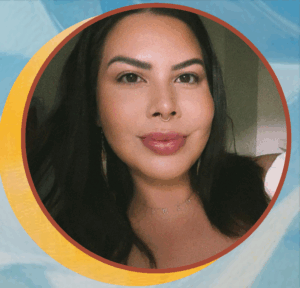
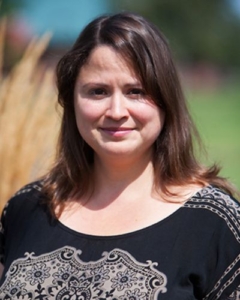
A woman pictured in a circle

Callyn Wagner

“We are in a behavioral health desert,” Wagner said. “If someone is in crisis, there’s almost nowhere for them to turn. I want to learn the skills to help people so I can create a safer place for my babies, for my family, for all of us.”

Now a senior studying Social Work, Wagner entered Heritage with a vision: to become one of those culturally grounded, homegrown professionals her community so urgently needs. Her journey from EMT to stay-at-home mom to domestic violence victims advocate, community organizer, and cultural advocate has been shaped by personal tragedy, resilience and an unshakable belief that healing begins with culture.

FROM EMERGENCY RESPONSE TO HEALING WORK

Wagner’s commitment to behavioral health has roots in her own family’s tragedy. When she was just 15, her older brother died by suicide. In the painful aftermath, her family sought help but struggled to find support that truly met their needs.

“We were connected with non-Native counselors, and it felt like we were counseling them about our culture instead of getting support,” Wagner recalled. “We need counselors who come from similar backgrounds, have similar life experiences, who understand our ways.”

Years later, before she became a student, Wagner was raising her two children and volunteering wherever she saw a gap. She served with the local EMT team, responding to emergencies that ranged from car accidents to postpartum psychosis. One incident in particular became a turning point. She was dispatched to help a woman in the midst of a mental health crisis.

“She was suffering greatly, and I kept thinking, There has to be something better than this,” Wagner remembered. “Her experience really stuck with me.”

Both her family’s loss and her experiences in the field deepened her conviction to help others at their most vulnerable. “I realized my passion was being that person others can lean on. I don’t want anyone to feel the way my family did—like nothing would ever get better.”

STEPPING INTO ADVOCACY

In 2022, Wagner attended an informational meeting about Heritage’s Behavioral Health Certification Program, which was being offered online and on the Toppenish campus. The credit- bearing, non-degree program trains people working with tribal communities to provide culturally responsive, holistic behavioral healthcare, especially in rural areas where access is limited. She didn’t have any preconceived notions about the program or even thoughts about going back to school.

“I thought this might be information that would interest someone,” she said.A group of people working on a project

It turned out that someone was her. Wagner quickly signed up and started classes part-time at the first opportunity. By 2023, she was all in, pursuing the certificate as well as a bachelor’s degree. At the same time, she began working as a domestic violence and sexual assault victim advocate on her reservation.

It was not an easy role. She had no personal experience with domestic violence and came from a stable two-parent household. “But I saw the need,” Wagner said. “The women I worked with had often been assaulted multiple times, sometimes starting in childhood.”

Her passion for serving women in her community led her to become certified to represent them in tribal court. She sat through forensic interviews with children. She took on unpaid tasks because, in rural communities, waiting for outside professionals often means waiting too long.

“I figure if I get trained, I can provide what is needed right here,” she explained.

RECLAIMING CEREMONY

The more Wagner searched for ways to help the women she worked with, the more she came to believe that healing began with a connection to culture.

“I realized we needed a cultural way of talking about our bodies—about how they are sacred, life-giving and deserving of respect.”

Wagner’s advocacy work is intertwined with her commitment to cultural revitalization. She saw that many young women she worked with in her community lacked guidance at critical moments, such as when they began menstruating.

“Our ancestors knew what they were doing,” she said. “There are seven ceremonies (in the Dakota way of life), and they include a naming ceremony. But many of us never had that first step. I realized that for us to heal, we need to go back to our roots.”

Wagner had a vision of what she wanted to do, but she didn’t have a clear path to lead the way. With her culture based on the oral tradition, learning about what to do wasn’t as easy as opening a book or asking Google. Instead, she reached out to elders who carry traditional knowledge. One in particular, Sylvia Longknife, was especially helpful. Not only had she hosted coming-of-age ceremonies for women in her community, but she also works in behavioral health at the Indian Health Center in Wolf Point.

With the elders’ guidance, Wagner began a plan to revive coming-of-age ceremonies for young women. These ceremonies, she explained, teach not only about womanhood but also about the responsibilities and sacredness of bringing life into the world.

“We teach them to respect their bodies, to understand what healthy love looks like, and to know their worth as life-givers and sustainers.”

The more she learned, the more she understood that ceremonies, like life, are not something to rush into. To do them right, there is an order to things, there are steps that must take place, and preparations that need to be made long before each ceremony. She points to the creation of a woman’s belt as an example.

“In our tradition, the belt represents the tools and sustenance needed to enter adulthood—food, medicine, cloth, and a knife. Wearing the belt in the ceremony shows you now have the knowledge needed and are now a woman,” she explained.

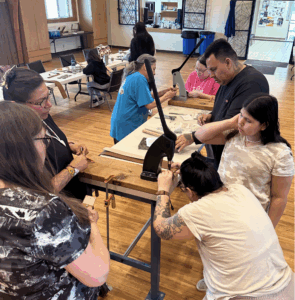
This summer, she helped a handful of women complete this preparatory task when she attended a belt-making workshop organized by her father, Terrance Gourneau, and taught by a family friend, Issac Miller. This first step is just one of many that will be undertaken as the women she works with make their preparation. Wagner is hopeful that by next summer, some of the young women will be ready to start their first ceremony.

LOOKING FORWARD

As Wagner approaches graduation, her vision is clear. She wants to strengthen behavioral health services on the reservation, build culturally relevant programming, and ensure that future generations do not face the same gaps she witnessed.

“It has to be more than just me—it’s a collective thing,” she said. “I love my community, and I want it to be safe for my babies, for my family, and for everybody to have a shot at healing. If I can be even a little mustard seed in someone’s healing journey, then I’ve done what I’m supposed to do.”


A group of people holding up belts

Guided by Family, Grounded in Tradition, Growing Toward the Future – Wings Fall 2025

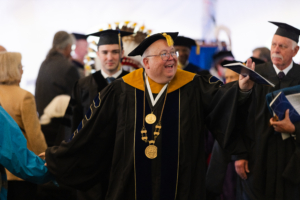
A person in a graduation gown

Heritage University President Dr. Chris Gilmer


Guided by Family, Grounded in Tradition, Growing Toward the Future

Heritage University entered a new era of leadership this fall with the inauguration of its fourth president, Dr. Chris Gilmer. The multi-day celebration, built around the theme of family, honored the university’s roots with the Yakama Nation, reflected on its 43- year history, and set a hopeful vision for the future of access and opportunity in higher education.

HONORING TRADITION

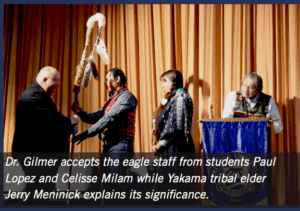
The celebration began with a cultural exchange hosted by the Yakama Nation, a meaningful acknowledgment of Heritage’s founding on the Yakama homelands and its ongoing partnership with the Tribe. Guests experienced a presentation on the Treaty of 1855, traditional drumming and dancing, and the symbolic transfer of Heritage’s Eagle Staff to Gilmer by students Paul Lopez and Celisse Milam. Yakama Nation Tribal Council Chairman Gerry Lewis formally welcomed the president, underscoring the shared commitment to education and sovereignty. The gathering concluded with a traditional salmon lunch, filled with honor songs and messages of goodwill.As part of Dr. Chris Gilmer's installation as President of Heritage University, Gilmer met with Heritage University Native American students who presented him with an eagle staff while a Yakama Nation tribal leader explains the staff's significance

THE INSTALLATION CEREMONY

On Friday, Heritage faculty, staff, students, alumni, and community members gathered on the Toppenish campus for the formal installation ceremony. Distinguished voices extended greetings, including Washington State Governor Bob Ferguson, Lewis, State Senator Curtis King of the 14th District, and State Senator Nikki Torres of the 15th District. The Heritage community was also well represented. Mercedes Garcia, president of the Student Government Association, spoke on behalf of students. Dr. Amy Nusbaum, president of the Faculty Senate, shared words on behalf of the faculty. Adriana Villafán, president of the Staff Educator Senate, offered reflections from staff, while alumna Betty Sampson, Class of 1992, spoke for Heritage graduates. Representing the Board of Directors, Dr. Kathleen Hilton, SNJM, added her greetings, underscoring the continuity of Heritage’s mission.

The ceremony wove together tradition and artistry. Heritage Senior Freddie Garza opened with a stirring rendition of the National Anthem. Later, National Book Award-winning poet Aaron Abeyta gave a powerful reading of his poem, The Moment of Liberation: When Your Dungeon Shook. The Wapato High School choir En Vox lifted their voices in “True Colors,” celebrating unity and authenticity.

The investiture itself, led by Board Chair Bob Gerst, officially conferred the responsibilities of the presidency to Gilmer. The moment was highlighted by a performance of “One Moment in Time” by soprano Ann McPhail, capturing the spirit of the occasion.

In his inaugural address, Gilmer shared his personal journey from rural Mississippi to higher education leadership, reflecting on the transformative power of opportunity. He emphasized Heritage’s mission of access, inclusivity, and service to first-generation students. “We are here to open doors,” he said, “and together we will build bridges for generations to come.” The program closed with blessings from Tougaloo College President Dr. Donzell Lee and a rousing performance of the Heritage alma mater “Lift High the Banner!” by En Vox. A southern-inspired reception in the campus café offered guests a chance to celebrate with the new president.

A GALA TO CONCLUDE THE CELEBRATION

The week concluded with a formal gala at Yakima’s Crown Ballroom. The evening combined elegance with heartfelt fellowship, featuring opera selections performed by McPhail and a southern-inspired menu honoring Gilmer’s roots.

CONTINUING THE CELEBRATION The inauguration events in the Yakima Valley are only the beginning. In the months ahead, Heritage University will continue celebrating Gilmer’s leadership with community gatherings in the Tri-Cities and through partnerships with educational organizations across the region.

To watch clips from the Installation ceremony, please visit https://heritage.edu/inauguration/.

Heritage University featured as cover story in national higher education magazine


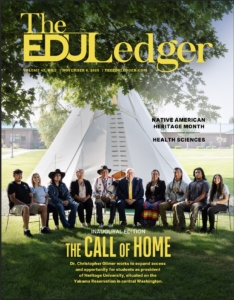
A magazine cover with a group of people sitting on chairs in front of a tipi

The EDU Ledger magazine cover

FOR IMMEDIATE RELEASE

Heritage University featured as cover story in national higher education magazine

Toppenish, Wash. – Heritage University has been featured as the cover story of The EDU Ledger, a leading national publication that highlights innovation and leadership in higher education. The article, titled “The Call of Home,” explores how the university is reshaping educational opportunity in central Washington and beyond through its deep ties to community, culture, and access.

The article chronicles the inspiring story of Heritage University, a higher education institution founded on the Yakama Reservation in central Washington through the collaboration of local Yakama women and a Catholic sister determined to create access to college for underserved communities. It traces the university’s origins, growth, and mission to provide culturally responsive education that honors Native traditions while welcoming all students in the Yakima Valley. Highlighting the leadership of current president Dr. Christopher Gilmer, it showcases how Heritage continues to break barriers for first-generation, Native, and Hispanic students—proving that education rooted in culture and community can transform lives and strengthen entire regions.

“This recognition affirms what we have long known at Heritage—that our students and faculty are doing work that is both locally rooted and nationally significant,” said Dr. Christopher Gilmer, president of Heritage University. “We are honored that The EDU Ledger chose to highlight how the power of education, when connected to culture and community, can change the trajectory of entire families and regions.”

Founded in 1982 on the Yakama Indian Reservation, Heritage University has built a reputation for advancing equity in higher education through partnerships, cultural inclusion, and programs designed to meet the needs of diverse learners. The university’s story in The EDU Ledger underscores its ongoing commitment to creating pathways for success that honor heritage while opening doors to the future.

For Heritage students, faculty, and alumni, the national spotlight is both a moment of pride and a validation of the university’s broader impact. “It’s deeply meaningful to see Heritage recognized on a national platform,” said David Wise, Vice President of External Affairs. “It tells the world that the work happening here in central Washington matters.”

The full feature, “The Call of Home,” is available now in the latest issue of The EDU Ledger which can be accessed online here:

https://lscpagepro.mydigitalpublication.com/publication/?i=855737

For more information, please contact Davidson Mance, media relations coordinator at (509) 969-6084 or mance_d@heritage.edu.

# # #

Heritage University launches innovative online Master’s in English

FOR IMMEDIATE RELEASE

Heritage University launches innovative online Master’s in English

Toppenish, Wash. – Heritage University announces the launch of its new online Master’s in English program, designed for working professionals, aspiring educators, and lifelong learners who want to deepen their love of literature and writing while advancing their careers. The program begins its first cohorts in January 2026 and August 2026.

Heritage’s online M.A. features literature courses that expand beyond the traditional canon and contemporary writing courses tailored to real-world applications. Students will work closely with faculty mentors to design a master’s pathway aligned with their personal and professional goals, whether that’s teaching, publishing, research, or community engagement.

“The curriculum of our new Master’s in English program aims to bring together students with a passion for literature and writing who wish to make a difference across Washington and the nation in classrooms, workplaces and communities,” said Literature & Languages Program Director Ann Kendall.

Students can choose between two focus areas to personalize their studies:

  • Teaching focus– Ideal for those interested in teaching at community colleges, dual enrollment programs, or who already hold K-12 certification.
  • Thesis focus– Designed for students planning to pursue a PhD, teach at the university level, or expand their expertise in literature and writing for professional growth.

The program is open to students from all undergraduate backgrounds, making it accessible to anyone with a passion for language, stories, and critical thought.

A virtual open house will be held on November 6, 2025, at 6 p.m. (PST) via Zoom, where prospective students can meet faculty, ask questions, and explore how this program fits their goals. To learn more about the program, visit heritage.edu/MAEnglish.

For more information and help with interviews, please contact Davidson Mance, media relations coordinator at (509) 969-6084 or mance_d@heritage.edu.

# # #

Heritage University announces inauguration of Dr. Chris Gilmer as fourth president

FOR IMMEDIATE RELEASE

Heritage University announces inauguration of Dr. Chris Gilmer as fourth president

Toppenish, Wash. – Heritage University is hosting the inauguration of Chris Gilmer, Ph.D. as its fourth president at its Toppenish campus on Friday, October 17, 2025. Doors open at 9:30 a.m., and the Installation Ceremony at Heritage will begin promptly at 10:00 a.m., followed by a reception at 12:00 p.m.

Inaugurations are as much of a celebration of the university and the communities they serve as they are of the incoming president. Dr. Gilmer joined Heritage University on July 1, 2025. He succeeded Dr. Andrew Sund who retired after serving as president for eight years. Gilmer has served as president of two Appalachian universities, West Virginia University at Parkersburg and West Virginia University Potomac State College. He has served as a faculty member and administrator at three Historically Black Colleges and Universities including Tougaloo College, in Jackson, Mississippi, where he was the Vice President for Strategic Initiatives and Social Justice and served on the college’s Board of Trustees. Gilmer has also served at one Hispanic-Serving Institution, Adams State University in Colorado, where he was Vice President for Academic Affairs. He is also the founder of the National Institutes for Historically- Underserved Students.

Dr. Gilmer received a bachelor’s degree in English/Journalism from the University of Southern Mississippi in Hattiesburg, MS a master’s degree in English from Mississippi College, and a Ph.D. in English from the University of Southern Mississippi. Gilmer and his spouse David live in Yakima, Wash.

The public is invited to attend Dr. Gilmer’s installation ceremony and reception and are encouraged to RSVP at heritage.edu/installation. For more information, please contact Davidson Mance, media relations coordinator at (509) 969-6084 or mance_d@heritage.edu.

# # #

Heritage University presents “An Evening with Jackie Cruz” as part of Hispanic Heritage Month celebration

Heritage University Presents Jackie Cruz


FOR IMMEDIATE RELEASE

Heritage University presents “An Evening with Jackie Cruz”
as part of Hispanic Heritage Month celebration

Toppenish, Wash. – Heritage University is proud to welcome actor and singer Jackie Cruz to campus on Wednesday, October 8, 2025, as part of its annual Hispanic Heritage Month celebration. Best known for her breakout role as “Flaca” in the award-winning Netflix series Orange Is the New Black, Cruz has captivated audiences both on-screen and on-stage with her talent and authenticity. Beyond her artistic achievements, she is recognized for her inspirational story of resilience, perseverance, and self-discovery. From experiencing homelessness to surviving a devastating car accident that nearly left her paralyzed, Cruz has transformed life’s hardships into opportunities to inspire others, making her an empowering voice for overcoming obstacles and embracing personal growth.

“An Evening with Jackie Cruz” will take place at 6:30 p.m. in Smith Family Hall on the Heritage University campus in Toppenish, Washington. This free public event invites students, faculty, and community members to hear Cruz share her journey and celebrate the richness of Hispanic culture and heritage. Guests will experience an evening of storytelling, conversation, and connection, highlighting the values of resilience and representation that resonate deeply within the university’s mission. Seating is limited – attendees are encouraged to RSVP in advance at heritage.edu/jackiecruz.

This event is made possible through the generous support of the Rotary Club of Yakima and Heritage University. Together, these partners are proud to offer opportunities that celebrate diversity, foster cultural awareness, and bring nationally recognized voices to the Yakima Valley community. For more information, please contact Davidson Mance, media relations coordinator, at (509) 969-6084 or mance_d@heritage.edu.


# # #


Heritage University receives $2.1 million NSF grant to increase student success in STEM

Jessica Black, Ph.D.


FOR IMMEDIATE RELEASE


Heritage University receives $2.1 million NSF grant to increase student success in STEM


Toppenish, Wash. – Heritage University will use a five-year, $2.1 million grant from the National Science Foundation to increase student success in science, technology, engineering, and mathematics (STEM). Over the next five years, Heritage will implement the “Strengthening Rural STEM Education” project, aiming to close gaps in student achievement. This will be accomplished by helping both the institution and its students build confidence and a sense of belonging in the STEM fields.

Project leader Jessica Black, Ph.D., professor of Environmental Science and Studies at Heritage, says a big part of strengthening STEM education at Heritage will be to integrate undergraduate research opportunities with strong academic support systems. The three research opportunities include:

  • Panama Indigenous Intercambio Program (PIIP): A two-week international research experience fostering global STEM citizenship through collaboration with Indigenous ecological experts in Panama
  • Summer Undergraduate Research Fellowships (SURF): Eight to ten-week intensive research experiences with regional partners, including Washington State University, the USDA, and the Yakama Nation Department of Natural Resources
  • Academic Year Undergraduate Research Fellowships: Extended research opportunities supporting senior thesis and capstone projects

Dr. Black says the project will create sustainable pathways for student success while serving as a replicable framework for other institutions nationwide. “At its core, this project is about giving students the tools, mentorship, and opportunities they need to thrive in STEM.”

Black also says rural schools face unique challenges in keeping STEM students on track, especially after the setbacks caused by the COVID-19 pandemic. To tackle this, She says the project will make cultural and structural changes on campus by:

  • Encouraging more open conversations between campus leaders and STEM faculty,
  • Providing training for administrators, and
  • Getting leadership more involved in student-centered STEM activities.

Heritage University President Dr. Chris Gilmer is excited about what the project will accomplish for both STEM students and the university’s STEM-related partnerships with other institutions. “What thrills me most about this project is how it combines innovative research methods—like student journaling, storytelling, and international experiences—with hands-on support such as research fellowships and early intervention programs, said Dr. Gilmer. “And it’s not just about helping students succeed in STEM today, but about building stronger connections between leadership and students, creating programs that serve entire communities, and preparing graduates to thrive in a global workforce. By sharing what we learn nationally, we hope to provide a model that other institutions can build on.”

Dr. Black says the bigger picture is about creating stronger connections between leadership and students, building community-focused STEM programs, and preparing more graduates for the global workforce. “Our findings will be shared widely through publications, conferences, and national networks so other institutions can benefit,” she said.

For more information and help with organizing interviews, please contact Davidson Mance at (509) 969-6084 or mance_d@heritage.edu.


# # #

In Memoriam – Wings Summer 2025


A person in a red suit smiling

Sneh Veena

Former Provost and Vice President for Academic Affairs Dr. Sneh Veena passed away surrounded by her family on April 6, 2025, in Walnut Creek, California. She was 86.

Veena was a lifelong educator with two doctoral degrees who spent 56 years in higher education, including 13 years at Heritage. She was a strong advocate for ensuring academic accessibility to all, regardless of ethnicity, income, or family background. She joined Heritage in 1998 after serving for 20 years at Voorhees College, a historically black liberal arts college in Denmark, South Carolina.

During her tenure at Heritage, Veena was credited for developing several new academic programs, including the criminal justice and practical nursing programs, setting the foundation for the Bachelor of Nursing program. She also expanded several existing programs, including business and social work.

In addition to her work on programming, Veena took strides in diversifying the university’s faculty. At the time of her retirement in 2011, nearly a third of the full- time faculty were Native American, Hispanic, African American or Asian American.

At the time of her retirement, Veena was awarded Professor Emeritus. She addressed the campus community, saying, “Working for Heritage opened up my heart more than I ever imagined. I feel like every moment I have worked here has been God’s mission.”

Veena’s family requested, in lieu of flowers, a donation be made in her memory to the Berbarta-Veena Family Endowed Scholarship Fund at Heritage University.

News Briefs – Wings Summer 2025

Heritage University unveils completed STEM learning center in Ross Center remodel

A collage of people in a roomHeritage University has completed a major renovation of the Kathleen Ross, SNJM Center, transforming it into a cutting-edge learning space anchored by the new Adelante STEM Center. The $2.5 million project, which broke ground in December 2024, was made possible through a $1.5 million Adelante STEM grant from the U.S. Department of Education and a generous $1 million private donation.

The remodel brings a host of upgrades to the university’s academic environment, particularly in STEM education. The new Adelante STEM Center features state-of-the-art math and computer science classrooms, a maker space for hands-on learning and innovation, and new study rooms with modern, student-friendly furniture. These spaces are equipped with advanced teaching technology to prepare students for careers in high-demand, tech-driven industries.

One of the most impactful features of the remodel is the proximity of the STEM Learning Center to the Academic Skills Center (ASC). Students now benefit from convenient access to tutoring, collaborative workspaces, and academic technology—all just steps away.

The renovation also included significant updates to the Donald North Library, located within the Ross Center. While construction caused a temporary disruption, the final result is a more modern, functional, and welcoming environment for research, study, and community engagement.


Faculty share insights on Latina first-gen Ph.D. journey at AERA

A collage of two people

Amy Nunez (top) and Laura Zamudio-Orozco (bottom)

Dr. Laura Zamudio-Orozco and Dr. Amy Nuñez presented at the American Educational Research Association (AERA) Annual Meeting in Denver, CO. Their session, titled “Reflections from McNair Scholars: Latinas Navigating the Ph.D. Pathway as First- Generation College Students,” highlighted the experiences of Latina scholars pursuing doctoral degrees.

The 2025 AERA meeting, the world’s largest education research conference, featured over 2,500 sessions showcasing cutting-edge research, renowned experts, and numerous opportunities for learning, networking, and collaboration.Heritage Eagle