A Legacy of Caring Begets a Legacy of Care

In the 1970s, when Nathan and Elaine Ballou moved to Richland, Washington, the land surrounding their new home was little more than a hillside of rocks, dirt and weeds. Where many would have seen a patch of impossibility, the Ballous saw potential. The couple went to work carving out the land, planting evergreens, and building a multi-layered landscape completed with pathways and ponds, a trickling stream, even a waterfall that cascades down to a lower patio. To sit in their garden today, it’s hard to imagine the grounds being anything other than the tranquil retreat that is so perfectly situated that it feels like Mother Nature unapologetically placed her best woodland landscape in the heart of the shrub-steppe.

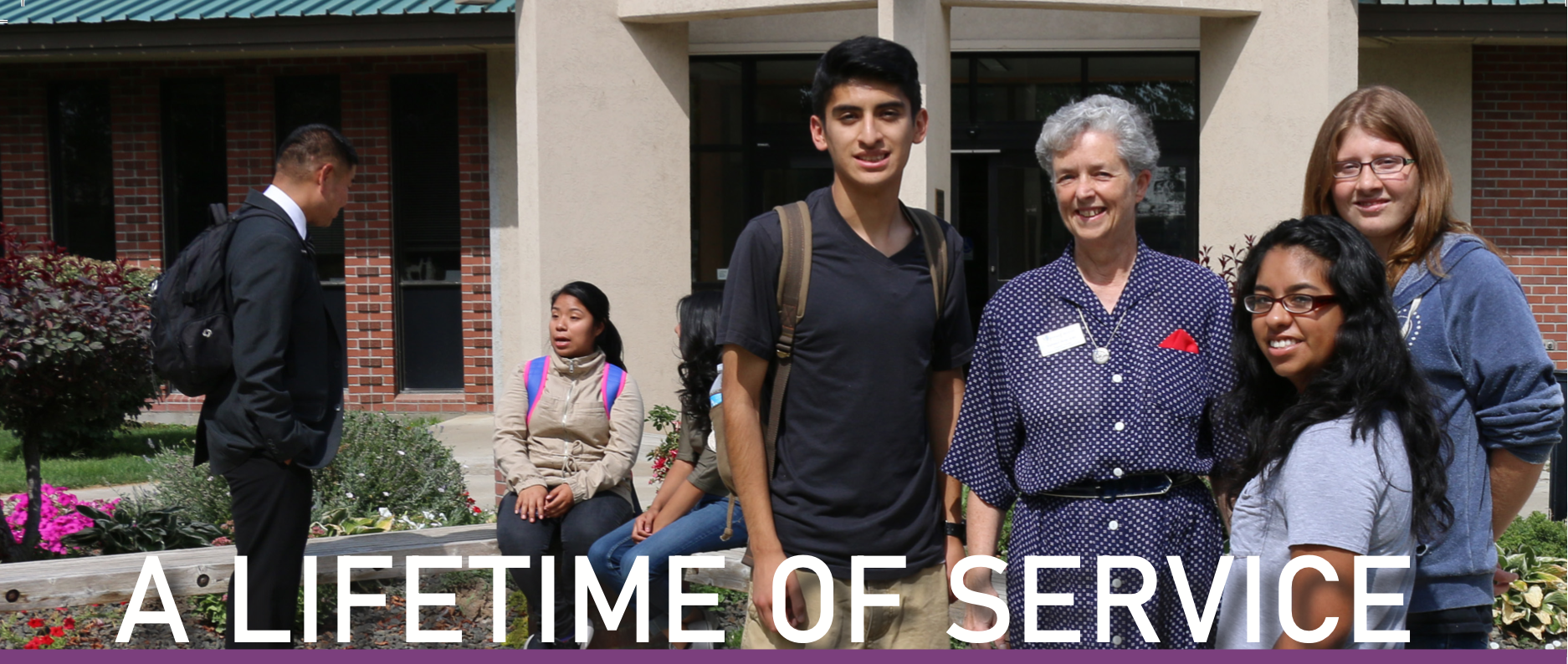
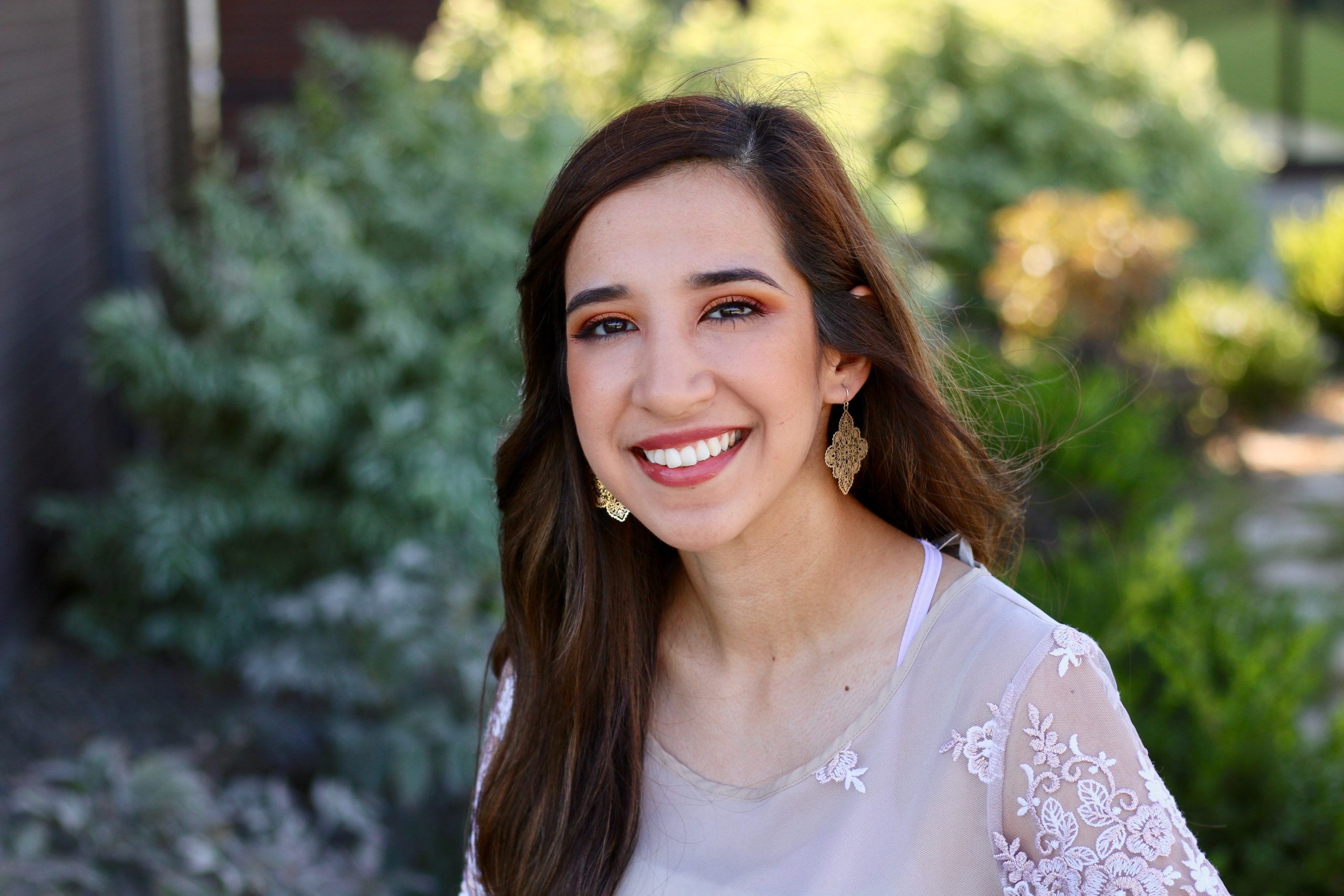
Scholarship recipient Karen Mendoza-Arellano (B.S.N., 2019) is a nurse at Prestige Care and Rehabilitation in Sunnyside, Washington.

The Ballous’ gardens are a testament to what can happen when opportunity meets passion and passion ignites inspiration in which motivates hard work. Some would say that the couple built a legacy over their lifetime. That is true. However, their legacy isn’t only in the shrubs and stones that shape their beautiful landscape. It is also in the lives they touch and will continue to touch long after the trees they planted stop growing.

Twelve years ago, the Ballous established the Elaine and Nathan Ballou Scholarship in Nursing and Health Sciences and later made provisions in their estate plans to ensure the fund will continue at Heritage in perpetuity. Their generosity makes it possible for students to pursue their dreams of higher education and the opportunities that come from earning their degrees.

Happenstance lead the Ballous to Heritage. Elaine was on lunch break walking around Richland one afternoon when she saw a sign for Heritage College. Intrigued, she went into the building to learn more. She spoke to the staff in the outreach office for the Tri-Cities regional site and took home a brochure to show to her husband.

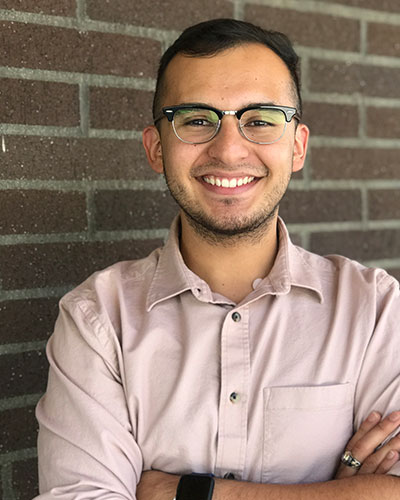
Senior, nursing major and scholarship recipient Samuel Cuevas (left) will graduate in spring 2021.

Nathan, then a chemist at Pacific Northwest National Laboratories, was from a large mid-west family of humble means. He earned his bachelor’s degree through the help of scholarships, and the attention of a particular professor whom he befriended during his undergraduate studies helped him be successful and spurred him on to continue his education until he earned a Ph.D.

“Nate always wanted to establish a scholarship at his alma mater in honor of his professor,” said Elaine. “When I showed him the brochure for Heritage, he said it sounded like something that we should get more information about. We drove up to campus and met Sr. Kathleen and some of the students. The young people we met were all so committed to their education, the staff were incredibly dedicated to the students, and the quality of the education was fantastic.”

Scholarship recipient Alejandra Arteaga, B.S.N., 2019 (right) is a nurse at Toppenish Hospital. Her fellow alum Shelby Clark (B.S.N., 2019) is a doctoral candidate in the nursing program at the University of Washington.

“Nate (who passed away in 2016) loved to learn. He learned from everybody. He could sense that same spirit in the students we met at Heritage. These are students who really value their education,” said Elaine. “No student should be deprived of their opportunity to learn if they want to learn.”

Sitting on her patio under the warm fall sunshine, Elaine is humble as she talks about her and Nathan’s relationship with Heritage and its students.

“It’s not about the financial,” she said. “It’s about doing what we can to support what we value, what we care about.”

Scholarship recipient Erika Scheel is a senior in the nursing program and will graduate in May.

The conversation shifts back to her garden and the decades of love and care she and her husband dedicated to nurturing every flower, shrub and tree. In many ways, it is a physical representation of what they are doing at Heritage, but with far greater reach than their own back yard. Through their support, they are nurturing generations of students. They are giving them the chance to show the world what great things can happen when opportunity meets their passions and ignites their inspiration, which leads them to work hard and, thus, change their lives and the lives of their families. This is the Ballous’ true legacy.

Delivering Ready Educators

A worldwide pandemic may change the way education is delivered on a day-to-day basis. But one thing never changes: The optimum educational experience features students being taught by well- prepared, qualified teachers to whom those students can relate.

For young students of color in the Yakima Valley – mainly Latinx and Native American children – that often means teachers who look like them and share similar cultures.

For the educators, it means having the ability to easily access the education they need – for undergraduate degrees, teaching certifications, and advanced degrees.

Heritage University delivers on all fronts.

Founded initially as a teacher’s college, Heritage has awarded nearly 8,000 Education bachelor’s and master’s degrees in its 38 years. Today, Heritage alumni work throughout the Yakima Valley as teachers, principals and administrators, employed by elementary schools, middle schools, high schools and school districts – all with multi-cultural student bodies. As a group, the educators are themselves a multi-cultural population – more than half of them Latinx and about ten percent Native American.

Because their roots are here, the great majority of Heritage- produced educators stay in the area – and some return to earn advanced degrees that propel them to administrative positions.

“We know that receiving a quality education is key to a good life,” said Kari Terjeson, chair of Heritage’s Department of Teacher Education. “Heritage students get that here and then go out and deliver the same thing to the students they teach. It’s good for the educators we produce, for students, for families. It’s good for our communities.”

Heritage’s focus on graduating students that return to their communities to serve, has a result that’s needed now more than ever. According to the Learning Policy Institute, a national research organization focusing on education policy, teachers of color boost the academic performance of students of color, with improved reading and math test scores, improved graduation rates, and increases in aspirations to attend college.

Nationwide, the gap between the percentage of Latinx teachers and Latinx students is larger than for any other racial or ethnic group.

But here in the Yakima Valley, that teacher-to-student ratio is much more balanced: Heritage is the largest producer of teachers in Central Washington and the largest producer of teachers of color in all of Washington state.

MEETING THE NEED

Washington has nine Educational Service Districts, or ESDs – each representing a certain number of counties and school districts. Kevin Chase (M.Ed., Educational Administration, ’93) is superintendent of ESD 105. Assuch, he is acutely aware of the impact Heritage graduates make in the districts and schools within the district area.

ESD 105 supports 25 public school districts and more than 20 private and tribal schools in South Central Washington. It coordinates cooperative programs that ultimately affect the learning of more than 66,000 students in the four counties it serves – Kittitas and Yakima, as well as portions of Klickitat and Grant.

Directing an ESD is a lot like running a business or a small company.

Kevin Chase

Kevin Chase, Superintendent of ESD 105

“My job is like a concierge for superintendents,” said Chase. “It’s fiscal support for districts when they need help. It’s professional development for staff. It’s all the student support that districts need to provide.”

Hiring and staff retention are not among the issues typically keeping him up at night. That’s because when you hire people who are from the area, they almost always stay in the area, said Chase.

“In both the Latinx and Native American communities, extended family is a big part of the culture. Social circles are very important.”

That means excellent teacher retention, in particular of teachers of color, and that’s good for students.

“It’s a really important component in academic achievement but also in the likelihood of students going on to post-secondary education,” said Chase. “Having people as role models is very important. It gives an ability for students to see themselves in positions they may not otherwise think about.”

HERITAGE GRADS READY

Since he started teaching more than 30 years ago, Heritage alumnus Doug Burge has seen an increase in his area’s Latinx population – from about 30 percent to now more than 50 percent. Today, Burge is superintendent of the Zillah School District, about a fifteen- minute drive from Heritage’s Toppenish campus.

Doug Burge

Doug Burges is the superintendent of the Zillah School District, which is comprised of a high school, middle school, intermediate school and an elementary school.

Burge said bilingual teachers who are ready to teach on day one meet a critical need.

“Heritage supplies a diverse group of teachers who’ve gained good experience in local schools as part of their education,” said Burge. “They’re ready to go as soon as they enter the classroom. I can count on the fact that they’re going to do an excellent job.”

Burge recalls that when he was an elementary principal, there were many applicants for open teaching positions. Today, there are fewer candidates, yet Heritage continues to be a source of those candidates. Supply and demand in the teaching “industry” is an up-and-down thing, said Burge.

Burge said the Zillah School District has made good inroads into making staff more representative of their schools’ student bodies, where about 15 percent of students are Spanish monolingual.

HERITAGE GRADS BUILD BILINGUAL PROGRAMS

Russ Hill

Russ Hill, assistant superintendent of East Valley School District in Yakima, Washington.

As Assistant Superintendent of the East Valley School District with five schools and 3,200 students in his purview, Heritage Alumnus Russ Hill has had the opportunity to help initiate language-related programs that are beneficial to students.

That’s critical in a district where the numbers of monolingual and English Language Learners, commonly called “ELL” – those who do not learn English as their primary language – is about 40 percent.

“Many of our families speak only Spanish,” said Hill. “Having a significant monolingual population makes it crucial to also have a significant bilingual teaching staff.”

East Valley schools have dual- language programs in which students spend half their day receiving instruction in English and the other half in Spanish. Schools have both English and Spanish text in their libraries. They seek and embrace curricula that reflects the makeup of their communities – both Latinx and Native American representation. The district hosts dual-language nights for families that encourage involvement and produce engagement.

“There’s a lot of deliberate inclusion of Hispanic culture and Native American culture,” said Hill.

ADVANCED DEGREES WHILE WORKING

For educators who want to lead beyond the classroom, Heritage offers the opportunity to earn an advanced degree while continuing to work.

Maria Batarao had her bachelor’s degree in communication and was studying for a master’s degree in professional development at Heritage when she realized what she wanted to do with her life.

Maria Batarao

Maria Batarao, Simcoe Elementary School Principal in Wapato, Washington.

“I was part of a volunteer program with AmeriCorps Reading Corp. I had been inspired by my parents who were AmeriCorp teachers,” said Batarao. “I realized working with children was my world.”

She taught for 10 years, then applied for the principal’s position at Simcoe Elementary School in Wapato. She’s been in the role for three years.

Said Batarao: “I learned from my parents to dream big, work hard, and give back to your community. Heritage helped me do that.”

The Dreamers The Doers The Risk Takers

Small businesses are anything but small. They are the bread and butter of the national economy, employing nearly 60 million people and generating 44 percent of the gross domestic product. According to the Small Business Administration,

there are 30.7 million small businesses in American today. In fact, big businesses, those employing more than 500 workers, account for only .01% of the business landscape. In rural communities, like the Yakima Valley, they are virtually nonexistent, making small businesses that much more critical for the vitality of the community.

Behind every one of these small giants is the story of entrepreneurs who had an idea and took a leap of faith, confident that they could turn that idea into a profitable venture. It is not a move for the timid. Starting, running and growing a business takes faith, grit and a whole lot of hard work. Still, for these Heritage University alums, the entrepreneurial call was too strong to ignore. Meet Javier Morin, Yerenia Espindola-Mendoza and Allie Haro.

CASHING IN ON CLEAN

Javier Morin’s entrepreneurial spirit was evident long before he graduated from Heritage in 2016. He came to Heritage as one of the first Act Six Initiative Scholars—a leadership program that provides full-ride scholarships to students in rural communities. True to the intent of the program, Morin’s presence was felt throughout the campus. Among his many involvements, he served on the Student Government Association, twice as the public relations officer and as the president; was a member of the university’s fraternity; a member of the nationally-ranked Enactus team; and a student staff member of the Heritage marketing department.

Javier Morin

The king of clean, Javier Morin (center) and fellow alum Marcus Morales (not pictured), built The Cleaning Brothers from an idea to a thriving business with 20 employees and contracts in three states in just three years.

“If there was some new and exciting, student- driven project going on, Javier was usually right there in the middle of it,” said David Wise, vice president for Marketing, Communications and Advancement. “His drive and enthusiasm was contagious.”

After graduating, Morin’s career path went down a typical route; he took a management trainee position with Enterprise Rent-a-Car. However, for Morin, it was less of a job and more like an extended internship with benefits.

“I did everything I could to learn all I could while I was at Enterprise,” said Morin. “It taught me a lot about the day to day operations of businesses and customer service.”

A little over a year after graduation, Morin partnered with fellow Heritage Eagle and Act Six Scholar, Marcus Morales to open a commercial cleaning business, The Cleaning Brothers. The idea to launch the business came after several conversations with Morin’s father, who works in facilities management for a healthcare company in Yakima. He was frustrated at the lack of quality commercial cleaning companies in the area.

“I saw there was a need, and I knew I could bring a level of professionalism to the industry that prospective clients would respond to,” he said. “Pretty quickly, I fell in love with the struggle and challenges of building a business. Nothing grows overnight, it took six months for us to get our first client, but success is all about being resilient and not quitting.”

It took time, but growth did come. One client grew to two, three, four, and more. Morin and Morales hustled. In just three short years, they’ve built a company with 20 employees and clients in three states. They even brought in another Heritage Eagle into their fold, partnering with Zia Lohrasbi as they expanded into the St. Louis, Missouri market.

“Our goal is to grow at a steady rate, to take on what we can handle so we can provide our clients with the best possible service,” he said.

For many, this would be the end of the story: a successful business with all signs pointing to a strong future ahead. However, Morin likes to explore different business ventures. A little over a year ago, he partnered with two filmmakers and started 3Mil Media, a commercial video production company that is just starting to get off the ground. And, even his side hustle has a side hustle. He’s in talks with another group of entrepreneurs to launch a third company.

“It’s all about being a risk-taker,” he said. “Being an entrepreneur comes with a lot of challenges. It’s lots of phone calls and responding to things that come up. Building strong partners, being persistent, having a plan and staying focused on our goals, that is the secret of success.”

SUCCEEDING IN BUILDING SUCCESS

When Yerenia Espindola-Mendoza enrolled at Heritage University, she never imagined that she would be a successful businesswoman helping individuals and business owners build long-term financial plans. Her desire was going into teaching. However, a conversation with her mentor led her to explore the world of business.

“I’ve always wanted to teach and help people to make a difference in their life. I thought that teaching was the way to do that,” she said. “But when I was talking to one of my mentors at the university, she said, ‘you should go into business.’ Her words changed my thinking, and I declared my business major.”

Yerenia Espindola-Mendoza

Yerenia Espindola-Mendoza leveraged her college internships into a career helping others plan for their futures.

Espindola-Mendoza, a non-traditional student several years older than the others in her cohort, knew she had found the right fit in her major but wasn’t sure what she would do with it once she graduated. That is until a guest speaker showed up to one of her business classes. He was a partner from New York Life, who was there to talk about their internship program. She was the only one who raised her hand when he asked the class who was interested in learning more.

“It was like God spoke to me and said, ‘Take the internship; this is your future career! It’s your path; you will be helping people.'”

That summer, she started her journey with the company, primarily selling life insurance. The company had a national internship contest, and she was named the national winner! The following year, she participated in the
internship competition, again receiving the same honor. As a result, for two years in a row, Espindola-Mendoza was taken to the headquarters in Manhattan, New York City, which was a fantastic experience. After two years of the internship, she decided to turn her experiences into a full-time position as an agent for New York Life.

“Everything started with that internship,” she said. “I saw the need in my community and the lack of education surrounding retirement and financial planning. The lack of information about risk management, life insurance, building a retirement plan, pretty much a lack of understanding about the concept of personal, business, and estate planning. I knew I could help people with this and that by impacting the financial wellbeing of one family or one business, I could impact the entire community.”

After three years in the industry, she became a broker to offer more services. Espindola-Mendoza expanded her service options menu at the three- year mark. She understood that it was essential to have a broad, holistic financial plan to help clients achieve their financial goals. Now she offers life insurance, retirement planning, and long-term care insurance. She sought out training on social security and Medicare supplement plans.

“Every individual’s situation is different,” she said. “I have to be knowledgeable in a wide array of services and products to help my clients find what best suits their needs.”

While her business began focusing on individuals, it has grown to serve the needs of business owners.

“Business owners have a whole host of needs that differ from the individual,” she said. “They need help with personal planning, business planning, and estate planning. Helping them in today’s business world. Her goal is to help implement different strategies based on business owners’ needs. Most common needs are to attract, retain, reward and significantly retain upper-level management employees. Personal and employee retirement plans, provide asset protection, and transfer of wealth in the most tax-efficient ways during succession planning.”

Knowing that her business clients’ needs were much more complex, requiring more specialized services than she could offer, Espindola-Mendoza built a partnership with accountants and attorneys in the area. She also partners with Hall Financial, which has helped businesses for more than 40 years in the area. ” The consortium of business professionals can provide wrap-around of complex business planning and estate planning services.

“My goal is to be the first person people think about when they are looking for financial services. I want them to look at me because of my knowledge, level of care, and exceptional customer service and superior company advanced planning services (attorneys, CPA’s and CFP’s) that assist in planning.

Always putting my client’s needs first. That’s my dream.” She said. “I’m going to continue to keep expanding my services, which means more training and getting more licenses so that I can be of greater service to my clients.”

EAT YOUR VEGGIES-THEY’RE AMAZING!

Allie Haro wasn’t thinking about her future business when she choose the food industry to research for her business ethics course her junior year. A self-described “foodie,” she was simply looking at a subject area she enjoyed.

“I’ve always loved eating,” she laughed.

Allie Haro

A love of good, healthy food and an idea sparked while doing research during her junior year at Heritage led Allie Haro to open Local Beet.

The more she dug into the industry, learning about where foods came from, how they are processed, and not only how peoples’ health are impacted by their food, but how the environment is impacted by their choices as well, the more disenchanted she became.

“I dove in head first and became a vegan,” she said. “While I wasn’t yet thinking about starting a food service company at the time, I think of this as the moment when the spark of an idea was born.”

That idea grew into Local Beet, a plant-based food preparation business providing delicious and nutritious meals to customers in the Yakima Valley. Operating somewhere between a restaurant and a meal subscription service, Local Beet customers order their favorites from a weekly menu. Haro prepares and packages their order into reusable containers, which they pick up from their storefront and take home to reheat and enjoy. Haro opened

her business in July 2019, the culmination of years of saving enough capital to launch her dream, of finding associates whose businesses could work well in collaboration with hers, and searching for the perfect building to house everything she and her colleagues needed.

“I feel like the relationship that I have with business associates are critical to making Local Beet work,” said Haro. “I started my businesses without taking out any loans. Everything came from my savings. Collaborating with Elaina Moon, owner of Healthy Eats Nutrition Service, allowed us to split expenses so we could get the facility and the equipment we needed. And we are able to do cross-promotions that support each other.”

She points to an effort the two undertook shortly after the pandemic shutdown.

“I was really worried about our customers,” said Haro. “I was worried about their health. In times of high stress we often turn to unhealthy habits, like eating too much of the wrong kinds of foods, to cope. Elaina and I, and our friend who is a yoga instructor, started Fitt Challenge. We provided health coaching, virtual workouts and yoga and I was the guru of meal preparation. For my part, our challenge members would get five plant-based, pre-prepared meal kits a week as part of their plan. It was so popular that I started offering the weekly meal subscription to my regular customers.”

Allie food

Haro wants people to know that healthy doesn’t mean boring. Her plant-based meals bring eye-popping color and full flavors to the table.

The challenge of starting a food service business in the first place, then building it into a strong, profitable venture during a global pandemic, isn’t lost on Haro. However, she is undaunted by the risk.

“I’m not afraid of failure,” she said. “The way I see it, failure is nothing more than redirecting you to something else. I feel like I am where I need to be right now and I am giving it my all to make this a success. I have my short and long-term goals and a plan to get there. Where there are challenges that come up, whether from COVID or something else, I look for opportunities in these challenges to move me and Local Beet forward.”

Heritage Grads Here to Serve

Social work is one of Heritage’s most popular majors, with 146 students currently enrolled in the program. The bulk of these students remain in their hometowns after graduation, where they tackle some of their communities’ most pressing issues: homelessness, healthcare, children and family services, mental health and criminal justice, to name a few. Heritage social workers are found in virtually every specialization and in a wide array of agencies throughout Washington state. Here are a few of their stories.

OLGA ZUNIGA – “ONE STUDENT AT A TIME”

Olga Zuniga

Olga Zuniga’s social work career led her back to the elementary school where she was once a student.

Olga Zuniga took on the role of caregiver when she was still a child. Her parents were migrant farm workers and they needed her to care for her siblings.

As an adult, after her youngest son’s premature birth, it was she who needed help. His medically fragile condition necessitated she live near the hospital for three months.

There, she met a woman who would be her lifeline: Anna, a hospital social worker who helped her with temporary housing, meals, and child care for her other children.

Three years later, her son was thriving, and she was ready to return to work.

“That’s when I thought about my experience and what a difference a social worker made for me,” she said. “I realized that was my calling.”

Many who decide to go into social work do so out of a strong desire to give back, said Corey Hodge, chair of the Social Work Program at Heritage.

“Everyone who chooses to pursue a degree in social work is there for a reason,” said Hodge. “Many have had someone in their lives who believed in them and helped them, and they want to give back.”

Heritage’s social work program has graduated more than 500, and Hodge said almost all have remained in the Yakima Valley. They work for the state and for non-profit organizations. They work in rehab centers and health care, for victims of domestic violence and substance abuse.

The work done by these Heritage University alumni and hundreds of others has effects throughout the region.

For Zuniga, that calling she felt brought her back to her roots. She’s a school social worker, and the building she works out of used to be her elementary school. She is seeing a lot of insecurity around food and housing among her students.

“We have students who may not have breakfast or dinner and students whose families are homeless.”

Sometimes traumatic experiences are deeply embedded in children’s lives. That’s when a social worker taps more comprehensive service providers.

She works regularly with food banks, financial assistance programs, housing assistance programs, mental health providers, medical providers and crisis intervention programs. She calls them “lifelines” for the students she serves.

“Our job is never done. But we make progress, one student and one family at a time.”

SALOMON CARRASCO – “YOU LISTEN”

Salomon Carrasco has counseled a lot of people in distress. Sometimes it’s the result of mental illness, sometimes drug use or alcohol abuse. He’s worked at treatment centers and at the Pasco County Jail.

It’s helped make him effective in his current role. Carrasco spends each workday riding with Pasco police officers as a Designated Crisis Responder, in a cooperative effort between his employer – Lourdes Crisis Services – and the Pasco Police Department.

The program’s goal is to identify repeat offenders, de-escalate crises, get people off the streets, and get them help.

Washington’s Tri-Cities area has three DCRs in total – one in each of its three cities of Pasco, Richland, and Kennewick. This “Mobile Outreach Team” works with all nine law enforcement agencies in Benton and Franklin counties.

Every weekday following the daily shift briefing, Carrasco hops in a patrol car with whichever officer he’s assigned to shadow. Whenever a mental health or behavioral health-related call comes in, the officer turns the vehicle toward the problem.

Once on the scene, Carrasco talks with family members and assesses the client. His goals are to establish safety, offer resources, and run through a plan should concerns arise.

If the client needs treatment, Carrasco calls ahead to Lourdes. Once there, the client receives care immediately, which wasn’t previously the case.

Sometimes situations are more acute – and possibly threatening. Then, police officers, who are trained to make initial contact, secure the area around the client, and engage Carrasco’s expertise.

“I look up their history, and I evaluate the individual: Are they of potential harm to themselves or others? Are they making threats? Do they understand what they’re doing? I can counsel them and de-escalate the situation.”

The client can talk to the police officer or to him, Carrasco said. “Some people are afraid I’m going to put them in a psych ward. But some see me as a counselor, and I am.”

Back at precinct headquarters, another critical part of Carrasco’s work is participating in training law enforcement on the psychology and process of de- escalation.

Salomon Carrasco


Salomon Carrasco goes out on calls with the Pasco Police Department to provide mental or behavioral health assessments.

“We talk about introducing yourself and tell them you’re there to help them. You listen, keep good eye contact, stay calm, express empathy, acknowledge their concerns, and just allow the person to vent without interrupting.”

The joint effort has helped Pasco meet its goal of decreasing incarceration at a time when mental health issues have increased. Pasco police refer an average of 50 clients to the Mobile Outreach Team every month.

“It’s working,” said Carrasco. “We’re seeing people who need help getting connected with resources having fewer interactions with police, and sometimes eliminating those interactions entirely.”

Lourdes has funding to continue to provide the service through 2020. Carrasco said Pasco city commissioners are talking about how to get funding if Lourdes doesn’t get re-funded in 2021.

“Because it’s making a difference,” said Carrasco.

CYNTHIA JONES – “HEALED PEOPLE, HEAL PEOPLE”

In her youth, Cynthia Jones made what she calls a series of poor choices, including dropping out of high school and abusing alcohol.

But at age 17, while living in Seattle, Jones saw an ad for a community college. She took the bus there, met with an advisor, and told her she wanted to enroll though she had no income.

Cynthia Decoteau

Cynthia Jones helps Yakama women, teens and children break the cycle of the adverse effects of generational trauma.

The advisor gave her a business card. On it was the name and phone number of a social worker who had funding for Jones for everything from bus tickets to tuition and childcare.

“She was my salvation,” said Jones. “I knew right there I wanted to do something like what she did.”

For those who decide to go into social work, it’s often about giving back in appreciation of what others did for you.

Jones credits many with helping keep her on her path, including fellow students and faculty at Heritage where, in addition to her full-time job, she now teaches as an adjunct professor.

“When my youngest was born prematurely, my classmates took notes for me and would check on me, and my instructors would always say, ‘Don’t let not having childcare keep you from coming to class.'”

Heritage instructor Gregorio Ochoa was one of those people Jones met who made it his business to help other people. She calls him an “old-school” social worker.

“He’s the male version of Mother Theresa,” said Jones. “He went to the people, and he spent time with them. I wanted to be like him.”

After graduating from Heritage, Jones went to work as a vocational rehabilitation counselor with the Yakama Nation. She did job skills training and helped her clients find jobs, at the same time she also pursued a master’s degree.

In 2017, she was offered a position with Yakama Nation Behavioral Health as a behavioral health therapist. She provides one-on-one mental health counseling to women, teens and children experiencing trauma, depression and anxiety.

She said an essential part of her work is helping clients understand that the losses their people have endured affect their lives today.

“Children were taken away, women were sterilized, we couldn’t speak our language, and we continue
to bear the legacy of this. We’re in a time of healing now, but we can’t help ourselves until we understand this societal trauma.

“After that, we start to work on the personal trauma,” said Jones. “You need to be with the person and their story. You need to hear it, really hear it – and you also have to help them see the good they have been able to do. I ask people, ‘What are your strengths? How is that you’re still here?’ And I tell them the blood flowing through our veins is that of the resiliency of our ancestors, and that we honor them by doing good. I work to communicate a sense of strength and pride that can build hope.”

Jones often incorporates Native spiritual practices into therapy. “We start with prayer, with a moment of silence, lighting sweetgrass or sage or a candle.”

She said it’s important for people in social work professions to make sure they’re OK, too. She releases her day by spending time in her garden – what she calls her “place of healing.”

“Before we can help others, we have to heal, and that can be a long process.”

Jones recalls visiting a homeless encampment on the Yakama reservation years ago. She saw someone she ran away with when they were teens.

“I remember thinking, ‘That could have been me.'”

Other people from the past show up from time to time, too — people whose lives she helped make better. To this day, she said, people stop into her office at Vocational Rehabilitation looking for her. They want to tell her how they’re doing, that they’re still at the job she helped them get or they’re still drug-free. They want to thank her.

“I think about how it’s one thing after another that leads to where you end up. The difference for me was that I was I’ve had people who care.

“I’ve been able to heal. And healed people heal people.”

LEO LÓPEZ – “I’M HERE TO SERVE.”

Leo López loves remembering the way his dad met people.

“He’d always say, ‘Mucho gusto. Lionel López – aquí para servirte.’ It meant, ‘Happy to meet you. I’m here to serve,’ “It’s how he lived his entire life,” said López.

López learned early on the impact one caring person could have on many people.

Growing up in a close-knit family, López started working in the fields and orchards at age four. Migrant students’ education included “migrant school” – several hours every day after the other students went home – to make up for the time they had been out working.

It was extra time and attention that ensured he had a quality education.

After high school, López knew he wanted a job working with children. He enrolled at Heritage, deciding to pursue a degree in social work. Washington state didn’t have school social workers in 1990, so López went into juvenile rehabilitation, working with adjudicated youth ages 12 to 21.

Leo López

Leo López’s career helping children took him from Washington state to Washington, DC and back again.

It was an eye-opener, more a criminal system than rehabilitation, he said. He learned that systems sometimes don’t serve the people in them very well.

He got his master’s degree and, in 1999, got a job with Head Start’s Migrant/ Seasonal program in their Washington D.C. headquarters. Head Start is a national organization that promotes the school readiness of preschool-aged children from low-income families.

It was in this role that López began to be able to impact more far-reaching improvements in systems affecting children.

“It was all about engaging families and encouraging them to work at what they want for their children – specifically a good educational foundation and keeping them in school,” said López. “This program made sure that wherever a family migrated to, children wouldn’t lose the credits they’d earned toward the grade placement they were at.”

Working with an organization he knew made a difference in children’s lives – children with a background just like his – López felt life had come full circle.

López wasn’t looking to leave Head Start in 2007 when he got a call from friends about a job that seemed tailor-made for him. It was in Yakima – a short commute from his home base of Sunnyside – and, once again, he’d be doing meaningful child- centric work.

Today, López is director of Casey Family Programs’ Yakima office, a national organization whose focus is to reduce the number of children in foster care in the U.S.

Working closely with Washington’s Department of Children, Youth and Family, López and his staff of 17 – mostly master’s-level social workers – are responsible for Casey’s work throughout the state of Washington.

He said some of his most rewarding work is with the Yakama Nation’s Nak-Nu-We-Sha foster program. He admires the way it weaves Yakama culture into its practice with the individual children and families it serves. Understanding a community is something he said is key to any social service program’s success.

There’s high-level interaction in the job as well. López works closely with consultants and lawmakers in New York, Washington, D.C., and Atlanta. He guides partnerships with multiple states and jurisdictions on research that affects public policy.

He’s even developed training for the Mexican Consulate and the Washington State Department of Children, Youth and Families (DCYF) that helps reunify children with their families in Mexico and parts of the United States.

López said he sees every day the ways positive change can happen on the micro and macro levels.

“I do think it begins with that one person who believes they can make a difference. For me, it started with what I saw every day at home – though I don’t feel I’m even close to what my dad did every single day. But I keep trying.”

Heritage University and Behavior & Law Corp. sign collaboration agreement to deliver behavioral sciences training courses in the United States

Heritage University and Behavior & Law Corp. sign collaboration agreement to deliver behavioral sciences training courses in the United States


Heritage University and Behavior & Law Corp., one of the leading online training companies in Europe and Latin America, have signed a collaboration agreement to expand Behavior & Law training courses in the United States.

Heritage, an accredited, private, nonprofit university, located in Toppenish, Washington, was founded in 1982 to improve societal progress through education; empowering a multi-cultural and inclusive student body to overcome the social, cultural, economic, and geographic barriers that limit access to higher education.  Located on the homelands of Yakama Nation, the University embraces transformational student-centered education that cultivates leadership and a commitment to the promotion of a more just society.  Heritage offers more than 40 undergraduate and graduate degree programs and boasts more than 10,000 alumni.

Behavior & Law was created in 2010 as an entity specializing in the training, scientific research, and dissemination of Behavioral and Forensic Sciences. Behavior & Law utilizes participative and innovative teaching methodology to ensure student learning in a virtual setting.

With headquarters in Florida (USA) and Madrid (Spain), Behavior & Law collaborates with various public and private entities around the world, including universities and different state security forces to develop the most up-to-date curricula and effective teaching methods. They are experts in Behavioral Science Training (Profiling and Forensic Science, Negotiation, Non-Verbal Communication, and Behavioral Economics) and its application. Their goal is to train qualified professionals that lead to improved working conditions and overall job satisfaction in their professional environments.

Behavior & Law, like Heritage, has a marked social justice mission, dedicated to a more just and safe society.  Their work is guided by three main pillars: scientific research, training, and dissemination of behavioral sciences.

Heritage and Behavior & Law are beginning their collaboration to provide continuing education in behavioral sciences. They are currently working on the implementation of online training programs that will be offered in both Spanish and English in the United States through the Heritage Workforce Development unit.

For more information, please contact David Wise at (414) 788-0686 or wise_d@heritage.edu or Silvestre Cabezas, Marketing and Communication Manager at  (786) 533-3069 or cabezas@behaviorandlaw.com

# # #

Honoring Our Elders

Each November, Heritage University celebrates Native American Heritage Month by recognizing four Yakama tribal elders for their lifetime contributions to their community. This year, we recognize:

Clockwise from top left: Larena Sohappy, Kip Ramsey, Sr., Sharon Goudy, Davis Washines

SUPTIKAWAI LARENA SOHAPPY, the daughter of Julia and Frank Sohappy, a well-known medicine man, grew up in the Wapato and Priest Rapids Longhouses. She was the first in her family to graduate from high school and college, having attended Haskell Institute. Suptikawai dedicated herself to helping the people of the Yakama Nation. She served as an interpreter for elders seeking financial and housing services with Yakama Nation Housing Authority. While at Yakama Nation Credit, she helped establish the tribal payroll deduction program, which later became the rotating credit program. As coordinator of the Yakama Victims of Crime Assistance Program, she helped crime victims access services to help them heal. Additionally, she served as a Tribal Council member and is currently Vice Chairwoman of the General Council. Suptikawai is one of the elders of the Wapto Kaatnum and an elder at the Priest Rapids Longhouse. Above all, she is dedicated to her large, extended family.

“PUNIA” KIP RICHARD RAMSEY, SR. is an entrepreneur, a staunch advocate for treaty rights, and a historian. Over his lifetime, he has built a cattle ranch and feedlot, a logging company, two gas stations and restaurants, and a tribal fuel distributorship. His businesses add to the economic vitality of the communities in which they sit and employ many Yakama tribal members and others in the community. When the State of Washington infringed upon his rights to move his products freely on state roads to bring them to market, he refused to back down. Twice, he took his battle to protect treaty rights all the way to the Supreme Court. Twice he won, reaffirming the Yakama Nation’s status as a sovereign nation. Above all, Kip is dedicated to serving the people of his community. He sits on numerous boards of directors, including the Heritage University board, for the last 35 years. Punia is an advocate for education and a protector of cultural treasures.

SHARON GOUDY “KUMSHAPUM” is a dedicated mother, grandmother, great-grandmother and wife of more than 50 years to Pat Goudy, who is rooted in her Christian faith and traditional religions and commitment to ensuring the sovereignty of the Yakama Nation. Her work building the vitality of Yakama Nation programs and enterprises spans more than 50 years and began while she was earning her college degree. She’s led programs that support tribal members’ economic independence, oversaw the administration of the tribe’s law and justice programs, and currently manages YN Credit Enterprise. She has a heart for youth and elder services. Through her term on Tribal Council, she helped lay the groundwork for the revenue-generating businesses run through Yakama Nation Enterprises. She serves on the Elders Board and college intertribal relations board. Her work ensuring sovereignty and the welfare of indigenous people isn’t limited to the Yakama Nation. She’s spent 21 years serving on the Affiliated Tribes of the Northwest Indians, a consortium of 57 tribes, helping to build policies and initiatives that address tribal sovereignty.

DAVIS “YELLOWASH” WASHINES has dedicated his life to protecting the welfare of the Yakama Nation, the Yakama people and the rights guaranteed to them by the US-Yakama Treaty of 1855. He dedicated more than 35 years to ensure the safety of his community as a Yakama tribal police officer, the chief of police, and the chief of the Columbia River Inter-Tribal Fish Commission. He worked on many efforts to improve the safety of tribal members, including the establishment of mandatory seatbelt laws on the Yakama Nation, and bringing national attention to the issue of missing and murdered Indigenous women. He is a dedicated advocate for protecting Yakama treaty rights and was instrumental in restoring the original spelling of the Yakama name as it is recorded in the US-Yakama Treaty of 1855.

Washington State Women’s Commission director to lead Empowher, Heritage University celebration of the 100th anniversary of women’s suffrage

FOR IMMEDIATE RELEASE

Washington State Women’s Commission director to lead Empowher, Heritage University celebration of the 100th anniversary of women’s suffrage

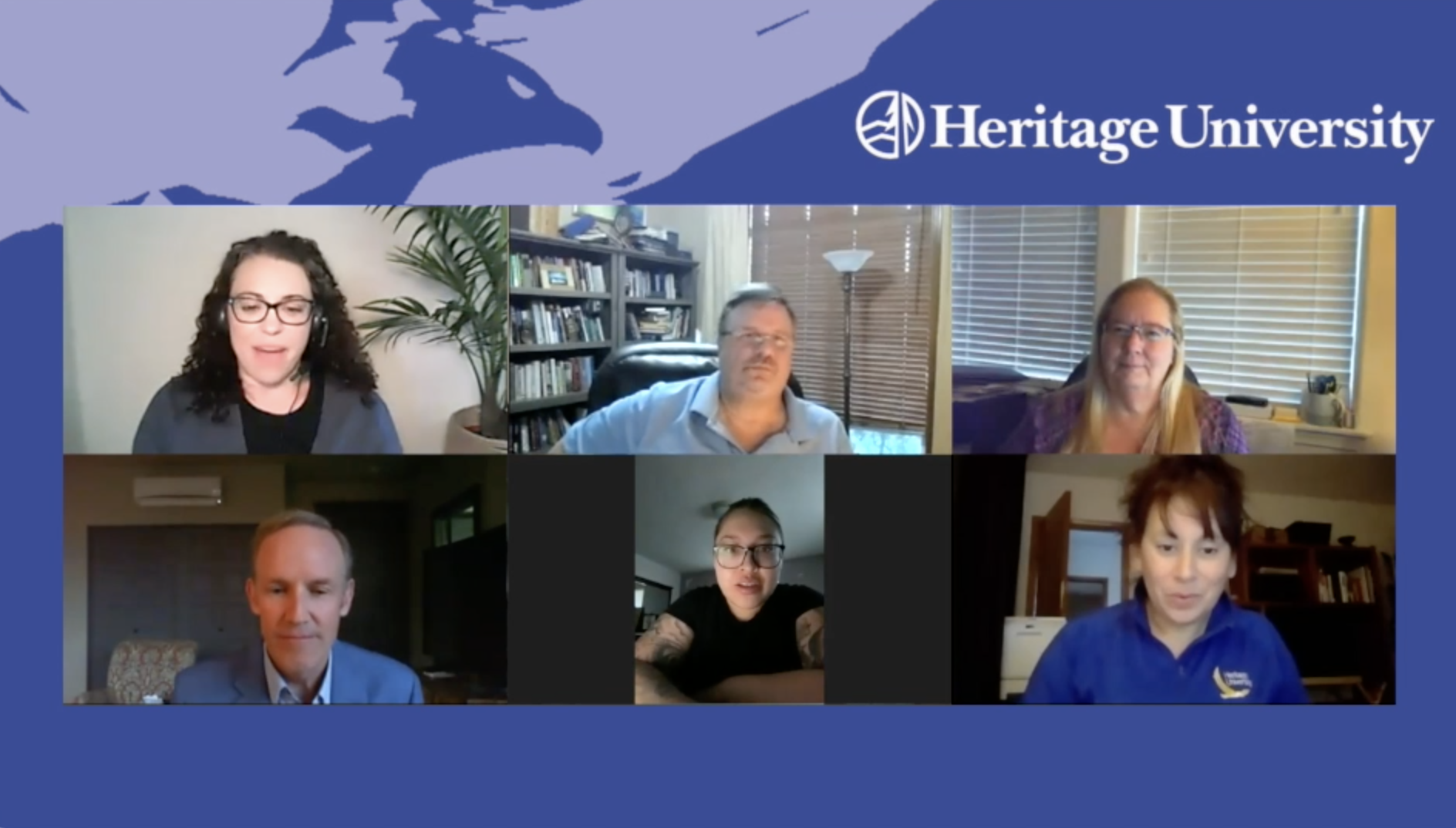
Toppenish, Wash. – A dynamic panel of women leaders are being featured as part of Empowher, Heritage University’s celebration of the 100th anniversary of the 19th Amendment guaranteeing women the right to vote. Empowher will be held virtually on Wednesday, October 14, 2020, from 7:00 p.m. to 8:00 p.m.

Dana Eliason, senior director of Donor Development at Heritage, and Empowher organizer, says recognizing this milestone for women is a natural choice for the institution. “Heritage University is an institution founded by women and where women make up 70% of the student body,” said Eliason. “At Heritage, we are all about empowering women to make an impact in the world.”

Headlining the event is Regina Malveaux, newly appointed director of the Washington State Women’s Commission, who will share how the Commission works to ensure women’s voices are heard in Olympia.  Ms. Malveaux will be interviewed by Reesha Cosby, YWCA of Yakima Board of Directors president. Following her remarks Ms. Malveaux will moderate a panel discussion. The panel is comprised of women in leadership positions across government, business, education and social service agencies. The panel consists of Washington State Representatives Debra Lekanoff (D-Burlington) and Gina Mosbrucker (R-Goldendale); Quinn Dalan, Yakima Volunteer Attorney Services executive director; Magaly Solis, La Casa Hogar citizenship program manager; Cady Padilla, Nuestra Casa executive director; and Virginia Hislop, community activist and volunteer.

People interested in attending Empowher can register at heritage.edu/empowher. For more information, contact Dana Eliason at (509) 865-0441 or eliason_d@heritage.edu.

Empowher is sponsored by Tree Top, and would not be possible without support from the following local organizations:

Washington State Women’s Commission
Junior League of Yakima
La Casa Hogar
League of Women Voters Yakima County
United Way of Central Washington
Yakima County Volunteer Attorney Services
YWCA Yakima
Nuestra Casa


# # #

Heritage University awarded $50,000 grant from the Yakima Valley Resilience and Response Fund to help Non-Title 4 students impacted by COVID-19

FOR IMMEDIATE RELEASE

Heritage University awarded $50,000 grant from the Yakima Valley Resilience and Response Fund to help Non-Title 4 students impacted by COVID-19

Toppenish, Wash. – Heritage University is grateful to announce it is a recipient of a $50,000 grant from the Yakima Valley Resilience and Response Fund that is the result of a funding partnership with United Way of Central Washington, the Latino Community Fund, and the Yakima Valley Community Foundation. The grant will provide emergency funding for non-Title 4 eligible students impacted by the COVID-19 pandemic. Non-Title 4 students, primarily DACA students, are not eligible to receive Federal CARES Act Funding for hardships resultant from the Covid-19 pandemic.

The grant from the Yakima Valley Resilience and Response Fund supports charitable organizations and agencies working to address COVID-19’s impact on the Yakima Valley, focusing on its most vulnerable populations. Andrew Sund, Ph.D., president of Heritage University, expressed his gratitude to YVCF and its partners for awarding the grant to Heritage. “While the Coronavirus Aid, Relief and Economic Security (CARES) Act has been instrumental in assisting many of our students, our non-Title 4 students are often the students most in need of emergency relief funding,” said Dr. Sund. “This grant will help ensure that all of our students facing COVID-19 related crises will be able to afford necessities such as food and housing until the economy begins to find its footing.”

Sharon Miracle, YVCF President and CEO said she is pleased to award the $50,000 grant to Heritage University. “We appreciate Heritage’s commitment to all of the amazing students that are such an important part of the Yakima Valley community,” said Miracle. “The educational opportunities Heritage provides is critical to our Valley, and we are honored to support them during this pandemic.”

For more information, contact Davidson Mance at (509) 969-6084 or mance_d@heritage.edu.


The Latino Community Fund cultivates new leaders, supports cultural and community based non-profit organizations, and improves the quality of life for all Washingtonians.  Contact Info: info@latinocommunityfund.org, (509) 901-2798

United Way of Central Washington gathers together people, ideas and resources to strengthen communities and improve lives. United Way of Central Washington is a local non-profit 501 (c) 3 organization, serving Yakima and Kittitas counties.  Contact Info: info@uwcw.org, (509) 248-1557

Yakima Valley Community Foundation has awarded grants in the Yakima Valley since 2004. The Yakima Valley Community Foundation’s mission is to connect people, resources and ideas so people and communities thrive.  Contact Info: grants@yakimavalleycf.org, (509) 457-7616

# # #

La Casa Hogar executive named Heritage University’s Violet Lumley Rau Alumna of the Year

FOR IMMEDIATE RELEASE

La Casa Hogar executive named Heritage University’s Violet Lumley Rau Alumna of the Year

Toppenish, Wash. – Heritage University alumna Magaly Solis, currently the citizenship program manager at La Casa Hogar in Yakima, Wash., is this year’s recipient of the Violet Lumley Rau Alumna of the Year award. Heritage president Andrew Sund, Ph.D., presented the award to Solis during a ceremony held virtually due to Covid-19 safety protocols, with Solis receiving a trophy and certificate at the La Casa Hogar office on August 27, 2020.

La Casa Hogar is a non-profit organization that partners with Yakima Valley immigrant families which offers culturally and linguistically responsive early learning, adult education, civic engagement, and citizenship services. In her role as citizenship program manager, Solis connects people to their dreams of U.S. citizenship and all the opportunities it brings to them. “Magaly exemplifies the ideals and values of Heritage University—excellence, inclusion, perseverance, leadership and service,” said David Wise, vice president of Advancement. “She demonstrates her commitment to helping others and building communities every day in her personal and professional life. We are so proud of her and proud to call her an Eagle.”

“Heritage University offered me a pathway to achieve my educational goals. Dedicated instructors offered support and encouragement throughout my journey. The education I received at Heritage has allowed me to positively impact many lives in our community,” said Solis. “I am honored to receive the Violet Lumley Rau 2020 Alumna of the Year. This award is a celebration to many years of dedication and service to immigrant families in the Yakima Valley. I am proud to partner with students, volunteers, allies and La Casa Hogar’s resilient and powerful team to transform lives and our Yakima Valley.”

Magaly Solis graduated from Heritage in 2008 with a bachelor’s degree in Education. Ms. Solis is the first in her family to obtain a college degree. As a teenager she immigrated from the state of Guerrero, Mexico to Mabton. After earning her diploma, she worked as a substitute teacher for the Toppenish School District, and worked as a medical interpreter helping injured farmworkers, communicate with their medical providers. This work led her to La Casa Hogar, where she volunteered teaching citizenship classes. Solis says the experience was so rewarding that she joined the team as a part-time employee and later took on the program’s full-time coordinator position.

In her role, Ms. Solis earned a legal credential through the Department of Justice to successfully support immigrants to complete the long and arduous process of becoming United States citizens, which takes months or even years from start to finish. To apply for citizenship an applicant must first be a lawful permanent resident (a status that, by law, many immigrants cannot access) for a minimum of five years, and be in compliance with numerous requirements. During the interview, individuals must also pass English, U.S. history and civics tests.

“Immigration law is very complex and intimidating. Our goal is to build our students’ confidence to navigate the naturalization process and achieve their goal of becoming U.S. citizens. We teach the rights, responsibilities, and the importance of civic engagement as citizens. We work with each person, meet them where they are, and support them from the initial eligibility screening through their oath ceremonies,” said Solis.

Under Ms. Solis’s leadership, the program has grown from her one originally part-time position to an office of four full-time staff members and 50 volunteers. She used her Heritage education to write the program’s first comprehensive citizenship curriculum in 2016, complete with clear learning objectives, evaluation processes and methods to share students’ progress. Moreover, the number of people who completed the program and are now citizens rose from a few hundred to now over 1,200– single-handedly representing 10% of the entire eligible population in Yakima County.

Outside of her work commitments, Ms. Solis was just appointed in July of 2020 as a Board member of the Yakima YWCA and a member of the City of Yakima’s Community Integration Committee. She also volunteers with the Yakima Yoga Collective and devoted 200 hours this year as a participant in the Collective’s first cohort of bilingual yoga instructors. Ms. Solis is an avid outdoors-woman and has summited several of the region’s volcanic mountains, serving as a role model among Latina women exploring the outdoors and in mountaineering. In 2019, Ms. Solis received the 39 under 39 recognition from the Yakima Herald-Republic.

To set up an interview with Magaly Solis, please contact Davidson Mance, Heritage University media relations coordinator, at (509) 969-6084 or mance_d@heritage.edu.

# # #

The American Dream – Alumnus helps Latinx families move towards citizenship

Magaly Solis builds bridges. Not physical structures made of steel and concrete. Her bridges are metaphorical. She connects people to their dreams and a lifetime of opportunities. Solis is the citizenship program manager at La Casa Hogar, a non-profit organization that partners with Yakima Valley immigrant families and offers culturally & linguistically responsive early learning, adult education, civic engagement, and citizenship services. She is this year’s Violet Lumely Rau Alumna of the Year recipient.

“Magaly exemplifies the ideals and values of Heritage University—excellence, inclusion, perseverance, leadership and service,” said David Wise, vice president of Advancement. “She demonstrates her commitment to helping others and building communities every day in her personal and professional life. We are so proud of her and proud to call her an Eagle.”

Solis graduated from Heritage in 2008 with a bachelor’s degree in education. She was a substitute teacher for the Toppenish School District and an interpreter helping injured farmworkers in the lower Yakima Valley communicate with their medical providers when she noticed the great need for adult education, particularly for this population.

“These workers were injured and had little to no way, that wasn’t physical labor, to support themselves and their families,” said Solis. “My own experience taught me that education was something that could open up opportunities for them. I started volunteering in the lower valley, teaching adult education classes in Spanish, English classes and computer literacy classes.”

Solis continued to volunteer with the program for several years before connecting with La Casa Hogar. She learned about the citizenship program and volunteered to teach some of their courses. The experience was so personally rewarding that she joined the team as a part- time employee and later took on the program’s full-time coordinator position.

“I think that coming directly from the immigrant community and having that firsthand experience, I see the needs that we have, and I want to do whatever I can to support those who have that need for education, connection and belonging,” said Solis. “That is why I get involved.”

Solis immigrated into the United States with her family when she was just 12 years old. They settled in the small town of Mabton and she enrolled in school. Her academic experience was challenging. Not only did she have to learn the required curriculum, but she also had to do it while learning a new language, an experience that many in the immigrant community share.

“I knew that education and learning English were the pathway to accessing opportunities,” said Solis. “There were lots of challenges, I had to work really hard, and I feel like I was privileged to have the opportunity to earn my college degree. That isn’t something that is easy for many to access when facing financial and language barriers.”

Today, Solis pays forward the opportunities she received by helping others do the same.

The citizenship program she oversees supports immigrants as they complete the long and arduous process of becoming a United States citizen. It can take years to complete from start to finish. An applicant must first be a lawful permanent resident for a minimum of five years, and be in compliance with other residency requirements, such as time living in the state where the application is being filed and time in country. They must have sufficient English proficiency and pass a U.S. history and civics test. Some applicants are exempt from the English test but still have to demonstrate knowledge of U.S. history and civics. And, they have to have good moral character and demonstrate their attachment to the United States and its constitution. The process requires classes, lots of paperwork, testing and a naturalization interview with an immigration officer. It can be very intimidating, confusing and frustrating, especially for those whose education level is rudimentary at best.

“Our program offers combined citizenship education, English and naturalization legal services. We have created a safe, welcoming space where learning and celebration go hand-in-hand. We want to remove barriers for people to naturalize. We work with them and meet them where they are and support them from the initial screening to their oath ceremony,” she said.

Immigration law is very complex and intimidating.

Our goal is to support our students’ confidence in navigating the naturalization process and achieve their goal of becoming proud U.S. citizens. In class, we talk about their rights and responsibilities as citizens and the importance of civic engagement.”

Under Solis’s leadership, the program has grown significantly. Staffing increased from her part-time position to an office of three staff members and a volunteer bank of 50 people. She used her Heritage training to write the program’s first comprehensive curriculum, which provides a clear plan and a process for evaluating and sharing students’ progress. Most importantly, the number of people who completed the program and are now citizens rose from a few hundred to more than 1,200.

When Solis enrolled at Heritage as a freshman, she never imagined the life that she leads today. She thought she would be teaching bright, young students in a K-12 classroom. While she didn’t end up in an elementary school, she found a calling that makes a deep and lasting impact.

“When someone becomes a U.S. citizen, you see this overwhelming emotion on their face, it is the most rewarding feeling seeing this,” she said. “So many of the people I work with want to become a citizen because the United States has been their home for many years. For some, it is about peace of mind, belonging, safety and family unity. And, by being a citizen, they can engage civically, use their voice, and uplift their community. This is what keeps me motivated.”