A Lifetime of Service – Wings Fall-Winter 2024
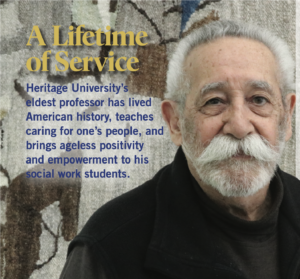
A Lifetime of Service title banner


When Heritage University Professor Gregorio Ochoa walks into his first Introduction to Social Work class each semester, he writes his name and the letters “MSW” after it on the chalkboard.

“I ask my students, ‘What does the MSW stand for?’” Ochoa said. “Invariably, they say, ‘Masters in Social Work.’

“And I say, ‘It stands for “Mexican social worker.”’ Yes, I’ll tell you eventually how I got my master’s and how it all came together for me, but for now, I want you to know that part of our bond is that we’re mutually Mexican.”

That has meaning for his Latinx students in particular as they approach the work of their chosen field, said Ochoa, because their work will be all about helping people, likely fellow Latinx people.

At 70 years their senior — he turned 90 on November 20th — Ochoa is forthright about the challenges they will face. But his indomitable spirit, his cheerful way of discussing life and one’s ability to make a difference in other people’s lives is ageless.

DETERMINED TO GET AN EDUCATION

He’s lived through years of social tumult, he’s experienced plenty of racism, and he’s seen the face of actual evil up close. Yet Ochoa’s life has been filled with immense personal growth, learning, and purpose — all of which began with a very intentional pursuit of education.

Born and raised in California by a Mexican mother and Native American father, Ochoa’s parents were focused on the value of work and making a living, not education.

“My parents thought you should just get a good-paying job, like the job I had at one point working in the Wyoming oil fields,” Ochoa said. “I made $150 a week.”

It was good money at the time, and his parents thought work like that was all one needed to live a decent life, Ochoa said. But he didn’t agree.

So he joined the US Navy at 17 — knowing the GI Bill would be his path to a college education. He’d been enrolled in the seminary from age 11 to 15, during which time the value of education was instilled in him by the priests who taught him there. Ochoa eventually left the idea of being a priest behind but took the love of education with him.

He married at age 22, and his wife Donna gave birth to a daughter the next year. When she experienced severe postpartum depression following the birth, Ochoa assumed responsibility for their daughter.

“I felt I l had lost my wife to this awful thing,” Ochoa said. “She was sad and distant. I didn’t understand why, but I needed to find out.”

It would be the beginning of a lifelong interest in mental health.

FASCINATED BY LEARNING

In the college classroom, Ochoa felt intense interest in many subjects. “I was enthralled with my history course, and I wanted to be a historian,” he said. “And then I would take a biology class and was amazed by science, so I wanted to be a scientist.

“I was just moved all over the place with the learning that was going on and how interesting it all was to me.”

Ultimately, Ochoa was most fascinated by sociology and psychology. As he pursued his coursework, he also took jobs from which he could learn. During his freshman year at San Luis Obispo Junior College, he got a job as a psychiatric technician working with patients who were identified as “sexual psychopaths and the criminally insane” with the California State Department of Mental Health. It was a tough job that paid very little, he said, but he learned a lot about people and the world of psychiatric care.

He soon enrolled at California State University at Northridge and graduated with a bachelor’s degree in social work. Planning to acquire his master’s degree, he applied to eight universities and was accepted into each. He earned his Master of Social Work from the University of Southern California in 1966.

Ochoa credits college professors and mentors as well as supervisors in his various jobs with helping him along his educational and professional paths.

“I think in social work, what can make a difference is if you have a supervisor who is willing to teach what they know,” Ochoa said. “I always had that.”

Ochoa said his supervisors always seemed to want to promote him to administrative positions, but he wanted to work directly with people.

“That was and is what I love best,” Ochoa said. “What matters more to me than anything is working directly with people who need help.”
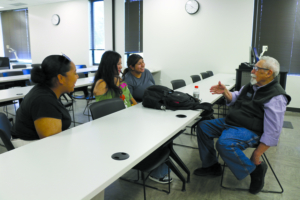
A professor sitting at a table across from three students in a classroom.

Social Work professor Gregory Ochoa talks with students following a class at Heritage University

FINDING A PLACE AT HERITAGE

Ochoa’s life’s work has taken him from California to Arizona to Washington, from senior and lead clinician positions at various mental health organizations — Central Washington Comprehensive Mental Health and the Yakima Valley Farmworkers Clinic among them — to faculty positions at UCLA, Arizona State University, the University of Washington, and now Heritage since 1990.

Ochoa remembers his children’s reactions as they drove through eastern Washington State, what would come to be home for them and for Ochoa for the next 35 years and counting.

“Going over the Snoqualmie Pass, they exclaimed they had never seen so many Christmas trees,” Ochoa smiled. “And, unlike California, all the rivers had water in them.

“This was the place that was right for my family.”

A few months after beginning his work in Yakima, WA. in 1989 at Comprehensive Mental Health Services, a colleague told him she was teaching at a small liberal college in Toppenish called Heritage College.

“She said they had two classes without an instructor and asked if I might be interested in helping them out,” Ochoa said. “I asked her what the courses were, and because they were Multicultural Counseling and Family Therapy, which resonated with me and I enjoyed teaching, I told her I would be able to help them.

“I’ve been at Heritage ever since,” he smiled. “They keep giving me new contracts.”

DECADES OF CHANGE . . . SLOW CHANGE

Looking back, it can appear Ochoa has led a charmed life. He’d tell you it’s been his attitude and his strong beliefs that have made the real difference.

He discovered what interested him in life. He did well in college and succeeded professionally, having support from professors, mentors and job supervisors, and he earned advanced degrees.

Jobs seemed to come his way, with growing responsibilities and professional gratification. He was helping people he felt called to help, and he was able to make a difference in people’s lives.

But Ochoa came of age in a time that was both evolving and tumultuous — a time that had a direct effect on his life — and his determination to be of service to others through social work.

Ochoa was taught English by two nuns in elementary school where he studied. Both thought it was important to teach him English in such a way that he would not have an accent.

“So Immigration Services wouldn’t arrest me, they told me,” he said. “That’s how it was then, and it’s no different today with the political talk about gathering all the immigrants and returning them to where they came from. It’s a huge amount of déjà vu.”

In 1966, at the University of Southern California, 75 students were admitted to his class. Among them, was one Mexican, one Asian, one Native American, and one Black student. “But there were hundreds of thousands of Latinos in Los Angeles County alone,” Ochoa said. “That has changed and is different today, depending on the university.

“The amazing changes in populations in various states where half the people are Latino, that brings to bear a significant number of students that are going on to higher education. It’s hard to ignore a population that is so huge — and that is some progress.”

In 1969, in Southern California, Ochoa’s focus was on helping young people, yet that positive focus sometimes met with complications from people whose interests were malevolent. His therapy group was visited by some who sought to take advantage of people who were seeking help — among them, Charles Manson, whose cult “family” went on to murder nine people across Los Angeles over two nights.

“He came there to prey on vulnerable individuals,” Ochoa said. “I told him he was not welcome, though no one could ever have imagined what he would have gone on to do.

“My whole life I have protected the vulnerable. That is what this was.”
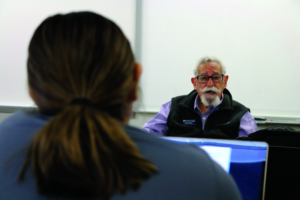
Social Work Professor Gregory Ochoa during one of his glasses at Heritage University

In 1971, when he visited the School of Social Work at the University of Washington in Seattle, the School’s dean was locked in his office.

“Students — Latino students — had nailed his door and windows shut,” Ochoa said. “It was an act of defiance by minority students who were not going to leave until the department hired a Latino professor.

“That was a point in time where things were changing for minority students. That dean interviewed me through a window. I had my résumé with me and handed it to him, and a few months later they offered me the position.

“Progress,” Ochoa said.

In 1989, when Ochoa accepted a supervisory position at a mental health organization in Yakima, there were two PhD-level clinical psychologists on staff. A few weeks after he’d started the job — as their boss — one of them handed Ochoa his resignation.

“I asked him why, and he said, ‘I like your ideas, but I just can’t work for a Mexican.’ I told him, ‘I have no choice but to accept your resignation. There’s nothing I can do about being a Mexican.’

“We change what we can, and sometimes you just have to accept things you cannot change, such as other people’s attitudes.”

AFFECT WHAT YOU CAN

Ochoa has waited for the world to change while changing what he can. Always he’s decided to focus on the good.

“My whole career, in every role, I focus on reality but also on possibility and fighting for what is right,” he said.

Just as his professors and other leaders helped him chart his course and find success, he works to do the same for his students as the “Mexican social worker” he is.

“It makes a difference to students to see leaders and instructors who look like them, talk like them, and have experiences like theirs,” Ochoa said. “That’s who I am, and I am here to help them.”

Ochoa believes that one of the most critical needs in social welfare/social work education today is that universities continue to hire more faculty that look like their students of color.

“Heritage does very well with this,” he said.

Not even contemplating retirement, Ochoa said his commitment to helping students learn how to protect people, especially Latinx, Native and other marginalized people, is as strong as ever.

“I see it as my commitment to social justice that sometimes people need to be confronted,” Ochoa said. “Many of our people are like lambs, and some people are like wolves, and we need to make it clear that they are unwelcome.

“That’s really the way I saw it throughout my life, and I have had to, at times, say it out loud.

“I think probably my whole life I’ve been doing that. I’ve been defending and helping people who need it.”

Agentes de Cambio – Wings Fall-Winter 2024

Agentes de Cambio title banner


When Heritage opened its doors a little over 40 years ago, the diversity of the professional community in the Yakima Valley didn’t reflect the communities they served. In communities where most of the population was culturally Hispanic, Latinx, or Mexican, few teachers, social workers, business leaders, and other professionals shared that culture. With more than 11,000 graduates, we are seeing some demographic changes. But there is still a lot of work to be done.

Judi Montes

Judi Montes

Today’s Heritage University student is tomorrow’s community leader. They are the change-makers. Here are a few of their stories.

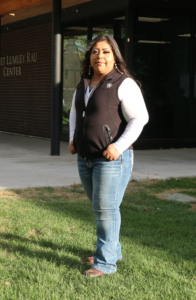
Sophomore and criminal justice major Judi Montes is not just preparing to be a community leader; she is one already. As a dedicated volunteer and organizer in her hometown of Granger, Washington, Montes is actively involved in the Chamber of Commerce and Granger Lions Club. She has helped organize and volunteered at initiatives such as the local schools’ PTO, holiday parades, and the annual Cherry Festival. After raising three daughters, she is pursuing her dream of earning a college degree to further contribute to her beloved community.

Granger is a small agricultural town with a population of under 4,000, predominantly Hispanic. In this tight-knit community, residents rely on each other to solve problems and support one another. Montes’s journey from a single mom to a community organizer reflects this spirit.

“Everything started with my daughters,” Montes explains. “As a single mom, I was determined to help my daughters succeed. I volunteered for their schools and enrolled them in sports, always helping with whatever activities they were involved in.”

Her commitment to her children led her to the Inspire Development Center, where she became one of the most active volunteers. Her involvement was so significant that she was invited to Washington, D.C., to discuss the importance of early learning programs for migrant families with legislators. “It was fascinating to see the national efforts to secure funding for these centers,” she recalls.

As her engagement deepened, Montes recognized that her community faced challenges beyond those she encountered through her children’s activities. After starting a full-time job at Inspire, her activism intensified. She interacted with many families and began understanding her community’s broader issues, including immigration problems and neighborhood safety concerns.

“People often come to me and share the challenges they’re facing, whether it’s struggling with immigration, accidents, or issues they notice in the community. I’m always here to listen and truly value when others feel comfortable approaching me with their concerns or suggestions. It’s important to me that they know their voices are heard, and together, we can work towards finding solutions,” Montes said.

In 2023, she was asked to run for a position on the Granger City Council. “Things in our community were not going well, and it was time for a change. Parents work late, and there’s little for children to do—no pool, no youth center, and gang activity is increasing. We need action,” she said. Montes ran for office and won with 63% of the votes.

Starting her council position coincided with her second semester at Heritage. “I’ve always wanted to be a lawyer. The law is power, and it will enable me to do more for my community,” she explains. “Getting my degree and becoming a lawyer will help me build my network and make a difference.”

Montes emphasizes the importance of community collaboration: “We are here to help others. Getting things done isn’t just about money; it requires people—those who can initiate and sustain change. I want to be that person.”

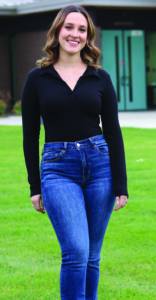
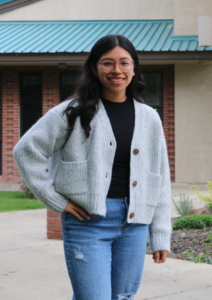
Yadira Cuellar is passionate about her Mexican heritage and committed to helping young people overcome mental health challenges. Currently a student in the Master of Mental Health Counseling program, she aims to dismantle the barriers that hinder individuals from living fulfilling lives.

“In my community, there are many stigmas and misconceptions surrounding mental health,” Cuellar said. “The Mexican culture often views mental illness as a sign of weakness, but that’s not true. The brain is an organ; like any other, it needs treatment when it’s unwell.”

Yadira Cuellar

Yadira Cuellar

After graduating, Cuellar returned to the Yakima Valley, where she became a case manager for young people involved in the foster care system, juvenile justice centers, or transitioning out of drug rehabilitation. “Many of these young individuals have endured traumatic experiences. They often struggle with behavioral disorders, come from broken homes, and find it difficult to move past their trauma,” she said.

As a case manager, Cuellar plays a vital role in the therapeutic team, connecting participants with essential services such as drug treatment, housing assistance, and mental health support. While she enjoys her current role, she aspires to have a more personal impact on young people’s lives. Earning her master’s degree will enable her to provide one-on-one counseling, allowing her to address the underlying mental health issues that hinder individuals from living independently and productively.

There is a pressing need for mental health providers from diverse backgrounds who can relate to the demographics of their communities. In Yakima County, which is 51% Hispanic, there is a significant shortage of Latinx behavioral health clinicians. “When someone Mexican walks through the door and sees that I am also Mexican, there’s a level of trust,” Cuellar said. “That shared background and understanding of similar beliefs, values, and traditions help foster a relationship of trust.”

Currently, in her first semester of the master’s program, Cuellar balances her studies with her work as a case manager. She expects to graduate in May 2026 and plans to continue her career in the Yakima Valley as a therapist for young adults.

Cuellar’s journey is a testament to her dedication to breaking down cultural barriers in mental health care, ensuring that future generations have the support they need to thrive. Through her work, she honors her heritage and paves the way for a healthier, more understanding community.


Being a Mexican means breaking a lot of things. Breaking cycles, breaking down obstacles, breaking through prejudice and out of limited expectations.

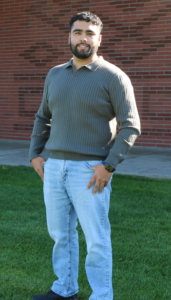
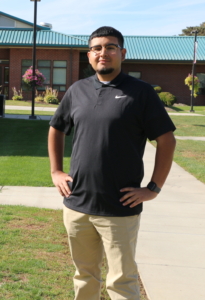
For a man in his early twenties, Salvador Ayala Vaca has wisdom beyond his years. It was learned through triumphs and tragedies, lots of hard work, and sage advice from his late father. Ayala was just a few months from graduating from high school when his dad passed away.

“My dad used to tell me, ‘We’re not rich. But you have something in your hands, an American citizenship, that will open many doors. Use it, and you’re going to see lots of good things.’”

Salvador Ayala

Salvador Ayala

Now a senior majoring in computer science, his academic résumé rivals any Ivy League school student. He has completed eight research experiences, including stints with Amazon, the Department of Energy in Washington, D.C., and collaborations with leading agricultural companies. He’s mentored students in the College Assistance Migrant Program and the CRESCENT program and is a tutor in the Academic Skills Center.

Ayala was sixteen when he and his family immigrated to the United States from Mexico. They were a hardworking family. In Mexico, Mom, Dad and the two brothers worked in the fields, often more than 13 hours a day, every day. Coming to America meant Ayala and his brother would have a better chance at a better future.

“When we came to America, we weren’t scared,” said Ayala. “We knew how to work hard. We knew that, in America, we could find jobs that pay better, and my brother and I could get a better education.”

The challenges he and his family faced when they moved to the United States—racism, difficult manual labor, low expectations of others, learning a new language, and finding his place in a new country—motivated him to excel in education.

“I want to inspire others who immigrate to this country. They can accomplish their goals. They can get an education. If you have the passion and the motivation, nothing can stop you.

“I see the sacrifices of my people every time I drive to Heritage. I see them in the fields picking apples, pears, and hops. It’s an honor to be Latino. My people are the ones who bring food to the table; without us, this country would be very different.

“I also know that this work is hard and dangerous. People are out there working in 100-degree-plus temperatures. We can do things through technology to make their jobs better and safer. I want to be part of the work that creates technology to improve their working conditions. With a degree in computer science, I can help companies collect and analyze data to improve their processes.”

Ayala is set to graduate this spring. He plans to enter the workforce and return to school after a few years to earn a master’s degree.


Being the oldest child in a traditional Mexican family comes with a lot of responsibility, especially when you are the oldest daughter. For junior  and education major Jackie Martinez, being the oldest is a position of honor and one that prepared her for her future career as a teacher.

“I’m glad I have the privilege of being the oldest. It is definitely not a burden,” she said. “I developed a caring, nurturing personality because I grew up caring for my younger siblings. I feel like that will help me when I have my classroom one day.”

Jackie Martinez

Jackie Martinez

Martinez knew very early on that she wanted to be a teacher. When she was in the fifth grade, a little boy, Eduardo, started school in the middle of the year. He had moved with his family from Mexico, and he didn’t speak a word of English. Her teacher didn’t speak Spanish. She asked Martinez if she could sit with Edwardo and help him with his lessons.

“It felt good helping out and seeing Edwardo start to grasp what we were studying and start to fall in love with learning,” she said. “Through him, I could imagine what it must be like to go someplace new where you didn’t know the language and then find that one person who guides you and helps you feel comfortable and safe. I knew then that I wanted to be that person.”

While her teachers were a big influence on Martinez throughout her K-12 years, it was the ones who shared her Mexican heritage that really inspired her to do well in her studies and strive for a college degree after graduating.

“Sunnyside is a Hispanic community. When I was in school, the only people I saw who looked like me and shared my cultural heritage worked in the fields. There weren’t a lot of Hispanic teachers in my school.

“I was in the eighth grade when I had my first Hispanic teacher. She was my hero. She looked like me. She knew my culture and what it was like to have parents working in the fields. I could relate to her.

“That kind of connection is important,” said Martinez. “It helps children feel safe in their classroom and more open to learning when they feel like the teacher can relate to what is going on in their world. Plus, it helps them see themselves in roles outside of farmwork. I want to be that person for my students.”

When Martinez graduates, she wants to return to the school system that raised her and teach the children in Sunnyside.

“There is a lot of work to be done in my community if we want to break the cycle that keeps our kids from prioritizing education,” she said.

Heritage senior and business major Christian Verduzco wasn’t out of elementary school when he started his first business. The tiny tot entrepreneur wanted to earn a little extra money, so he sold his shoes. In a few months, if all goes to plan, those won’t be the last pair of shoes he’ll sell. Verduzco dreams of leveraging his business and marketing degree enter the big business of sportswear. And, he has a hook, his culture.

Christian Verduzco

Christian Verduzco

“Hispanic employees bring a lot of benefits to their employers,” said Verduzco. “We have great empathy, a strong work ethic, dedication, discipline and loyalty.”

Not to mention, he said, with Hispanic households being one of the fastest growing demographics both in their numbers and their purchasing power, bringing employees with this cultural background into management positions in companies large and small makes good business sense.

“Having focus groups can only get you so far,” he said. “Nothing beats having someone of the culture to market to the culture. There are so many nuances to being Hispanic that people get wrong. Just look at how we see Mexican, Hispanic and Latino used like they represent the same group of people. They don’t. When businesses make assumptions and get them wrong, it’s obvious and can negatively impact their bottom line.”

For Verduzco, business success is as much about personal accomplishment as it is about being a role model for young people growing up like he did—the children of hardworking immigrants who sacrificed education for survival.

“There were not a lot of role models for me in Sunnyside,” he said. “There was a lot of violence and expectations that I would just go into the workforce after high school. I was lucky that my parents always pushed me to get an education. My mom would say, ‘You’re really smart, son. I want you to do something more than I got to do.’”

With graduation half a year away, Verduzco is starting his job search. Where he will end up remains to be seen, but what he will accomplish and the significance of that accomplishment to his family and community is indisputable.

“Me and two of my siblings are the first in my family to earn a degree,” he said. “The first to have a wide path of opportunities ahead of us.

“A message I have for future students is to believe in yourself, trust in God, fight for your dreams. You may not have it all figured out but keep working, have that faith that it will all come together. ¡Si se puede raza!” 

Actor Adam Beach to visit Heritage University

Adam Beach event flyer


Actor Adam Beach to visit Heritage University

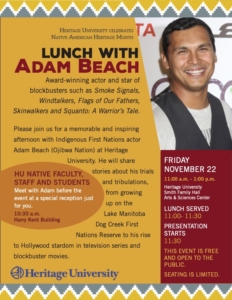
Toppenish, Wash. – Actor, advocate and motivational speaker Adam Beach will share stories of growing up on the Dog Creek First Nations Reserve in Manitoba, Canada as part of his presentation on Friday, November 22, 2024, in Smith Family Hall at Heritage University. Beach is a member of the Saulteaux (Plains Ojibwe) nation and was raised near Ashern, Manitoba. He grew up with his parents Sally and Dennis Beach, and his two brothers. His childhood was marked by tragedy. His mother was killed by a drunk driver, and his father, who was an alcoholic, drowned weeks later. Adam and his brothers then lived with their grandmother and later with an aunt and uncle in Winnipeg.

Beach began his career at 16 when he attended the Manitoba Theatre for Young People in Winnipeg. Since then, Beach has appeared in over 60 films and television programs. He’s won Best Actor awards for Dance Me Outside (1995) at the American Indian Film Festival; My Indian Summer (1995) at the First American in the Arts Awards; and Smoke Signals (1998) at the San Diego World Film Festival. His performance in the Academy Award-nominated Clint Eastwood-directed Flags of Our Fathers (2006) earned him two Best Supporting Actor Award nominations (Broadcast Film Critics Association and Satellite Awards). Beach has been further nominated for three awards for his role in Bury My Heart at Wounded Knee (2007), including a Golden Globe.

Other performances include Joe Dirt (2001), and the John Woo World War II war epic Windtalkers (2002) in which he co-starred with Nicolas Cage. He headlined the cast in the Walt Disney production Squanto: A Warrior’s Tale (1994); featured in John Singleton’s Four Brothers (2005); and starred with Harrison Ford and Daniel Craig in the science fiction-western smash hit Cowboys & Aliens (2011). He had a recurring starring role in Law & Order: Special Victims Unit (1999) and Big Love (2006). In 2016, he played Christopher Weiss/Slipknot in the supervillain film Suicide Squad (2016).

Beach’s presentation will take place at Heritage University’s from 11:00 a.m. to 1:00 p.m. This event is open to the public. For more information and help with interviews, please contact Davidson Mance at (509) 969-6084 or Mance_D@heritage.edu.

# # #

Heritage University honors Native American elders and welcomes Indigenous actor Adam Beach as part of Native American Heritage Month celebrations

FOR IMMEDIATE RELEASE

Heritage University honors Native American elders and welcomes Indigenous actor Adam Beach as part of Native American Heritage Month celebrations


Native American Elders

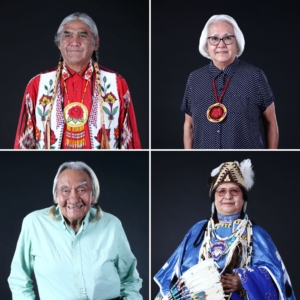
Native American elders being honored this year include (clockwise from top left) Warren Cloud, Carol Craig, Esther Moses-Hyipeer and Elmer Schuster


Toppenish, Wash. – November is Native American Heritage Month, and Heritage University is celebrating with a variety of events that honor Native Americans in our communities, including the Honoring Our Elders ceremony, taking place on Wednesday, November 6, 2024. During this event, we celebrate four Yakama Nation elders for their lifetime contributions to the Yakama people and their community. This year’s recipients are Warren Cloud, Luxkulkist, Carol Craig, Nukshay Xwaami,  Taleets Esther Moses-Hyipeer and Elmer Schuster, Tomiith.

Warren Cloud Luxkulkist dedicated his life to hard work, using his hands to get the job done. As a trucker, logger, and heavy equipment operator, he provided food, homes, and water essential for life. When called to serve as a Yakama Nation leader, he accepted wholeheartedly. Now, as General Council Chairman, Warren leads with respect for tradition and commitment to the 1855 Treaty, inspiring his community to honor heritage and build a brighter future together.

Carol Craig, Nukshay Xwaami is a storyteller and educator dedicated to sharing Native truths about the environment and treaty rights. Her work at the Columbia River Inter-Tribal Fish Commission and Yakama Nation Fish and Wildlife highlights efforts to restore salmon runs and educates non-tribal communities on Yakama fishing rights from the Treaty of 1855. As a Yakama Nation Review reporter, she ensures her community receives honest information on key issues, fostering understanding of their heritage and rights. Carol’s commitment empowers her community and inspires future generations to protect these connections.

Taleets, Esther Moses-Hyipeer grew up deeply connected to her culture, learning from her elders the importance of traditional foods and community care. Her dedication to the Yakama people is evident in her work with the Yakama Nation Tribal School, Language Program, Gaming Commission, and Tribal Council. She has championed initiatives honoring veterans, providing housing for homeless families, and addressing addiction. Additionally, she advocates for unified tribal healthcare to support holistic well-being. Guided by the wisdom of her ancestors and the Treaty of 1855, Taleets inspires others to uphold their heritage and support their community.

Elmer Schuster, Tomiith has left a lasting impact on the Yakima Valley and its people. A skilled carpenter since the 1960s, he’s constructed vital infrastructure, including highway overpasses and irrigation dams that support both transport and agriculture. He also helped build longhouses for cultural ceremonies and youth camps that provide meaningful experiences. As leader of the Yakama Nation Housing Authority, he directed teams that built homes for tribal members, supporting community resilience. His contributions are more than structures; they are symbols of strength, tradition, and hope for future generations.

The annual Honoring Our Elders ceremony will be held in Heritage University’s Smith Family Hall on Wednesday, November 6, 2024, at 9:00 a.m. This event is by invitation only. Also, their stories are featured in a series of full-page ads, each dedicated to a specific elder, that are running in the Yakama Nation Review through November. Framed copies of these ads are being added to the permanent display of honorees at the university in the Violet Lumley Rau Center.

Other events Heritage is holding in November in observance of Native American Heritage Month as designated by President George H. W. Bush in 1990 include:

Native American Heritage Month Flag Raising Ceremony
Date & Time: Wednesday, November 6, 2024, 8:00 a.m.
Location: Heritage University main entrance
Description: Heritage University will raise the flags of the Yakama Nation, the state of Washington and the United States during a ceremony featuring the Yakama Warriors.

Honoring Our Elders (Invitation only)
Date & Time: Wednesday, November 6, 2024, 9:00 a.m.
Location: Smith Family Hall
Description: we celebrate four Yakama Nation elders for their lifetime contributions to the Yakama people and their community. This year’s elders are Warren Cloud, Luxkulkist, Carol Craig, Nukshay Xwaami,  Taleets Esther Moses-Hyipeer and Elmer Schuster, Tomiith.

MMIW Event by Heritage University Native American Club (HUNAC)
Date & Time: Friday, November 8, 2024, 12:00 p.m.
Location: Smith Family Hall
Description: HU student club HUNAC is organizing a program aimed at increasing awareness on the issue of Missing and Murdered Indigenous Women.

Native Flute Music by Jeremy Garcia
Date & Time: Friday, November 8, 2024, 1:00 p.m.
Location: Smith Family Hall
Description: Jeremy Garcia (Yakama) will perform Native flute music during a noontime concert in Smith Family Hall

Roc Your Mocs Week
Date & Time: November 10-16, 2024
Location: Campus
Description: Rock Your Mocs is an expression of tribal identity where we invite people to wear moccasins the week of November 10-15 to celebrate Indigenous traditions and culture around the world.

Indigenous Beading Workshop
Date & Time: Thursday, November 13, 2024, 11:00 a.m.
Location: Patricia Wade Temple Room
Description: Participants will learn how to create beaded artwork while learning more about the Orange Shirt Society and Redress Project.

Rez Ball Mini premiere
Date & Time: Friday, November 15, 2024, 5:00 p.m.
Location: Smith Family Hall
Description: Heritage University will host a Hollywood-style showing of the movie “Rez Ball” currently playing on Netflix. The cast includes Devin Sampson-Craig (Yakama) of White Swan, WA.

Frybread Cooking Class
Date & Time: Tuesday, November 19, 2024, 5:00 p.m.
Location: Eagle’s Cafe
Description: Student club HU Masterchefs will teach participants how to make frybread.

AIBL Holiday Bazaar
Date & Time: Thursday, November 21, 2024, 10:00 a.m. – 2:-00 p.m.
Location: Patricia Wade Temple Room
Description: The Holiday Bazaar presented by the American Indigenous Business Leaders Chapter at Heritage University will be held in the Patricia Wade Temple Room.

Jeremy Garcia & Students Flute Concert
Date & Time: Thursday, November 21, 2024, 6:00 p.m.
Location: Smith Family Hall
Description: Native musician Jeremy Garcia (Yakama) and his students will perform a concert of flute music in Smith Family Hall.

Heritage University welcomes actor Adam Beach
Date & Time: Friday, November 22, 2024, 11:00 a.m. – 1:00 p.m.
Location: Smith Family Hall
Description: Actor, advocate and motivational speaker Adam Beach will share stories of growing up on the Dog Creek First Nations Reserve in Manitoba, Canada as part of his presentation at Heritage University. Beach is a member of the Saulteaux (Plains Ojibwe) nation and was raised near Ashern, Manitoba. Beach began his career at 16 when he attended the Manitoba Theatre for Young People in Winnipeg. Since then, Beach has appeared in over 60 films and television programs including Dance Me Outside(1995), My Indian Summer (1995), Smoke Signals (1998), Windtalkers (2002), Flags of Our Fathers (2006), Cowboys & Aliens(2011), Suicide Squad (2016), Law & Order: Special Victims Unit (1999), and Big Love (2006).

All Native American Heritage Month events at Heritage University are free and open to the public. For more information on these events, contact Valerie Sampson at (509) 865-5000 ext. 1741 or Sampson_V1@heritage.edu. For help with interviews, contact Davidson Mance at (509) 969-6084 or Mance_D@heritage.edu.

# # #


Native American Heritage Month at Heritage University

Read more

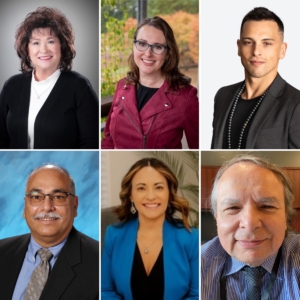
Six new members join Heritage University’s board of directors

New HU Board Members Collage

New HU Board Members (clockwise from top left) Connie Fallon, Allison Parker, Derek Red Arrow, Elmer Ward, Maria Verduzco and Raul Sital.

FOR IMMEDIATE RELEASE

Heritage University adds six new members to its board of directors

Toppenish, Wash. – Heritage University has announced the addition of six new members to its board of directors. The six are leaders in their respective fields and join 24 other directors who generously volunteer their time and resources to ensure the University’s success.

Connie Falon, CEO of Compass Financial Network LLC, has been involved with Heritage University for the past 20 years in volunteering for different projects and is proud to join the board of directors.  Connie’s expertise in the world of investing and finance will be an added value to the University.

Allison Parker joined the board of directors in January 2024. Allison Parker is a seasoned social impact strategist with nearly 25 years of experience, focusing on channeling flexible, long-term capital to under-resourced communities. As the principal of Peake Impact, she advises individuals and foundations in strategy, impact investing, and complex asset gifts. Prior to founding Peake Impact, she spent over 16 years at Seattle Foundation, where she most recently served as Managing Director of Philanthropy Strategies, leading a team responsible for creating new funds and launching a donor-advised impact investing program. Her career began as a staffer to U.S. Senator Patty Murray, specializing in federal funding, where she first encountered Heritage University.

Derek Red Arrow is an enrolled member of the Nez Perce Tribe and serves as Litigation of Counsel for the law firm Kilpatrick Townsend & Stockton and its Native American affairs unit. Red Arrow advises tribal governments, enterprises, nonprofits and businesses on matters involving treaty rights, land-back projects, inter-tribal trade, taxation, and other aspects of Federal Indian Law. Prior to joining his current firm, he co-founded the American Indian Law practice group at a Yakima-based firm, served as a staff attorney for the Yakama Nation, and clerked for Chief Judge Brian M. Morris of the U.S. District Court for Montana. He has been recognized as one of “America’s Best Lawyers: Ones to Watch” in Native American Law, he has received the NCAIED National 40 Under 40 award for his leadership and contributions to Indian Country and named a “Successful Indigenous Role Model” for Nez Perce Tribe’s Lapwai School District.

Raul Sital is the Assistant Superintendent of Operations and Supports for the Pasco School District, a role he has held for three impactful years. His leadership in this capacity has contributed to the effective functioning of the district’s operations and support systems. While at Pasco School District, Sital has also served as a teacher at McLoughlin Middle School, a program teacher and manager at Discovery Middle School, and as Principal of New Horizons High School and Pasco High School. He earned his teaching credential at Central Washington University, and holds a Master’s in Teaching and Learning degree from Heritage University. He is passionate about education because he believes in providing the opportunity for every child to reach their dreams and goals.

Dr. Maria Verduzco is the Clinical Medical Director for the Yakima Valley Farm Workers clinic in Yakima, Wash. Dr. Verduzco was born and raised in Yakima. She earned a BA in Biology with a minor in Chemistry from Central Washington University in Ellensburg and went on to obtain her Doctor of Medicine degree from the University of Washington School of Medicine. Dr. Verduzco completed her residency at the Central Washington Family Medicine Residency program in Yakima. She is bilingual in Spanish and English and has dedicated her career to enhancing patient health, especially within underserved communities.

Elmer Ward is an Associate Judge of the Yakama Nation Court. Ward has worked in Native law for his entire legal career in a variety of roles for several tribes. Ward received a Bachelor of Arts degree from Harvard University, and a Juris Doctorate from the UCLA School of Law. He has served as a board member for People for People, the Yakima Valley College Board of Trustees and the Providence Foundation Board.

Heritage University President Andrew Sund, Ph.D. is grateful for the valuable perspectives and skills these individuals will bring to guide and strengthen our organization. “In our efforts to recruit board members for Heritage University, we prioritize representation from diverse sectors of the economy and education. This approach ensures a well-rounded and effective governance structure that supports our mission and strengthens our operations,” said Dr. Sund. “By engaging leaders from various fields, we are better equipped to address the needs of our community and drive forward our vision for educational excellence.”

For more information, please contact Davidson Mance at (509) 969-6084 or at Mance_D@heritage.edu.

# # #

Heritage University Land Acknowledgement


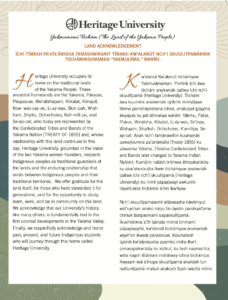
Heritage University formally signed a Land Acknowledgement Statement on November 10, 2021, recognizing the Indigenous peoples as the traditional stewards of the land in central Washington on which Heritage is located, and the Yakama Nation’s enduring relationship with their territory. The statement, signed by tribal elder Kip Ramsey and Heritage University president Andrew Sund, marks the university’s first official acknowledgement of this connection. Maxine Janis, Ed.D., President’s Liaison for Native American Affairs, emphasized that the Land Acknowledgement Statement provides a consistent and official message of respect for the land. Sol Neely, Ph.D., associate professor of English at Heritage and a citizen of the Cherokee Nation who helped write the statement, highlighted its role in strengthening ties with the Yakama Nation and promoting long-term actions to support Indigenous students.

Heritage University Land Acknowledgement Statement:


Heritage University Land Acknowledgement

Heritage University Land Acknowledgement

Heritage University Welcomes Largest Group of New Students Since 2017

FOR IMMEDIATE RELEASE

Heritage University Welcomes Largest Group of New Students Since 2017

Toppenish, WA – Heritage University has welcomed its largest group of new students since 2017. A total of 347 students have started their educational journey at Heritage this fall, marking a significant milestone for the university and the community it serves.

This remarkable achievement comes despite the challenges faced by students and families this year, particularly with the delayed release of funding through the Free Application for Federal Student Aid (FAFSA). The university’s Financial Aid Department played a crucial role in overcoming these hurdles, working tirelessly to help students secure the necessary funding to pursue their education. In addition, the university’s generous donors stepped in to fill any financial gaps, ensuring that no student was left behind due to financial constraints.

Heritage University President Andrew Sund, Ph.D. expressed deep gratitude for the collective efforts that contributed to this success. “The dedication of our staff and the generosity of our donors have been nothing short of extraordinary,” said Dr. Sund. “Despite the obstacles, we have been able to provide the necessary resources to our students, ensuring that they have the support they need to succeed. This milestone is a testament to the unwavering commitment of our Heritage community to make education accessible to all.”

As the university continues to grow and expand its programs, this incoming class of 347 students foreshadows a bright future for Heritage University and the surrounding community. With an emphasis  on culturally responsive education and serving students that are the first in their families to attend college  Heritage remains committed to its mission of serving diverse communities and providing educational opportunities for all.

For more information, please contact Davidson Mance, Media Relations Coordinator at (509) 969-6084 or Mance_D@Heritage.edu.

# # #

Seattle University School of Law expands access to legal education at Heritage University

Heritage University and Seattle University School of Law logos


FOR IMMEDIATE RELEASE

Seattle University School of Law to expand access to legal education in central Washington with  ‘Hybrid Hub’ at Heritage University

Toppenish, Wash. – Aspiring lawyers in central Washington will have a new way to earn a law degree while remaining in their communities thanks to a partnership between Seattle University School of Law and Heritage University to establish a “Hybrid Hub.” The hybrid hub addresses the critical need for legal professionals in underserved regions known as ‘legal deserts’ where there are not enough lawyers to meet community demand. This partnership will allow local students with aspirations to pursue legal careers, especially those with work and family commitments, to complete law school without leaving the Yakima Valley.

The Hybrid Hubs initiative builds on the success of Seattle U Law’s Flex JD program, which offers an innovative, part-time, hybrid-online legal education. By opening a hybrid hub at Heritage, central Washington students will have a pathway to study law, pass the bar exam, and practice law locally. The hub at Heritage allows students to study in an academic setting by utilizing study spaces and other campus resources, such as internet and library access. Students will also enjoy intellectual life and in-person networking events to build community among fellow Flex JD students, Seattle U Law alumni, the local legal community, and other aspiring law students.

The establishment of the hybrid hub at Heritage capitalizes on the achievements of the Law School Admission Counsel (LSAC) Prelaw Undergraduate Scholars (PLUS) Program, an innovative partnership between the law schools at Seattle University, the University of Washington and Gonzaga University and Heritage with the goal of boosting the numbers of people of color serving as lawyers in central Washington.

Under the leadership of Heritage University President Dr. Andrew Sund, HU has expanded its academic programs to include the LSAC PLUS, which puts legal education within reach of students in the Yakima Valley while also increasing student enrollment and strengthening community partnerships. “I am honored to have helped central Washington students envision themselves serving communities as lawyers,” said Sund. “We welcome the hybrid hub as a catalyst for cultivating homegrown legal talent and expertise.”

“The opening of this new Hybrid Hub at Heritage University marks a significant milestone in Seattle University School of Law’s ongoing efforts to make legal education more accessible and to cultivate a new generation of diverse legal professionals in underserved areas. This need is urgent in Central Washington, and we are excited to work with Heritage University because of its ongoing commitment to educating people in this region,” said Seattle U Law Dean Anthony E. Varona.

Seattle U Law and Heritage University will sign a memorandum of understanding to establish the hybrid hub during a ceremony on Saturday, Sept. 14, 2024, at 5 p.m. in the Barnhill Fireside Room, located in the Gaye and Jim Pigott Commons at Heritage University. For more information and for help coordinating interviews, contact David Sandler at (206) 291-6271 or sandlerdavid@seattleu.edu or Davidson Mance at (509) 969-6084 or Mance_D@Heritage.edu.

About Seattle University School of Law
Seattle University School of Law is a mission-driven, diverse, and civically engaged law school based in the heart of Seattle, offering a comprehensive legal education that goes beyond the classroom. Our students become lawyers and leaders with the practical skills, the knowledge, and the drive to make a real difference for their clients and their communities. Our practice-based curriculum features a renowned Legal Writing Program, a highly ranked clinical program, the Pacific Northwest’s only hybrid-online part-time program, and hundreds of learning opportunities around the globe. Seattle University’s Jesuit tradition infuses our students’ legal education with a sense of purpose and a drive to action to cultivate leaders in law who serve justice.

About Heritage University
Heritage University is an accredited, private institution offering a wide variety of academic programs and degrees. At Heritage, we believe that a college education should be accessible to anyone with the talent and drive to pursue a degree — regardless of economics, culture or geographic locations.

# # #


Heritage University to Host El Grito de Independencia Celebration in Commemoration of Mexican Independence Day


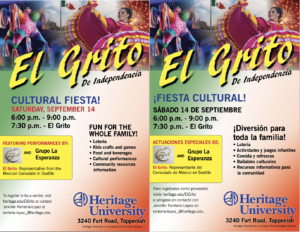
El Grito 2024 Flyers

El Grito 2024 Flyers English and Spanish


FOR IMMEDIATE RELEASE

Heritage University to Host El Grito de Independencia Celebration in Commemoration of Mexican Independence Day

Toppenish, Wash. – Heritage University is delighted to announce its upcoming El Grito de Independencia celebration, scheduled for Saturday, September 14, 2024, from 6:00 p.m. to 9:00 p.m. This lively event will be held at the picturesque Toppenish campus, commemorating Mexican Independence Day.

El Grito de Independencia pays homage to the historical “Cry of Dolores,” a pivotal moment in Mexican history that ignited the Mexican War of Independence against Spanish rule. The re-enactment of this event will take place at 7:30 p.m. A distinguished representative from the Mexican Consulate in Seattle will lead the El Grito ceremony.

Promising an array of vibrant Mexican-style activities and games, El Grito will be an engaging affair for all attendees. The event will be animated by the dynamic and lively performances of Los De La Z and folklore dance group Grupo La Esperanza and the participation of Yakima Aztec Dancers. Families can look forward to many attractions, including traditional Loteria games, engaging kid crafts, food and beverages, captivating traditional dance performances, live music, and an informative resource fair.

The celebration will be open to the public, and admission is entirely free, reflecting Heritage University’s commitment to community engagement and cultural festival.

For individuals and businesses interested in becoming vendors at El Grito de Independencia, there are still limited vendor opportunities available. To register as a vendor, contact Jennifer Renteria-Lopez via email at renteria-lopez_j@heritage.edu or phone at (509) 517-2040.

For media inquiries contact: Davidson Mance at (509) 969-6084 or mance_d@heritage.edu.

# # #