Hopping into Med School

Hopping into Med School

Biology major gains valuable experience with a summer spent researching one of the Yakima Valley’s signature crops.

OF PLANTS AND PESTS

Last spring, Karolynn Tom, program coordinator of Heritage’s Center for Indigenous Health, Culture & the Environment, told Serrano about a summer research opportunity at Yakima Golding, a hops farm in Toppenish, Washington. While studying hops seems worlds away from medical sciences, the intensive lab work involved with the project would be great experience, the kind that would give her a leg up on her competition for med school. Additionally, the opportunity came with a stipend from the Ronald E. McNair Post-Baccalaureate Achievement Program. Additionally, it was the kind of project that she could present at the Murdock College Science Research Conference (MCSRC) in October. Serrano was quick to take advantage of the opportunity.

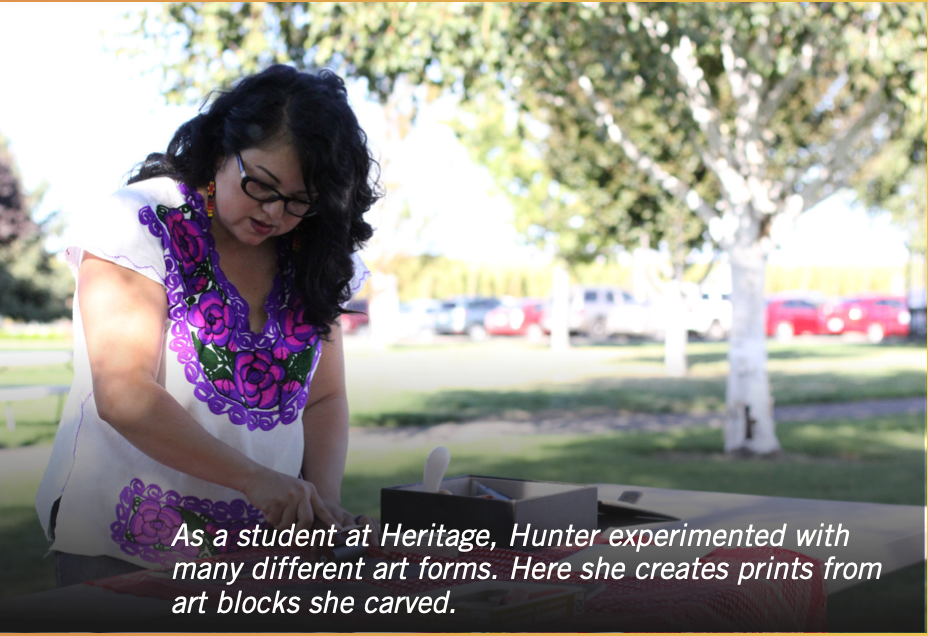
Karly Beth Serrano

The summer was busy. In addition to her part- time job as a phlebotomist, she spent three days a week at Yakima Golding to observe hop plants and collect data. She spent the other two days at home studying hops production.

Serrano was supervised remotely by Heritage Associate Professor of Environmental Science Jessica Black. She was mentored by Marissa Porter, research agronomist for John I Haas, Inc., who conducts some of her company’s research at Yakima Golding.

In her research, varying levels of nitrogen were applied to different hops plants, and she observed their growth. Were they taller? Were they shorter? Were there more leaves?

Serrano observed the insects. Were there more? Were there fewer? Were the insects predators or pests?

She learned to interpret data, to understand what’s significant and what’s not, and how to draw conclusions. While she gained understanding, she also learned the importance of coming to understand the research process, even when the subject matter is “not exactly your field.”

POWERPOINT LEADS TO PRIZE

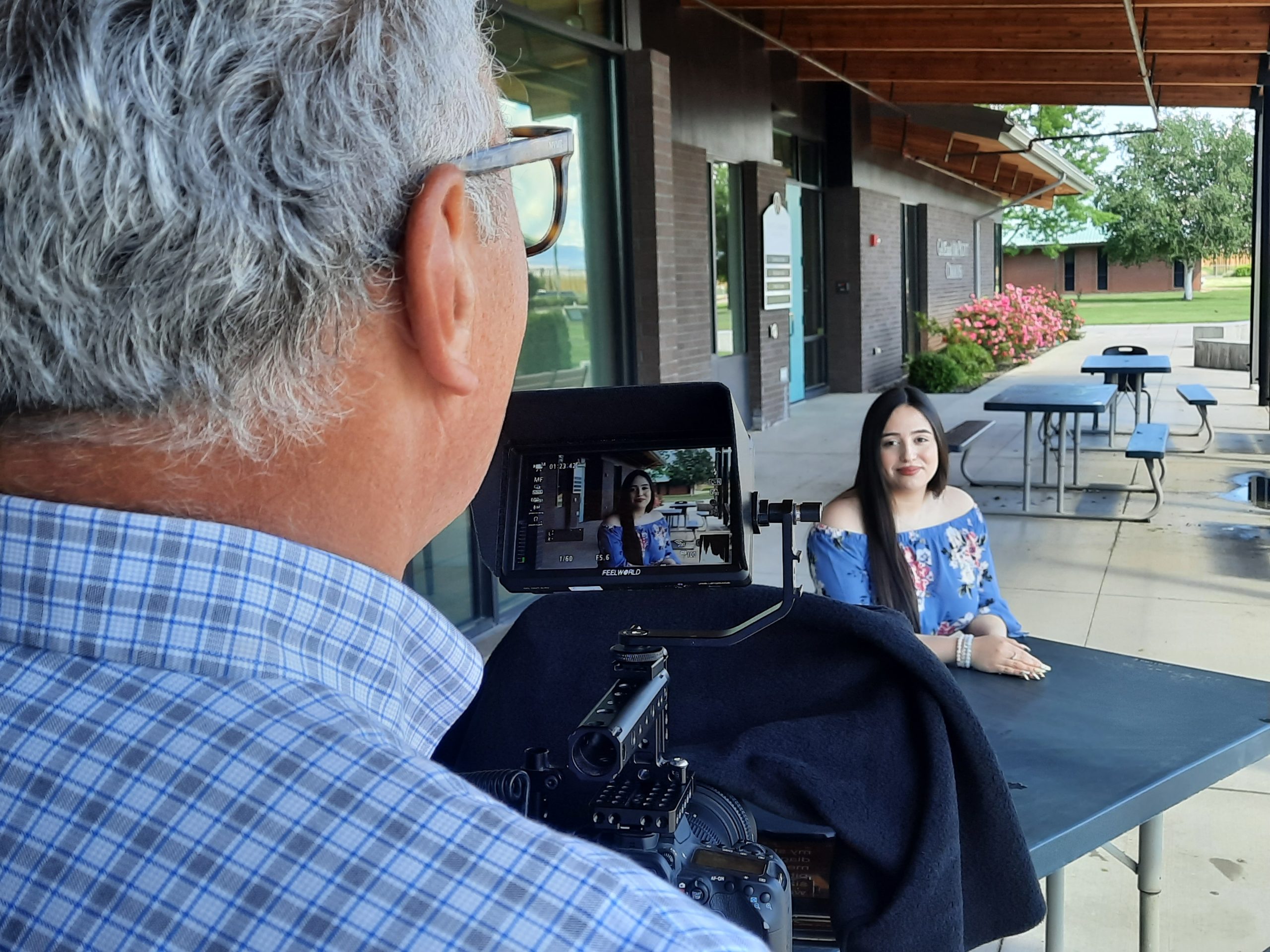
In September, after the lab work was completed, Serrano began putting her presentation together for the Murdock conference. She would need to create a succinct statement of her major conclusions at the beginning, follow it up with supporting text and a brief concluding summary, presenting only enough data to support her conclusions and show the originality of her work.

A socially distant pandemic year meant a big change in conference presentations. Serrano shared her poster and work digitally as a PowerPoint with a video link.

She built a strategy on how to present to any judges that would “happen by” virtually. Each time, she’d speak for five to ten minutes, then take questions.

“It was both nerve-wracking and exciting, but I was happy I was expanding my horizons.”

She smiled when she recalled one judge’s question, “Are hops microhezia obligates?”

“I acknowledged I did not know the answer to that but that I could definitely incorporate something about that next time. I texted Marissa, ‘Do you know this worm?’” she said.

Porter texted her back that it wasn’t a worm but a fungus that grows in the soil in the plants’ roots and helps them take up phosphorus.

Serrano said she learned to “think ahead to what you might be asked” – even when some questions might be more easily anticipated than others.

Weeks after the conference was all a memory, Serrano learned she was awarded the MCSRC’s Environmental Science Poster Competition award, which included a modest cash prize.

The most significant recompense?

“The work, the presentation, and being able to say I won the environmental competition on my resume,” said Serrano. “That’s really important for a future medical student.”

Karly Beth Serrano in the field

INSPIRED BY HEALTHCARE HELPING

Either this fall or next, following graduation, Serrano will apply to several medical schools, among them Pacific Northwest University of Health Sciences, University of Washington Medical School and Washington State University.

Her goal ultimately is to help her community. She notes her local Union Gospel Mission and her nine- year-old sister as two of her continuing inspirations.

She started volunteering at Yakima’s Union Gospel about a year and a half ago, doing patient intake and interpreting.

“Seeing how the Mission works with people who don’t have insurance or traditional healthcare or are homeless has really impressed me. I want to be that kind of physician.

“And my sister Aaleyah – I want to inspire her. I want her to think college automatically – like me.”

Serrano has applied for summer work to the Leadership Alliance summer research program and to the Vanderbilt School of Medicine’s undergraduate clinical research internship program in Nashville, among others.

“I would be excited and nervous to be so far from my family,” she said. “But I’m far more excited than I am nervous.”page16image3597248

Conquering COVID

CONQUERING COVID

Heritage nursing students get hands-on doing their part to stop the COVID-19 pandemic.


Heritage nursing student Viviana Rico remembers the January 2021 day she opened the email from Linda Rossow. “Are you interested in helping at the Toppenish vaccine clinics over the next several months?” it read.

Rossow, an assistant nursing professor at Heritage, was asking her students – the 2022 nursing cohort – to help vaccinate the people of the Yakima Valley against COVID-19.

Rico emailed back immediately: “Count me in.”

What Rico was saying “yes” to would involve traveling to several hospitals over several months, handling hundreds of vials of invaluable vaccine, and injecting it into the arms of hundreds of front-line healthcare workers, the elderly, and first responders.

Each person would walk away a little more immune from the deadly virus than when they had arrived. The people of the Yakima Valley would be a little safer.

Rico’s biggest personal takeaway would be immense satisfaction and positive feelings about her contribution – and an enhanced clarity regarding her place in nursing.

For this Pasco native, knowing immediately that she wanted to help fight COVID was as easy as deciding to follow a half dozen of her family members into nursing.

“I always loved hearing the ways they help people,” said Rico. “In nursing, you meet people, you help them, you put in your little grain of salt to help them get well.

“I just thought, ‘What a unique opportunity!’ I remember thinking it was super cool that I was going to be part of the change back to ‘normal’. That this would be something I would tell my grandchildren.”

Before her work as part of that change could take place, Rico needed to re-focus on something she and her classmates had learned more than a year earlier.

“Review giving shots,” Rossow had told her students.

Because of the pandemic, Rico and her fellow students had been out of direct contact with any patients for almost a year.

READYING STUDENTS

Rossow’s students had learned to give intramuscular injections – what the COVID shot is – beginning their sophomore year. With six semesters, including the summer between junior and senior year, clinical experiences occur beginning with the second semester for sophomores and extend through to their final semester as seniors.

In the clinical experiences Heritage nursing students undertake, each student has a clinical supervisor or a “preceptor” – an individual nurse who oversees the activities of that student, working with them to become proficient in the skills they’ve learned in class and in lab. That work includes accessing meds, ensuring they’re the right ones, given the right way, at the right time, whether it’s a flu vaccination – or, now, a COVID vaccination.

“Everything that student does until senior year is always with a clinical supervisor or a preceptor,” said Rossow. “That training, testing and supervision ensure that once they’re out in the ‘real world,’ they’re adhering to good practices.”

Once Rico reviewed her old notes and watched a video or two, she felt ready to give the vaccine. But the magnitude of the situation was not lost on her.

“Being part of this whole thing as a nursing student – that’s a big deal. I almost couldn’t believe I was doing it. It’s such a big responsibility.

“I remember thinking to myself, ‘You’re helping make a real change.’”

NURSING FAMILY

Like Rico, Camryn Newell counts her role in the COVID vaccination effort as perhaps her most significant clinical experience to date.

It’s reaffirmed her knowledge that she wants to be part of the solution to big challenges.

Newell’s focus on nursing originated with family, just like Rico’s. Her grandmother was a nurse and, as a child, Newell was fascinated with the medical world. By age 15, she knew she wanted to be a nurse.

Once she entered the Heritage nursing program, her coursework set the stage for the real work that takes place in clinicals.

“Sub-Q injections, giving oral meds, assessments – they’re all part of what we do in clinicals,” said Newell. “In every one, you get more experience.”

As they gain experience, students learn more about what settings and situations really appeal to them.


Nurse holding a needle

HANDLING LIQUID GOLD

In the early morning hours a couple of weeks after Rossow’s email, Rico, Newell, and another Heritage nursing student, Payton Moore, climbed into a car and headed toward Astria Toppenish Hospital, a few minutes from the Heritage campus.

Walking into a conference-room-turned- vaccination center, the women were greeted by three of the hospital’s nurses leading that day’s effort. The first vaccine recipients – mostly hospital staff – began arriving at 7:30 am.

Newell says she and her fellow students all felt some trepidation when it came to handling the vaccine, in this case, the Pfizer version: “You feel like you’re handling liquid gold.”

Years more familiar with such processes was their supervisor that day, Yvonne Ebbelaar, RN, BSN, director of critical care at the hospital, and adjunct nursing professor at Heritage. She said having the Heritage students there is good for everyone.

“We love having the students,” she said. “It takes a team to keep the whole process going. The students are instrumental in helping us keep the flow moving. Their presence means our staff can stay on their units and do their work caring for their patients.”

As an instructor herself, Ebbelaar says any opportunity a student has to practice over and over helps them gain that “muscle memory” that’s important for a soon-to-be RN.

Altogether, the three students administered a total of about 100 injections that morning.

Five days later, Rico and Newell repeated their work at Prosser Memorial Hospital. Both students had done two clinical rotations there and were specifically requested by a charge nurse they’d worked with.

“As nursing students, that’s a really big deal,” said Rico. “That made us feel really good.”

There, they worked as part of a bigger team, this time giving the Moderna vaccine, with about 300 recipients, in a seven-hour shift.

By the time this story publishes, Rico, Newell and many other HU nursing students are expected to have been part of providing hundreds more vaccines to Yakima Valley residents.

NEW APPRECIATION

Newell said she feels a new appreciation for nurses and other healthcare professionals on the pandemic front lines.

“Thinking what they’ve all have had to go through – they’re putting themselves and their families at risk so that they can help other individuals in their time of need. That altruism is amazing.”

Altruism, supporting their community, gaining needed expertise – all are part of the experience the university’s nursing program works to provide its students.

Rossow names catastrophic events like the 2010 Haiti earthquake, Hurricane Katrina, and the 9/11 attacks as examples of the need for the emergency effort preparedness and activation that’s required as communities come together to treat victims and save lives.

“All their lives, our students will be asked to contribute to emergency efforts in their communities and beyond,” said Rossow.

“The COVID vaccination effort is far bigger than any single event we’ve had. It’s also bigger than any one entity can handle – because it’s affected everyone everywhere.

“The more students who can be involved in this experience, the more valuable they’ll be to their communities.”

Nurses tend to be people with compassion, Rossow said, with a strong desire to help, whether that’s in volunteering with a massive event like a pandemic or doing first aid for their child’s soccer team.

“Heritage students’ community-focused altruism – a deep desire to give back to their communities – is extremely strong.

“Heritage nurses are different. They’re bringing something to their work that’s kind of indefinable.

It’s a presence, a compassion that focuses on patient-centered, family-centered care.

“A big part of who we are is that being on tribal land, we reflect those values of taking care of our community.”

FINDING THEIR PLACE

When she graduates, Rico wants to stay in the Yakima Valley. She’s learned from her clinical experiences that she loves the intensity of the emergency department.

“All of a sudden, a crisis comes, and you have to move. I was part of a ‘code’ one day and, when I did that, I felt, ‘This is me.’ I knew it.”

Newell is still deciding. She’d like to stay in the area in “any opportunity that would be a growth experience.”

Both students feel they got more from their COVID vaccination experience than they gave.

“People are so grateful,” Newell said. “They said things like, ‘You guys are like superheroes!’ It was a great experience to feel so needed and so appreciated.”

“Whenever someone sat down, just as they thanked me for giving it to them, I made sure to tell them, ‘Thank you for doing this’,” Rico said.

“I felt really kind of proud of the people willing to get the vaccine. We all have to do our part,” she said. “We’re (nursing students) just doing our part too.”page13image3280544

Heritage University announces return to full in-person instruction for fall 2021 semester

FOR IMMEDIATE RELEASE

Heritage University announces return to full in-person instruction for fall 2021 semester

Toppenish, Wash. – Heritage University has announced plans to return to full in-person instruction for the upcoming fall 2021 semester. The plan takes into account the progress Yakima County has made towards preventing the spread of Covid-19 and the increasing number of vaccinated residents in the county. “These trends have boosted our confidence that we can fully reopen campus in time for fall,” said Heritage University President Andrew Sund, Ph.D. “We will continue to rely on the Yakima County Health District, as well as State and Federal authorities, to ensure our plans are consistent with their guidance regarding current Covid-19 protocols.”

Sund applauded the efforts by Heritage University’s employees to support student learning in the face of the challenges created by the pandemic. “I am proud of how our faculty and staff rallied to provide a safe and quality educational experience for the students who chose to learn on campus, while also delivering the tools necessary to students who chose to attend classes remotely,” said Sund.

The Heritage University campus has been partially open since the fall 2020 semester to accommodate students who do not have the conditions in their homes to conduct significant academic work. In being present on campus, students have access to reliable high-speed Internet and plenty of space for studying. A full reopening will allow students to develop camaraderie with other students and interact with faculty and staff. “We are anxious to re-establish our sense of community at Heritage,” said Sund. “The majority of students that choose Heritage University to fulfill their higher education do so because they believe in the value that participating in a campus environment brings.”

For the fall 2021 semester at Heritage University, graduate classes will begin August 2, 2021, and undergraduate classes will begin August 23, 2021. For more information, contact Davidson Mance, media relations coordinator at (509) 969-6084 or Mance_D@heritage.edu.

# # #
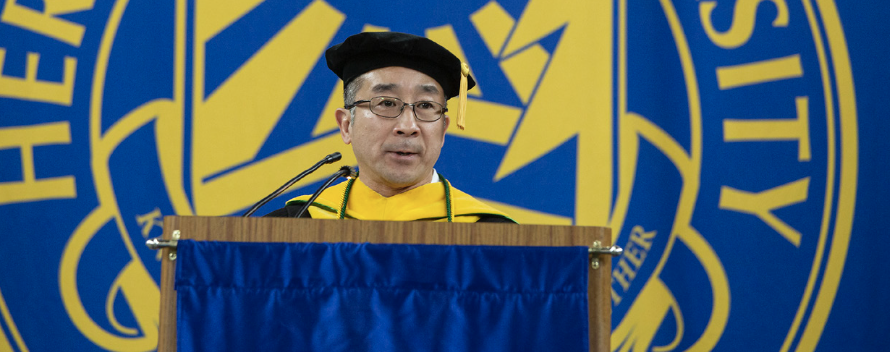
Heritage University and Yakima Chief Hops celebrate completion of CHIEF ACADEMY management training program by front-line employees

Chief Academy organizers from left to right:Monica Sanchez, John Reeves, Steve Carpenter, Salvador Benitez, Charles Wheaton Ph.D, Erica Tait, Howard Allred, Cesar Silva, Ryan Hopkins

FOR IMMEDIATE RELEASE

Heritage University and Yakima Chief Hops celebrate completion of CHIEF ACADEMY management training program by front-line employees

Yakima, Wash. – Heritage University and Yakima Chief Hops (YCH) are celebrating the completion of the first-ever CHIEF ACADEMY management training program by YCH employees. YCH partnered with Heritage@Work, the university’s workforce training and development division to deliver the program that, when completed, earned 16 full time employees a Management Training certification.

CHIEF ACADEMY at YCH consisted of workshops that covered five essential topics determined to be of high importance to the company. They included:

  1. The Art of Communication – a business writing and communication workshop which offered tips on improving existing skills as well as preparing participants for public speaking.
  2. Putting Humanity into Human Resources – a highly-interactive workshop covering the important basics of human resources with role-playing activities.
  3. Data Science – a workshop that helps those in company leadership roles understand the importance of data analytics by identifying, interpreting and summarizing data.
  4. Business Finance – a workshop to help employees understand financial drivers and strategic objectives and realize the connection between strategy and financial success.
  5. The Book of Leadership – a workshop where employees learn the attributes of a leader, the difference between management skills and leadership skills, and what it means to be a leader at YCH.

Experts from each field taught the workshops at the company’s Headquarters in Yakima, Wash. from October through December 2020.  Ryan Hopkins, chief executive officer at YCH, said the curriculum developed by himself, Chief Human Resources Officer Lisa Garcia, and Heritage University will equip participants with the training, skills, knowledge, and tools to enhance some already skilled managers and leaders within the company. “As a company that is 100% grower owned, YCH is built on the philosophies of continuous improvement and empowering employees.  The CHIEF ACADEMY is a proud example of hop growers working with a great local university to empower our employees and in turn empower great leaders within our community.”

John Reeves, director of Heritage@Work, said the curriculum developed for CHIEF ACADEMY is the result of a deep and thorough understanding of the company’s needs. “Our team worked with YCH leaders to learn where they wanted to see their employees grow, and tailored specific curriculum designed to teach those skills,” said Reeves. He went on to explain that companies who “grow their own” as Ryan Hopkins referred to the training, have one of the best ways to hold onto great employees. “It is an investment, but businesses who empower their employees to grow their careers, get to hold onto good people.”

For more information, please contact Heritage University Media Relations Coordinator Davidson Mance at (509) 969-6084 or mance_d@heritage.edu or Yakima Chief Hops Global Communications Manager Cait Schut at (916) 690-4379 or cait.schut@yakimachief.com.

# # #

Heritage University names new director of Student Life and Engagement

FOR IMMEDIATE RELEASE

Heritage University names a new director of Student Life and Engagement

Toppenish, Wash. – Heritage University is proud to announce the selection of Isaias Guerrero as the university’s new director of Student Life and Engagement. Guerrero, who was already a staff member at Heritage, and who is a graduate of Heritage, moves to Student Life from the TRIO/Student Support Services department following an exhaustive search which determined the best candidate for the role was already close to home.

Isaias Guerrero, director of Student Life and Engagement at Heritage University

As director of Student Life and Engagement, Guerrero will be responsible for providing support services for the campus student community through events and group activities designed to engage students by promoting participation, service and leadership.

Dr. Melissa Hill, vice president for Student Affairs at Heritage, is thrilled with the committee’s selection of Guerrero. “Isaias brings a wealth of knowledge to the Student Life department, not only with his work through TRIO but his firsthand experience as an alumnus,” said Hill. “He’s been there as a student and knows what it takes to engage students and create positive experiences for students during their time at Heritage.”

Guerrero said the mentorship and guidance he received at Heritage University helped him succeed as a first-generation college student. “The guidance I received in navigating college was so important to my success because I had no one to relate to at home,” he said. “Heritage became a sanctuary of learning for me. Every day I stepped onto campus was a new adventure. I was excited to see my friends and challenge myself in the classroom. This was possible through my involvement with various campus activities. I want to provide these same opportunities to other students.”

As a student, Guerrero was selected to participate in the Act Six scholarship and leadership program which prepares students to become community leaders. He earned a bachelor’s degree in social work from the university in 2019 and began working for TRIO at Heritage as a retention specialist that same year. Guerrero started his new role as director of Student Life and Engagement on January 21, 2021. Guerrero is studying for his M.Ed. in Educational Leadership with a focus in Student Affairs.

For more information, contact Davidson Mance, media relations coordinator, at (509) 969-6084 or Mance_D@Heritage.edu.

# # #


Yakima Valley Partners for Education receive grants to help families impacted by food insecurity

FOR IMMEDIATE RELEASE

Yakima Valley Partners for Education receives grants to help Lower Valley families struggling with food insecurity

Toppenish, Wash. – Heritage University’s collective impact initiative known as Yakima Valley Partners for Education (YVPE) has received $34,000 in grants to help Lower Yakima Valley families struggling with food insecurity due to the ongoing pandemic.

Eva Lujan of Latino Community Fund, Forbes Mercy of Washington Broadband and Micaela Razo, also of Latino Community Fund, hold check donations.

YVPE received a $15,000 grant from Save the Children to purchase grocery gift cards for families struggling with food insecurity, and this grant was matched by Latino Community Fund at $15,000. YVPE also partnered with Fiesta Foods which provided $3,000 and grocery cards, with Washington Broadband’s Forbes Mercy also contributing $1,000. These grants allowed YVPE to provide more than 600 grocery gift cards for families in need.

Bryan Ketcham, director of Catholic Charities Housing Services in Yakima, says nearly 90 families living in their housing sites in Wapato and Sunnyside are able to feed their loved ones because of YVPE’s efforts. “During this time of the year and with the current pandemic we have seen a significant increase in the level of need amongst our residents,” said Ketcham. “Paying for their rent, utilities and access to food and other emergency services have been among the highest of priorities and needs that our staff has been helping our residents to access. We are grateful for YVPE’s generosity.”

Luis Alberto Moreno, of Fiesta Foods, Eva Lujan and Micaela Razo of Latino Community Fund, and Alexis Magallon, also of Fiesta Foods, hold grocery gift cards.

Micaela Razo, program director at Latino Community Fund says she is humbled to work within the community to be a voice and resource to the most in need during the pandemic. “We continue to hear the need and work effectively to network with multiple organizations, school districts and businesses to bring relief to the families in need,” said Razo, “Our goal is to make sure we can be a beacon of light in time of darkness to our community. Together we can do more for each other.”

Distribution of the grocery gift cards made possible through these grants began last month in time to help families during the holidays, and will wrap up later this month. For more information, contact Suzy Diaz, Heritage University Collective Impact director at diaz_s@heritage.edu or (509) 480-9354.


Class Notes

2007

Francisco Guerrero (B.A., Business Administration) received the Outstanding Leadership Award from HAPO Community Credit Union. He is the Finance Center Manager at the Sunnyside branch, a position he has held since 2007. Additionally, he was elected mayor of the City of Sunnyside in 2019 and assumed the role in January 2020.


2017

Norma Ortiz (B.A., Business Administration) joined Catholic Family Charities as a Human Resources Recruitment Assistant.

2020

Alyson Mehrer (B.A., Criminal Justice) enrolled in the University of Idaho College of Law and began her studies there in September.

Anitramarina Reyna (B.S.N., Nursing) joined the Cle Elem- Roslyn School District in September and serves as the district’s nurse.

Noemi Sanchez (B.A., History) joined the Washington Immigrate Solidarity Network in Seattle, where she is a fellow working with community members to build a plan to implement the 2019 Keep Washington Working Act enacted by the State Legislature. The act addresses Washington’s economy and immigrants’ role in the workplace.


Submit Your Class Notes

Did you get married? Have a baby? Get your dream job, an award or even a promotion? If you have good news to share with your fellow alums, let us help.

Send us your submission for Class Notes. It’s easy. Just visit heritage.edu/alumni, complete the submission form and upload your picture. Be sure to include a valid email address so we can contact you if we have any questions.

Leaders for the Good of the Nation

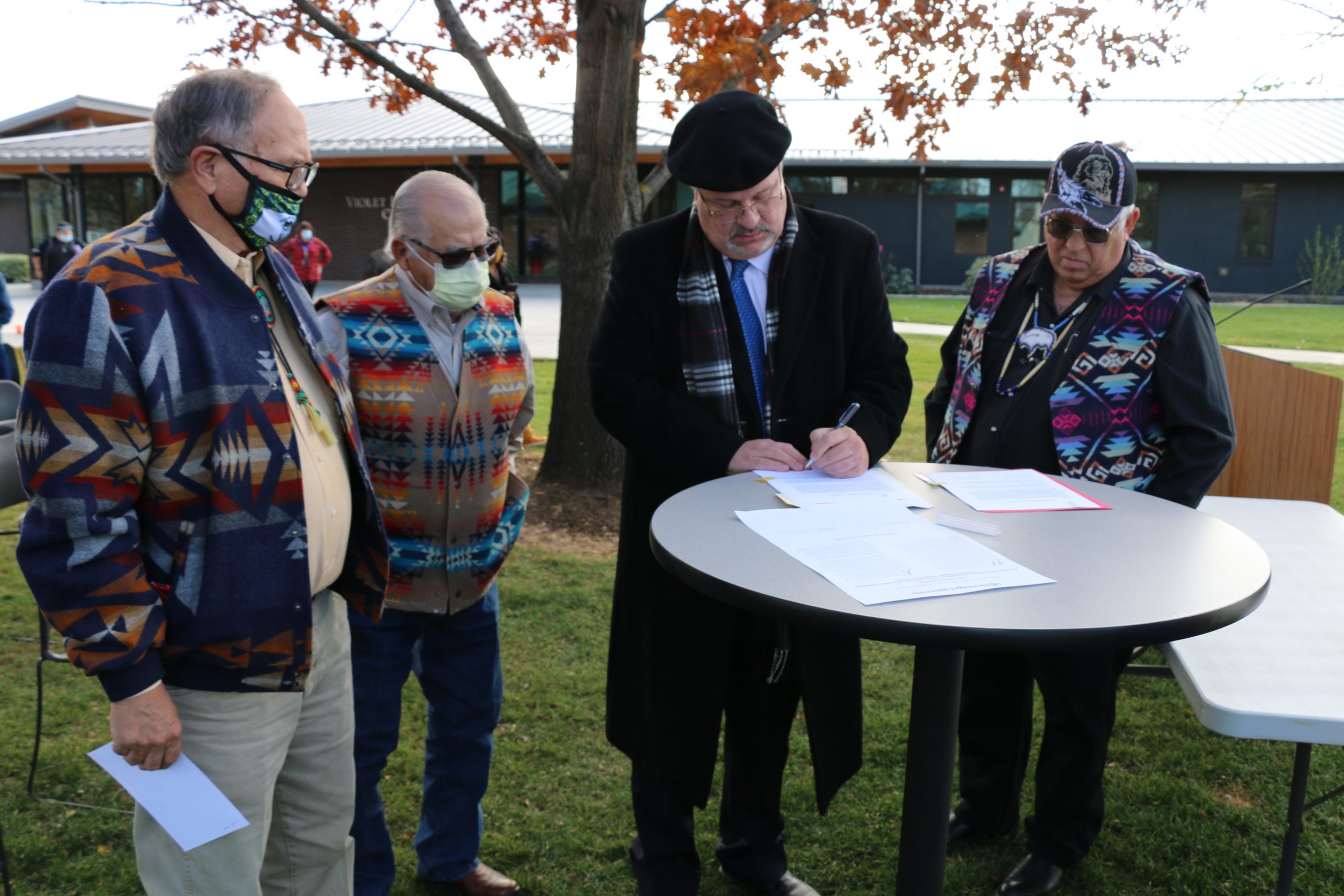
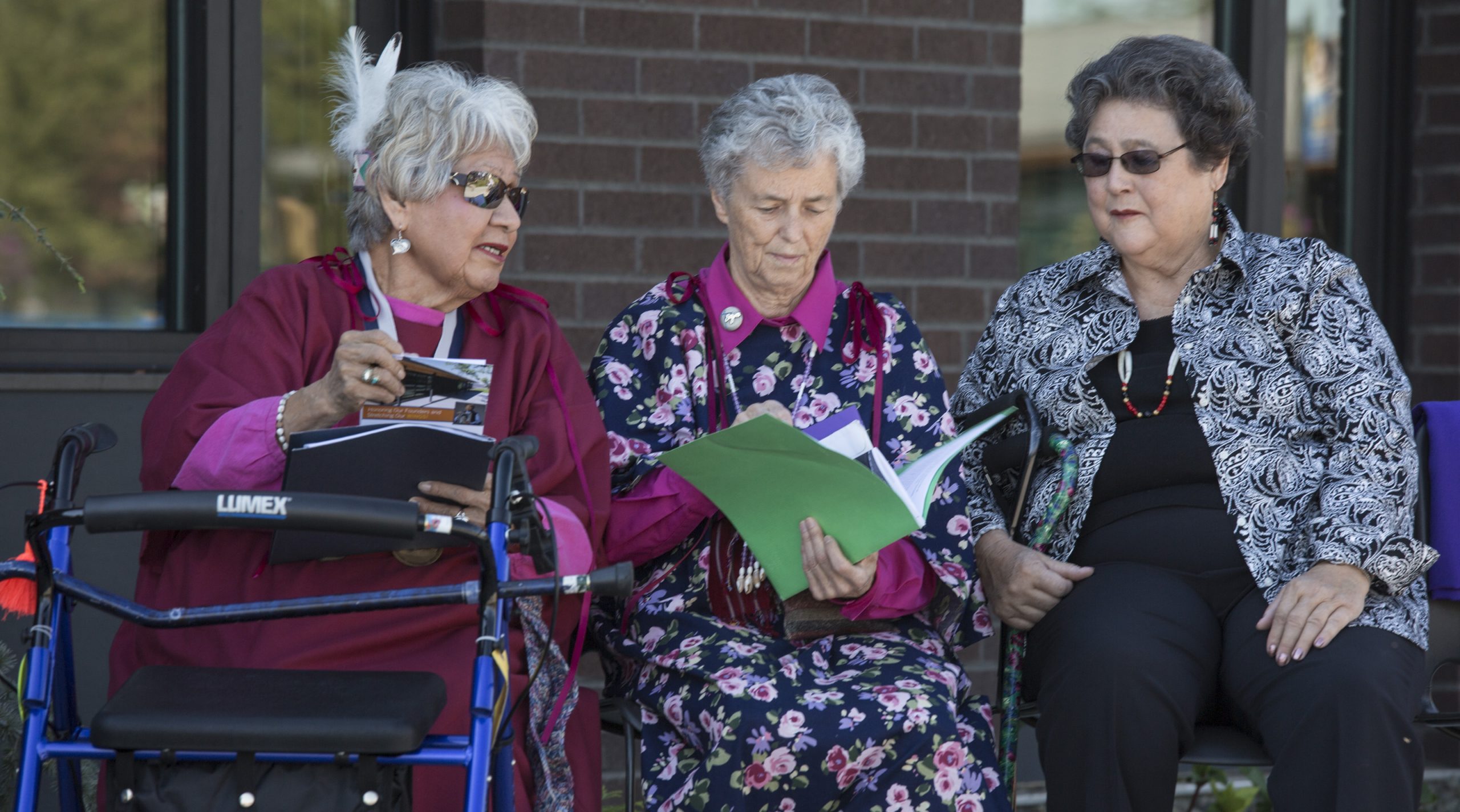
Every year, Heritage University kicks off its celebration of Native American Heritage Month with a flag-raising and honoring ceremony recognizing four Native American elders.  This year global circumstances forced us to celebrate differently. While we were unable to come together for the gatherings, we celebrated nonetheless with virtual lectures and the selection and public promotion of the four elders whose lifetime contributions to their community made and continue to make a significant impact in the lives of others. This year, we recognize:

“PUNIA” KIP RICHARD RAMSEY, SR. is an entrepreneur, a staunch advocate for treaty rights,
and a historian. Over his lifetime, he has built a cattle ranch and feedlot, a logging company, two gas stations and restaurants, and a tribal fuel distributorship. His businesses add to the economic vitality of the communities in which they sit and employ many Yakama tribal members and others in the community. When the State of Washington infringed upon his rights to move his products freely on state roads to bring them to market, he refused to back down. Twice, he took his battle to protect treaty rights all the way to the Supreme Court. Twice he won, reaffirming the Yakama Nation’s status as a sovereign nation. Above all, Kip is dedicated to serving the people of his community. He sits on numerous boards of directors, including the Heritage University board, for the last 35 years. Punia is an advocate for education and a protector of cultural treasures.

SHARON GOUDY “KUMSHAPUM” is a dedicated mother, grandmother, great-grandmother and wife of more than 50 years to Pat Goudy, who is rooted in her Christian faith and traditional religions and commitment to ensuring the sovereignty of the Yakama Nation. Her work building the vitality of Yakama Nation programs and enterprises spans more than 50 years and began while she was earning her college degree. She’s led programs that support tribal members’ economic independence, oversaw the administration of the tribe’s law and justice programs, and currently manages YN Credit Enterprise. She has a heart for youth and elder services. Through her term on Tribal Council, she helped lay the groundwork for the revenue-generating businesses runt hrough Yakama Nation Enterprises. She serves on the Elders Board and college intertribal relations board. Her work ensuring sovereignty and the welfare of indigenous people isn’t limited to the Yakama Nation. She’s spent 21 years serving on the Affiliated Tribes of the Northwest Indians, a consortium of 57 tribes, helping to build policies and initiatives that address tribal sovereignty.

SUPTIKAWAI LARENA SOHAPPY, the daughter of Julia and Frank Sohappy, a well-known medicine man, grew up in the Wapato and Priest Rapids Longhouses. She was the first in her family to graduate from high school and college, having attended Haskell Institute. Suptikawai dedicated herself to helping the people of the Yakama Nation. She served as an interpreter for elders seeking financial and housing services with Yakama Nation Housing Authority. While at Yakama Nation Credit, she helped establish the tribal payroll deduction program, which later became the rotating credit program. As coordinator of the Yakama Victims of Crime Assistance Program, she helped crime victims access services to help them heal. Additionally, she served as a Tribal Council member and is currently Vice Chairwoman of the General Council. Suptikawai is one of the elders of the Wapto Kaatnum and an elder at the Priest Rapids Longhouse. Above all, she is dedicated to her large, extended family.

DAVIS “YELLOWASH” WASHINES has dedicated his life to protecting the welfare of the Yakama Nation, the Yakama people and the rights guaranteed to them by the US-Yakama Treaty of 1855. He dedicated more than 35 years to ensure the safety of his community as a Yakama tribal police officer, the chief of police, and the chief of the Columbia River Inter-Tribal Fish Commission. He worked on many efforts to improve the safety of tribal members, including the establishment of mandatory seatbelt laws on the Yakama Nation, and bringing national attention to the issue of missing and murdered Indigenous women. He is a dedicated advocate for protecting Yakama treaty rights and was instrumental in restoring the original spelling of the Yakama name as it is recorded in the US-Yakama Treaty of 1855.

Three Letter Word for Success

Blake Slonecker can still picture it: his grandmother at her dining room table, pencil in hand, newspaper and well-worn crossword dictionary before her. She’s working the puzzle in the Eugene Register-Guard.

Blake Slonecker

Blake Slonecker

It’s his first memory of crosswords.

“She did the puzzle every day,” said Slonecker. “I remember picking it up around age 10. I didn’t get very far.”

By adulthood, Slonecker, a history professor and chair of Heritage University’s Humanities Department, had become a practiced and skilled crossword solver.

Then about three years ago, he tried creating one. It was challenging – but Slonecker enjoys mastering challenges.

He’s now written more than 40 advanced crosswords and has had 15 of them published in the Los Angeles Times, the Wall Street Journal, and The Chronicle of Higher Education.

On December 10 of last year, Slonecker got an email letting him know he’d reached the holy grail of aspiring crossword creators everywhere.

He’d just have to be patient to see his words in print.

FROM PAPER NAPKINS

Twenty years since he first started working them, Slonecker finishes the Sunday New York Times crossword – the section’s most difficult of its seven daily puzzles – in about an hour.

He said it takes him an average of five hours to create one.

It was in scratching out puzzles on restaurant napkins that he started thinking about creating crosswords.

“We’d be out to dinner, and my girls would ask me to make them a crossword,” Slonecker said. “It made me think about the relationship between words, clues, and your audience.”

Pre-pandemic, Slonecker would often use his drive time for that creative process – trying to think of well-known phrases with double meanings around which he could build a puzzle.

Ideas can also come randomly.

“A friend asked if I’d had any good ideas lately for puzzle themes. When I said no, he said, ‘You’ve got writer’s block.’ From that, came an idea for a puzzle with famous writers’ names contained in a block.”

Hidden within many crossword puzzles is the “revealer” – a phrase, like “writer’s block,” that gives the puzzle’s theme.

For his crossword “Mixed Greens,” Slonecker’s “theme entries” were popular types of salad greens with the letters in each of those words mixed up.

Last year, Slonecker used his familiarity with the history of 1960s counterculture to create a puzzle for the 50th anniversary of Woodstock. The revealer was “Woodstock.”

“People obviously thought of the concert, but the trick was that I was using it literally – the two words ‘wood’ and ‘stock.’ I had names of trees hidden in the words of the puzzle.”

WORD CURATOR

It’s that kind of clever thought process that’s been the fuel of crosswords since the first one was created in 1913 by a British journalist.

Until recently, constructors used paper, pencil – and, presumably, plenty of erasers. Today, said Slonecker, everyone utilizes software like Crossfire, which is his preference. The constructor does the deep thinking; the software assists the process.

Once you have your theme, said Slonecker, you work with a 15-by-15-inch square comprised of white blocks. You place keywords, come up with filler words, change white blocks to black blocks

where words begin and end. Constructors work with purchased word lists; Slonecker’s puts 800,000 words at his disposal.

“Click on the available squares, and it gives you every word that fits,” Slonecker said.

Though this part may sound rote, Slonecker said it’s a very creative process.

“It’s like, ‘This word is boring – but this word is playful!’

“It’s like being an art museum curator: ‘This piece and this piece will look really cool together!’

“A constructor is really a curator of excellent words.”

When solving a puzzle, Slonecker said, there is an “aha!” moment that comes when the puzzle’s revealer finally makes sense. It’s really satisfying, he said: “Almost like you’ve been let in on an inside joke.”

“When creating a puzzle, there’s the same feeling, but multiplied a few times – like you’re the one letting people in on a really great inside joke.”

A blog called crosswordfiend.com reviews every major daily puzzle published. Slonecker said bloggers reviewing his puzzles have said things like, “great idea – why didn’t I think of that!”

“That’s a major satisfaction: creating a puzzle where the wordplay is so smooth that, once solved, it feels entirely natural and obvious.”

SUBJECT LINE: CROSSWORD . . .

When the New York Times Crossword section sends you a rejection, you know it even before you open the email. Not surprisingly, the subject line is “Crossword.”

Slonecker received about 25 of those since he first began submitting his work, but he knew his work was good enough, so he kept it up.

But that December 10 email last year: It was from the New York Times. Its subject line containedone extra word, whose crossword clue could have been: “A three-letter word for success.”

It was: “Crossword – yes!”

Slonecker remembers smiling big when he saw it. He savored the moment. He opened the email, read it, then went and told his family his news.

“We had a bottle of champagne that night,” he smiles.

His puzzle will run in the New York Times sometime in the next few months.

As a History Ph.D., Slonecker’s been published many times. He said he figures the number of people reading his scholarly work is probably measured in the dozens.

“But seeing that puzzle? Probably in the millions,” he said.

“It’s very fun realizing that many people are engaging with your ideas.”

Dr. Blake Slonecker invites you to try one of his puzzles. “I prepared this puzzle to share with everybody at Heritage on All-University Day in January 2020. At the time, Heritage’s leadership team included Andrew Sund, Mel Hill, Taylor Hall, Kazu Sonoda, and David Wise; Heritage’s founding President, of course, is Sister Kathleen Ross. And a reminder: clues that require wordplay in order to solve, end with a ?. Good luck!”

To download a printable copy of the crossword puzzle, click here: Blake Slonecker Crossword Puzzle.

Visit heritage.edu/puzzle to see how well you did solving the puzzle.


A Legacy of Caring Begets a Legacy of Care

In the 1970s, when Nathan and Elaine Ballou moved to Richland, Washington, the land surrounding their new home was little more than a hillside of rocks, dirt and weeds. Where many would have seen a patch of impossibility, the Ballous saw potential. The couple went to work carving out the land, planting evergreens, and building a multi-layered landscape completed with pathways and ponds, a trickling stream, even a waterfall that cascades down to a lower patio. To sit in their garden today, it’s hard to imagine the grounds being anything other than the tranquil retreat that is so perfectly situated that it feels like Mother Nature unapologetically placed her best woodland landscape in the heart of the shrub-steppe.

Scholarship recipient Karen Mendoza-Arellano (B.S.N., 2019) is a nurse at Prestige Care and Rehabilitation in Sunnyside, Washington.

The Ballous’ gardens are a testament to what can happen when opportunity meets passion and passion ignites inspiration in which motivates hard work. Some would say that the couple built a legacy over their lifetime. That is true. However, their legacy isn’t only in the shrubs and stones that shape their beautiful landscape. It is also in the lives they touch and will continue to touch long after the trees they planted stop growing.

Twelve years ago, the Ballous established the Elaine and Nathan Ballou Scholarship in Nursing and Health Sciences and later made provisions in their estate plans to ensure the fund will continue at Heritage in perpetuity. Their generosity makes it possible for students to pursue their dreams of higher education and the opportunities that come from earning their degrees.

Happenstance lead the Ballous to Heritage. Elaine was on lunch break walking around Richland one afternoon when she saw a sign for Heritage College. Intrigued, she went into the building to learn more. She spoke to the staff in the outreach office for the Tri-Cities regional site and took home a brochure to show to her husband.

Senior, nursing major and scholarship recipient Samuel Cuevas (left) will graduate in spring 2021.

Nathan, then a chemist at Pacific Northwest National Laboratories, was from a large mid-west family of humble means. He earned his bachelor’s degree through the help of scholarships, and the attention of a particular professor whom he befriended during his undergraduate studies helped him be successful and spurred him on to continue his education until he earned a Ph.D.

“Nate always wanted to establish a scholarship at his alma mater in honor of his professor,” said Elaine. “When I showed him the brochure for Heritage, he said it sounded like something that we should get more information about. We drove up to campus and met Sr. Kathleen and some of the students. The young people we met were all so committed to their education, the staff were incredibly dedicated to the students, and the quality of the education was fantastic.”

Scholarship recipient Alejandra Arteaga, B.S.N., 2019 (right) is a nurse at Toppenish Hospital. Her fellow alum Shelby Clark (B.S.N., 2019) is a doctoral candidate in the nursing program at the University of Washington.

“Nate (who passed away in 2016) loved to learn. He learned from everybody. He could sense that same spirit in the students we met at Heritage. These are students who really value their education,” said Elaine. “No student should be deprived of their opportunity to learn if they want to learn.”

Sitting on her patio under the warm fall sunshine, Elaine is humble as she talks about her and Nathan’s relationship with Heritage and its students.

“It’s not about the financial,” she said. “It’s about doing what we can to support what we value, what we care about.”

Scholarship recipient Erika Scheel is a senior in the nursing program and will graduate in May.

The conversation shifts back to her garden and the decades of love and care she and her husband dedicated to nurturing every flower, shrub and tree. In many ways, it is a physical representation of what they are doing at Heritage, but with far greater reach than their own back yard. Through their support, they are nurturing generations of students. They are giving them the chance to show the world what great things can happen when opportunity meets their passions and ignites their inspiration, which leads them to work hard and, thus, change their lives and the lives of their families. This is the Ballous’ true legacy.