The Answered Prayers of My Grandmothers – Wings Summer 2024

Focus on indigenous tradition leads student to Heritage University’s American Indian Studies major —
and a plan to teach the next generation.

Lateet Olney, a freshman majoring in American Indian Studies, remembers the prayers, the singing, the dances. Most of all, she remembers the reverence of her family’s traditions. Growing up on the Yakama reservation in a big family, she was raised as a member of the Native American Church in a very spiritual home. At her father’s knee, she learned about the “red road” — the name Indigenous people use to refer to living life with a deep respect for oneself, for elders and young ones, for creation and the Creator: a state of being in harmony with the universe.

“These are the traditions your grandmother, great-grandmother, and great-great-grandmother lived,” her father told her.

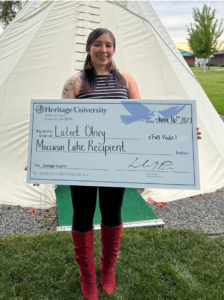
Young woman in front of a Native American tepee holding a large check representing a scholarship award.

Lateet Olney holds a poster-sized check that represents her scholarship award

From the time of Olney’s earliest memories, people from various tribes would gather at her parents’ home. She remembers the most devout and active among them were her uncle and aunt — PeterJoe and Audrey — and how they guided her toward the “powwow trail” as she approached adulthood. As she journeyed from one powwow to another throughout the Pacific Northwest and the American Southwest, Olney became completely immersed in Indigenous culture.

As she learned more about the celebrations and spiritual customs of her own and other tribes, she saw how honoring and practicing those traditions kept them alive and meaningful. She saw the way they were purposely passed on to the young people.

Olney prayed before each journey for greater knowledge, understanding and growth, and she received it. The powwows, the celebrations, the physical journey brought clarity to her personal journey.

HERITAGE PROGRAM FORMALIZES EDUCATION

Olney found the next step in her evolution in Heritage’s American Indian Studies program, a major in which history, linguistics, art, literature, and social studies all combine to inform students on the past and present of indigenous people.

The program was designed to promote a rich and layered understanding of the Native American experience, said Blake Slonecker, Chair of the Department of Humanities. “In the most basic sense, we are a native-serving institution, and we understand ourselves as being rooted in the place where we are, so the program is a natural outcome of this,” Slonecker said.

The program is small but has been steadily growing. Most students who enter the program are members of the Yakama Nation or members of the tribal community. Eleven percent of Heritage’s students are Native American.

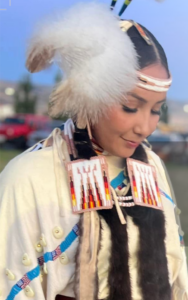
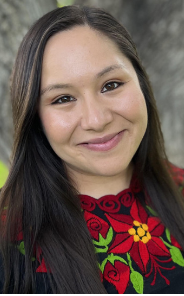
A young woman wearing Native American designed clothing looking downward

Lateet Olney

“Because of this, it’s important that we create and offer a learning environment where students can explore what is essential to their identities,” Slonecker said.

As much as possible, the Heritage courses are taught by Indigenous instructors. Current Yakama instructors include Greg Sutterlict, Ph.D., Languages and Literature professor and Director of the Center for Language Revitalization & Preservation, who teaches the Yakama language Sahaptin, known as Ichishkiin. Vivian Harrison and Ida Shock, both Yakama, are art instructors. Arlen Washines, a Yakama elder, has taught history and traditional knowledge of the Yakama people at the University of Idaho and will teach a course on the subject at Heritage this fall. Elese Washines, enrolled Yakama, has taught tribal governance and sovereignty for several years.

Slonecker credits Maxine Janis, Ed.D., President’s Liaison for Native American Affairs, as instrumental in connecting Yakama instructors with the university — a much-needed aspect ofthe program. He also says having Yakama staff members in place in Advising and Admissions means the major is increasingly actively discussed with enrolling students.

“Having more staff members who are Yakama talking about the program means more students become interested in it,” Slonecker said. “Within a small community like ours, including within the Yakama Nation, word of mouth makes a difference.

“We’re actively working to bring more indigenous faculty on board as we also encourage more students to consider this major.”

WALKING IN “TWO WORLDS”

Olney sees Heritage’s American Indian Studies program as a way to help her people honor their ancestors and, at the same time, move forward. She said one important way that’s been done more effectively in recent years is via the nearby Mount Adams School District practices.

“Our grade schools are bringing in some of our Yakama ways, welcoming people in Ichishkiin, recognizing we are all on Yakama land, having powwows and traditional food feasts,” she said. “These were not part of my experience in grade school.”

She notes that the Yakama Nation Tribal School is only middle school and high school, not grade school, but said that what’s now included in the Mount Adams School District curriculum does represent progress. She notes that some Sahaptin is taught, but “our teachers are aging, so we need to figure that out. There are big shoes that need to be filled.

“There needs to be an understanding among more Yakama people about what and where we come from, our traditions, and how to walk in the two worlds together.”

Olney wants to be an educator or work in nonprofit management. Other paths for an American Indian Studies major include becoming an archivist, advocate or cultural resource manager, tribal administrator, researcher or journalist.

“The more we have students come into the program, graduate, and move into successful careers, the more we get on people’s radar,” Slonecker said.

FINDING THAT SENSE OF DIRECTION

Lateet Olney is an early riser who takes time to experience each morning as a ritual. She gets up and opens her curtains, goes to the kitchen sink and fills a glass with water. She sits and drinks, putting her focus on “good thoughts” about what she wants to do in the day ahead. Following her own quiet time, she walks into her 11-year-old daughter Madison’s bedroom to gently wake her.

“I tell her not to rush,” Olney said. “I never want her to rush. It’s important to start the day slowly.”

She wishes for her daughter the same things she wishes for herself and all her people.

“I wish for her a happy and healthy life,” Olney said. “That she can find joy. That she can find her own purpose.”

Olney thinks about the four pillars of her religion, though she hesitates to call it a “religion.”

“That’s because it’s a way of life,” she said. “Thinking about our Native American Church and the four main pillars — they are love, faith, hope and charity. When I think about those and the red road, I believe if you’re following them, you can find a sense of direction.”

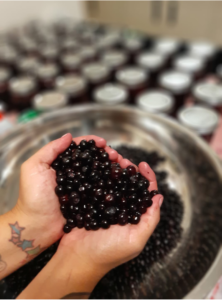
Berries cupped in two handsAs she learns more about her people’s traditions and beliefs, whether at a powwow or during her day at Heritage, she feels a sense of awe.

“When I’m learning, sometimes it has me speechless, whether I’m taking a thousand notes or quietly listening,” she said. “We are taught to be quiet. We are taught to never think we know it all but to take it all in, our history, our language, our art. When I get to learn, I reflect on all that I am.”

As Olney decided on her educational path, she said her main thought was, “I don’t want to be wrapped up in a work world that isn’t connected with who I am.

“What I chose with this program means learning everything I can so I can share it,” Olney said. “I want to keep our traditional way of life alive and live it every day and pass it on to our children, not just for them but for the generations after them.

“They’ve done it all for us to keep this prayerful way of life moving forward. In this way, I am the answered prayer of my grandmother and her grandmothers before her.”

Thanks a Million! – Wings Summer 2024

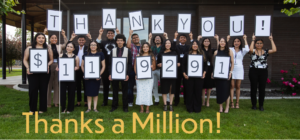
People holding up signs to read "Thank You!" and "$1,109,291"

Heritage University students and staff hold up signs revealing the amount raised during the 38th Annual Bounty of the Valley Scholarship Dinner.


When it comes to fundraising, there are always two goals—the one you know you can reach and the one you dream of achieving. For Heritage’s Bounty of the Valley Scholarship Dinner organizers, the dream number has been $1,000,000 for several years. This year, the dream came true.

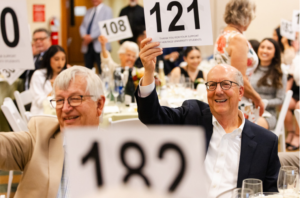
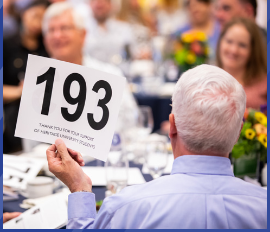
People holding up numbers during the paddle raise portion of the Bounty of the Valley Scholarship Dinner.

Guests of the Bounty of the Valley Scholarship Dinner lift bid numbers during the paddle raise portion of the event.

After all final gifts came in through June, the total raised was $1,109,291! “It is incredible!” said David Wise, vice president for Advancement and Marketing. “A million dollars has been floating out there as a stretch goal for a few years.”

“Just think about what this means for our students. So often, we hear from them that they never thought they would be able to go to college. Then, they came to Heritage where people they never met gave the gifts that make their dream of earning a degree a reality. Time and again, they tell us that those gifts are more than the dollars they receive; they are validation that they are capable and a motivator that sees them through the challenges that inevitably come during their studies.”

Scholarship Dinner is the single largest fundraising event the university holds each year. Since its inception 38 years ago, the event has brought in more than $8 million to support student scholarships.

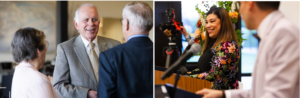
A collage of photos with people talking to each other and emcees addressing the crowd.

HU Chairman of the Board Bob Gerst speaks with a guest of the event; emcees Alex Vera and Gerardo Ruelas speak to the attendees from their podiums.

This year, the dinner occurred on Saturday, June 1, on Heritage’s main campus in Toppenish. Guests who attended the event in person mingled with students during the dinner reception in Heritage’s Eagles Café before making their way to Smith Family Hall for the program, which was live-streamed to audiences throughout the country. The total raised at the night’s end was an impressive $803,590. Organizers knew that the total would increase over the month as gifts from those who could not attend trickled in.

“There were a number of our most ardent supporters who had conflicts the night of the dinner and could not attend,” said Dana Eliason, senior director of development and the lead planner of the event. “It was surreal seeing the number rise closer and closer to that $1 million mark as the gifts from those who were not at the dinner continued to come it.”

Collage of pictures from the Bounty of the Valley; people holding up bid numbers; a student speaking; guests making a toast.

From left to right: a guest holds up a bid number; student Lillie Wesley shares her higher education story with attendees; and event goers raise their glasses in a toast.

“Most of our students come from economic backgrounds that make higher education unaffordable,” said Dr. Andrew Sund, Heritage president. “The unwavering community support our students receive is crucial for their ability to earn college degrees. For over 40 years, the extraordinary generosity of our donors has enabled more than 11,000 individuals to graduate from Heritage. These graduates have contributed to the community as educators, business leaders, healthcare professionals, and more throughout the Valley. We deeply appreciate their remarkable support.”

FARE THEE WELL, FRIEND

For the past 13 years, Scholarship Dinner has been the baby of Senior Director of Development Dana Eliason. She’s overseen everything from the selection of the artwork to approving gourmet menus to working her magic with donors and sponsors. Under her tutelage, Scholarship Dinner has grown from raising an impressive $150,000 event to an astonishing $1 million plus. It’s been a labor of love, but her time at Heritage is coming to an end.

Dana Eliason image

Dana Eliason

Eliason is retiring and will leave her position at the university in July. While Scholarship Dinner is perhaps the work Eliason is most known for, her role at the university went much deeper. Over the years, She was part of the team that raised millions of dollars for the construction of seven new buildings on campus, the development of student support services, the development of academic programs, and, of course, student scholarships.

“Dana’s legacy at Heritage is one of dynamic inspiration, stylish presentation, active compassion and unwavering dedication,” said Bob Gerst, chair of the university’s Board of Directors. “She’s touched countless lives and leaves an indelible mark on our institution and our hearts.”

Igniting the Sparks – Wings Summer 2024


Violet Lumley Rau Alumna of the Year, called “best teacher leader” to come out of Heritage, connects with students, other educators, and aspiring teachers.


More than 20 years ago, Jen Johann arrived at Harrah Elementary School for her first day of teaching in her very own classroom. She’s been there ever since.

Johann loves her students. She loves her colleagues. She loves her job — a job she says doesn’t feel like work at all.

Johann is a natural as an educator and yet, if events in her life had gone differently, she could easily never have gotten her degree or become a teacher.

Instead, she’s been named the 2024 Heritage University Violet Lumley Rau Alumna of the Year.

Johann not only loves spending every day with her classroom full of third graders, she exhibits seemingly tireless energy outside of it. She huddles with her students in after-school activities. She embraces thei families during evening cultural and academic events. And she shares her expertise with her fellow educators and student teachers anytime and anywhere she can fit it in.

A Tier 3 Project GLAD Trainer, 21st Century Site Supervisor and Mount Adams School District Instruction Facilitator, she works with students in settings outside the classroom and guides and trains other teachers in best teaching practices.

As a Student Teacher supervisor and member of the Beginning Educator Support Team (BEST), she welcomes student teachers into her classroom, demonstrating the characteristics and methods that make her outstanding in her field.

She’s even co-created a a Google website to help her fellow educators teach to the educational standards of Since Time Immemorial, a Washington State tribal sovereignty curriculum. Teachers visit the website to find legends, stories, and other aids to add to their classroom instruction.

Johann’s devotion to her students, her infectious positive mental attitude, and her highly effective teaching skills are all part of what made her colleague Denny Brown, District Teacher Mentor, nominate her for the Heritage award, an honor she received at Heritage’s May 11 commencement ceremony.

“Jen is an incredibly dedicated and community- oriented individual,” Brown wrote in his nomination. “The creation of a Since Time Immemorial website for her district highlights her leadership and innovative approach to incorporating Indigenous perspectives into education.

“She is the very best teacher leader I’ve seen here in the Yakima Valley since 2005. She represents the best that Heritage University has to offer.”

It’s an inspiring success story — yet as a teen, Johann was an uninspired student who, by her own admission, “barely made it through high school” and did not consider college. Upon graduation, she moved to New York City to nanny for a family, stayed four years, then returned to the Yakima Valley, where she stumbled upon the idea of becoming a travel agent.

“As a teen, as I thought about life after high school, I didn’t think about a place like Heritage,” Johann said. “A guidance counselor had looked at my grades and basically told me I wasn’t university material. And I believed him.”

To get her travel agent’s license, she enrolled in a two-year program at Yakima Valley Community College. She hadn’t really found her “spark,” she said, just something to do.

While she was taking classes, she worked a part-time job at a daycare center. Part of her job included tutoring children.

“My travel agent instructor looked at me and said, ‘You’re doing all this work with children. Why don’t you pursue that?’” Johann said. “She saw that spark in me.”

Johann transferred to Heritage University to major in education, guided by that spark.

FINDING ONE’S STRENGTHS

Jen Johann loved her Heritage University experience. “I loved the sense of community I felt there,” she said. “I loved that the professors were hands-on and interactive. I had amazing instructors like Pam Root, who had this sense of purpose and this joy of teaching, and they instilled in me the love of learning and teaching.

“They helped me identify where my strengths were. I learned that that was exactly what I wanted to be able to do with kids.”

One of her guiding principles is that learning happens most effectively and most joyfully when a student can relate to the subject matter. Often, what makes that possible is a teacher who finds a way to relate the subject matter to their students.

“Part of igniting their fire for learning is having them see themselves in the curriculum,” Johann says. “It goes beyond bookwork, beyond reading something and answering the questions at the back of the book. It’s about being able to bring their background into the curriculum so they can start making it their own.

“They become engaged, and you see them take ownership of their learning, even in third grade.”

CULTURAL INSIGHT MATTERS

Johann spends a lot of time enthusiastically sharing her teaching methods with her fellow educators.

“Being able to share my ‘why’ behind the way we do things is one of the reasons I’m so excited to do the extracurricular work I do,” Johann said. “I want other

educators to have that same joy.”

Johann shares her experience in education in her role as a Tier 3 Project GLAD trainer of trainers. An acronym for “Guided Language Acquisition and Design,” the GLAD program trains educators in quality instruction methodology — things like poetry, singing and visuals.

“It’s really influenced how I teach,” she said. “Its focus is on kids working together, and it’s fun to see them collaborate and build off each other.”

She’s a 21st Century site supervisor at Northwest Community Action Center (NCAC) Farm Workers Clinic in Toppenish, an after-school STEM-based program that provides enrichment activities for primary grade students — typically Indigenous and Latinx children — in sites around the Yakima Valley.

Johann also mentors aspiring educators through the BEST Mentor program, which has placed a student teacher in her classroom every year for the last four years. It provides student teachers with an opportunity to work side by side with a teacher, share data, and help build relationships with students.

“Student teachers get to see your work ethic and your joy of connecting with students, and I think it helps them stay with the program,” Johann said.

Along with many of her colleagues at Harrah, Johann plans cultural events for students, their families and community members. In the Mount Adams School District and at Harrah, more than half the students are Indigenous; the other nearly half are Latinx. Students learn about Yakama and Latinx traditions and participate in dance, song, and storytelling. Harrah evening events also include literacy nights and math nights.

“Mount Adams School District students come from Harrah, White Swan and Wapato, so making their heritage a significant part of the school curriculum and extracurricular activities is really important,” she said.

“It’s an important part of why it means so much to me to be here.”

The Mount Adams School District needs teachers like Johann who make it their business to really support their students and families, said Denny Brown.

“As an enrolled Yakama member who grew up in Toppenish, Jen brings a unique cultural insight andunderstanding to her work,” he said. “That’s invaluable for promoting inclusivity and diversity within the school and broader community.”

Johann greatly values the fact that the Mount Adams School District provides students with opportunities like learning their native language or Ichishkin.

“It’s nice seeing two kids sit by side-by-side learning words and phrases around seasons, around animals — things they’re interested in.”

IMMERSED IN COMMUNITY

When she was her students’ age, Johann spent a lot of time with her grandmother, Elizabeth Whitefoot.

“Growing up, I spent every summer with my Grandma Libby,” Johann said. “She did a lot of service activities in her community of White Swan. I watched her interact, and I wanted to give back the way she did. “

Johann loves the fact that she has that history in the community.

“I know so many of the families — the kids, the parents, the aunts and uncles — because I’ve been here so long,” Johann said. “And I run into former students who are now young adults on a regular basis.

It’s exciting to see where they are now and how they’re taking off on their journey.”

Johann sees the potential in all her students. “There may be a student who’s really quiet or struggles in the classroom, but then you see them out at a powwow dancing, and you see the pure joy because they are in their own element. They’re shining in a different light. It helps you see the whole child.

“I know our kids can do anything they set their minds to. I know our teachers believe that and believe that our kids can get to be college- and career-ready.

“My job is that whatever sparks a child’s interest, whatever’s fun for them to learn about, I need to find that and apply that in the classroom. That’s how it starts.”

“FIND WHAT YOU LOVE”

Johann has a message for young people who don’t know immediately upon graduating from high school what they’re going to do.

“It’s not always obvious immediately. I needed to grow up a little before I could really focus on my education. That’s how it is sometimes, so it’s OK not to know right away.

“Heritage made getting the education I needed attainable for me because of how local it was, how loving it was, and how everyone there wants their students to be successful.

“My message for young people is to trust what you love. You may not have all the answers right away, but trust your heart. Take time to find what you love and do it.”

A Heart for Heritage – Wings Spring 2024

When Dick and Pat Twiss made the Yakima Valley their home 57 years ago, they brought with them a passion for making a difference in the lives of those around them. Dick, now a retired cardiologist, dedicated 45 years to delivering essential medical care that not only extended the lives of his patients but also enhanced their overall well-being. His expertise was literally lifesaving, fostering longer and healthier lives for countless patients.

However, the Twisses’ impact goes beyond the medical realm. Together, their shared commitment to elevating the quality of life in their community led them to support many civic endeavors and eventually to Heritage University, where they became a transformative force. Their dedication has unlocked doors of opportunity through education for countless individuals. While maybe not lifesaving in the same way as a heart surgeon, the lives they have touched have been transformed in meaningful ways.

Dick and Pat Twiss have orchestrated a narrative of community enrichment. Their story is a testament to the profound influence that compassion and commitment can have on both the individual and the community at large, creating a legacy that resonates with the transformative power of education and the ripple effect of philanthropy.

The Twiss’ Heritage story began shortly after the university began in the early 1980s. A colleague told Dick about “a couple of nuns” from the Sisters of the Holy Names of Jesus and Mary who had started a college in rural Toppenish, Washington, just a few miles south of Yakima.

“I was educated for 12 years in The Dalles by the Sisters of the Holy Names,” said Dick, who grew up in the small Oregon town. “I was familiar with sisters’ work in primary and secondary education and was curious about what they were doing in Toppenish. I asked my colleague to introduce me to the sisters so I could learn more.”

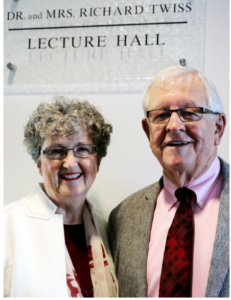
Pat and Dick Twiss

Dick and Pat traveled down to the fledgling campus and met with Sister Kathleen Ross, Heritage’s founding president. At the time, Heritage had only been operating for four years. It was little more than a few classrooms in a former elementary school and a library created from books handed down from its predecessor school, Fort Wright College. As they toured the school and met with Ross, they also talked to a few of the students, and faculty and staff.

“We were impressed by the work being done and by the students we spoke to,” said Dick. “They were all so dedicated, and the students were eager to learn. Sr. Kathleen and her staff were creating an environment and teaching style unlike anything else. It was specifically designed so that the students they were working with would be successful. For the most part, these students were low-income, minorities and the first in their families to go to college, and they had no other options available to them to earn a degree.”

That first meeting sparked a nearly four-decade-long relationship that helped build the institution as it stands today. Their financial support has funded student scholarships, including an endowed scholarship in their name dedicated to helping students studying to enter the medical field, helped student clubs travel to national competitions, and helped build a thriving campus. They even expanded the footprint of the university when they purchased the old Toppenish Grange, which sat across the roadfrom the college, and gifted the property to Heritage. That old building was used for many years as an art room and meeting hall before the property was converted to house an early learning center.

As impressive as their generosity towards Heritage is, their commitment goes much deeper than their financial support. Dick spent a total of 21 years on the board of directors, once from 1990-2002 and a second time from 2007- 2016, and he was the Board Chairman from 2007-2009. He’s been part of the leadership team at almost every significant milestone in the university’s history: every multi-million-dollar capital campaign, the construction of nearly every building on the campus, the development of some of the university’s most successful academic programs, and the transition of leadership when Ross announced her retirement and the subsequent national search and hiring of Heritage’s second president, Dr. John Bassett.

Dick and Pat have also been fixtures at many of Heritage’s key events. They cheered on their favorite team at the polo fundraising events that took place during the university’s early years. They’ve attended every Scholarship Dinner. They were there for the openings of ten campus buildings, including the Arts and Sciences Center, Petrie Hall, Kathleen Ross snjm Building, the Martha B. Yallup Health Sciences Building and Violet Lumley Rau Center. They were part of the crowd of supporters who celebrated Ross when she retired and welcomed both Bassett, and current president Dr. Andrew Sund, at their inaugurations. And they have been among the scores of families and friends who cheered for graduates as they walked across the stage to get their well-earned degrees at several commencements.

“What is truly remarkable about Dick and Pat is how great their hearts are for this university and our students,” said David Wise, vice president for Advancement. “Every time there is a need, they are among the first to step forward and say, ‘How can we help.’ Together, they’ve made more individual gifts to Heritage than any other donor. There isn’t a student at Heritage, past, present or future, whose education hasn’t been touched by Dick and Pat.”

For the couple, what first excited them about Heritage, and what has kept them such ardent supporters over the years, is the impact the institution has both on the lives of the individuals who are attending the college, as well as on the community in which it serves.

“You can so clearly see the need here,” said Dick. “The need for a university to provide education to those who are unable to go anywhere else to learn, and the need for supporting scholarship so that these students can afford to go to college.

“Education is truly life-changing for these students and their families, and we can see the impact they are making in our schools and businesses and health centers after they graduate.”

Pat added, “There are lots of colleges out there, bigger colleges, who do a fine job educating young people. But they have so many more resources available to them. We feel like, through Heritage, we are really able to make a difference.”

“We are very proud of the university,” said Dick. “It gives us great pleasure knowing that we’ve been a part of their success.”  Heritage Eagle

2023 A Year in Review


It was a very busy and productive year at Heritage in 2023. The university celebrated many impressive accomplishments, including expanded degree programs, a new regional location, record-breaking fundraising, strengthened partnerships, and students achieving greatness. Here are a few highlights.

Tri-Cities Expansion!

Heritage expanded its reach in the Tri-Cities area by opening a new regional location in Kennewick. Students can now complete all four years of study in one of six majors – accounting, business administration, criminal justice, education, psychology, or social work – without leaving the Tri-Cities area. Or, they can complete their first two years in Kennewick and then attend classes at the main campus in Toppenish to complete their studies in any of Heritage’s degree programs. It welcomed its first cohort of freshmen for the fall 2023 semester.

The university maintains its relationship with Columbia Basin College (CBC), and students graduating from CBC continue to seamlessly transfer to Heritage to complete their bachelor’s degrees on the college’s campus.

New Graduate Programs!

Heritage developed two new master’s degree programs, the Master of Arts in Mental Health Counseling and the Master of Social Work (MSW) degree programs.

The MSW program was developed through the support of a five-year, $5.5 million federal grant awarded to Educational Service District 105, which included provisions for the university’s program development. This fall, the program received pre-candidacy status from the Council on Social Work Education’s Board of Accreditation, opening it up to begin recruiting for a fall 2024 start.

A five-year, $6 million grant from the U.S. Department of Education supported the development and launch of the mental health program. It received approval from the university’s accreditation board and is currently recruiting its first cohort of students who will start in the fall.

Breaking Records!

In June, the 37th annual Bounty of the Valley Scholarship Dinner broke all previous records, bringing in $872,559 for student scholarships. The event was held at the Toppenish campus and live- streamed so that those who could not attend in person could still participate in real-time.


Strengthened Collaboration!
Heritage and Children’s Hospital of Seattle cemented their partnership surrounding nursing education and shared goals to increase diversity within the profession and improve healthcare in rural communities. The partnership brings hospital nursing staff to Heritage to serve as adjunct faculty members and allows Heritage students to complete a 4-week pediatric clinical rotation at the hospital.

Together, Heritage and Children’s launched a multi-million-dollar campaign to create endowments to support the program in perpetuity. In fall 2023, Jim and Gaye Piggot, who are deeply invested in supporting healthcare and education, announced a $4 million gift to be divided between the two organizations, establishing the Gaye and Jim Pigott Nursing Endowment at Seattle Children’s and the Gaye and Jim Pigott Endowed Chair of Nursing at Heritage.

For the Children!

Heritage opened the new Early Learning Center (ELC) at its Toppenish Campus in March. Construction of the $4.1 million state-of-the-art facility started in spring the year before. It was funded by an anonymous donor.

The new ELC has five classrooms and is larger than the previous facility, allowing it to increase enrollment from 74 to 90 students. Its location, just east of the university’s main campus parking lot, makes it easier and safer for parents to pick up and drop off their children.

The ELC programs are designed to offer experiences that enhance and enrich each child’s cognitive, language, social, emotional, physical and creative development. It serves children from 12 months through pre-kindergarten.

Addressing Food Insecurity!

Heritage opened Eagles Market, a program to address food insecurity among students and their familes. The food pantry is supplied with frozen, refrigerated and non-perishable food items by Opportunities Industrializaiton Center (OIC) in Yakima. It is open for students to stop by and pick up free, nutritious food Monday through Friday. It was made possible by a contribution by Kwik Lok Corporation in Yakima and through a gift from an anonymous donor. Heritage Eagle


News Briefs – Wings Spring 2024


College of Education professor receives national award for dissertation

HU Assistant Professor Amy Nuñez, Ph.D., received third place in the Kurt M. Landgraf Outstanding Dissertation Award from the American Association of Hispanics in Higher Education (AAHHE) and the Educational Testing Service. The award is given annually to spotlight top doctoral students and to showcase Hispanic students’ excellence. The goal is to encourage more Hispanic students to pursue doctoral degrees and to enhance the quality of the dissertations these students write.

Nuñez received her award for her dissertation, I Wish They Knew We Existed: The Academic Experiences of Latinx College Students in Mixed-Status Families. She completed her work as part of her doctoral studies at Indiana University-Bloomington, where she earned a Ph.D. in Education Policy. She presented her dissertation at the AAHHE conference in March when she received her award. Heritage Eagle


Theatrical troupe set to perform professor’s script on a national tour

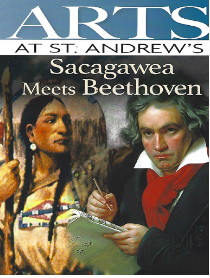
Professor Winona Wynn received an award from The National Endowment for the Arts to write a script about the life of Sacagawea, a Lemhi Shoshone woman who helped Meriwether Lewis and William Clark on their expedition to cross the western United States.

Sacagawea was performed by The Core Ensemble at a special invitation- only venue in Lakeworth, Florida. It was so well received that the company commissioned Wynn to write two additional scripts featuring Native American women to be included in a production that will go on tour across the United States this fall. Wynn completed a script about Wilma Mankiller, the first primary chief of the Cherokee Nation, and has a third script about Yankton Dakota writer, educator, translator, musician and political activist Zitkala-Ša, in progress.

The Core Ensemble performs works highlighting three historical figures in a presentation that blends compelling narrative with musical accompaniment. Each production includes educational programming to accompany the stories. Heritage Eagle


HU alumni challenge other graduates to Pay it Forward

A new endowed scholarship established by Heritage graduates will help future students rounding the corner toward graduation. Called Pay it Forward, the fund was started by two Heritage alumni to both give thanks for the help they received when they were undergraduates and to pass along those blessings to future generations of students. The couple, who wish to remain anonymous, set up the endowment with the initial contribution and hope that other graduates will contribute to the fund and help it grow.

“Most of us Heritage alumni received some sort of financial support while we were in college. We envision other alumni contributing to this fund as a way to help students get an extra push on their final step in their educational journey.”

Scholarships from the fund are earmarked for junior and senior students.

Endowed scholarships have the potential to make the greatest impact on the greatest number of students over time. They are created through a significant initial investment, which is held in perpetuity and invested for long-term growth. Scholarships are awarded annually as directed by the university Board of Directors. Gifts to the university can be directed to the endowed scholarship, which will grow the principal and ultimately increase the number of students who benefit from the gift. To make your gift to Pay it Forward, visit heritage.edu/giving. Heritage Eagle

Nursing program gets shot in the arm with grant to expand outreach and support

Heritage University received a three-year, $1.4 million grant from the Biden-Harris Administration to launch an innovative program to address the critical shortage of nurses in our rural communities. The program is called Pathways to Opportunity and takes a two-pronged approach to addressing nursing education. First, it increases outreach into local high schools to guide students interested in a nursing career and helps them prepare for college. Second, it provides for dedicated case managers within the university’s nursing program who will help all Bachelor of Nursing students prepare for the licensing examination, and offers career guidance, advising, and mentorship. The goal of this approach is to ensure that incoming students are prepared for the rigors of college and that, when enrolled, they receive the wrap-around support that keeps them engaged and more likely to persist to graduation.

“This substantial investment from the Biden-Harris administration underscores the importance of addressing the critical shortage of nurses in rural communities and Heritage University’s role in helping to fill those gaps,” said Dr. Melissa Hill, Heritage provost and vice president of Academic Affairs.

Pathways to Opportunity will focus on Native American, Hispanic, low-income, and first- generation high school and college students. Outreach will target students in the eight high schools in communities surrounding the university’s Toppenish campus and the Yakama Tribal School. Heritage Eagle


Quarter million dollar gift directed to support DACA and DREAMER students

Heritage University received a $250,000 gift from the directors of the Bezos Family Foundation to support the institution’s DACA Emergency and DREAMER Funds. This transformative contribution reflects a commitment to supporting the immediate needs of undocumented students facing unforeseen challenges.

Each year, the Bezos Family Foundation’s Board of Directors chooses non-profit organizations that align with the Foundation’s mission. In selecting Heritage, the Foundation’s directors recognize the university’s work to provide equitable opportunities to children and youth in its communities.

“This gift underscores the understanding that the foundation directors have of challenges undocumented students face if they wish to pursue a college education. DACA and DREAMER students do not qualify for federal financial aid, often creating situations where the cost of attending college is insurmountable,” said Dr. Andrew Sund, Heritage president. “This gift helps level the playing field for students to pursue a college degree regardless of their immigration status.” Heritage Eagle


In Memoriam – Wings Spring 2024

Ed Rousculp

Heritage lost a beloved fixture to the campus community in January when Professor Emeritus of Education Edwin Rousculp passed away.

Rousculp was a Vietnam-era veteran who served four years in the Air Force before he entered college at Wright State University in Ohio. He earned a Bachelor of Science in Secondary Education and Teaching, and taught middle school in Carlton, Ohio, before he and his wife, Susan, moved to the Yakima Valley. They settled in Toppenish, and he went to work at the Yakama Nation Tribal School.

His tenure at Heritage began in 1983 when he started teaching English in the evenings as an adjunct instructor while still teaching at the Tribal School. He took a brief hiatus from the university when he moved to Pullman, Washington to pursue his graduate studies at Washington State University (WSU). In 1993, he returned to Heritage as a full-time faculty member in the College of Education. Later that year, he was appointed Chair of the Teacher Education Program. He continued to serve in that role until 2005 when he transitioned into the position of Director of the Center for Intercultural Learning and Teaching, where he remained until his retirement in 2022.

“Ed’s commitment to education, unwavering support for our students, and positive impact on colleagues resonate deeply within our hearts. He embodied kindness, patience, generosity, and gentleness, qualities that made him not only an exceptional colleague but a true friend to many,” said Dr. Andrew Sund, Heritage University president. “We are collectively mourning the loss of a remarkable individual. His dedication and passion for Heritage University’s mission have forged a legacy that will endure for years to come.”

Ted Strong

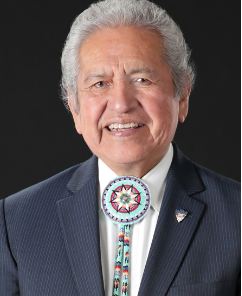
Former Heritage University board member and Yakama Nation tribal elder Taninsh Ted Strong died on January 30. He was 76.

Strong served on the Heritage board from 2003 to 2012 and was a member of the Executive Committee and the Tribal Relations Committee. In 2022, he was among the Heritage’s Honoring Our Elders award recipients.

In addition to his Heritage service, Strong was a leader among the Yakama Nation and an advocate for treaty rights, salmon recovery, water rights and environmental management. He served as the executive director of the Columbia River Inter-Tribal Fish Commission, was a chief judge for the Yakama Nation Tribal Courts, and was director of the Yakama Housing Authority. Most recently, he was the Vice President of Corporate Responsibility for Yakima Chief Hops.


Virginia Beavert

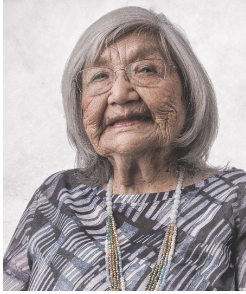
A renowned linguist, author and educator, Dr. Virginia Beavert Tuxámshish passed away in February at the age of 102.

Beavert dedicated her life to revitalizing and preserving indigenous languages, particularly Ichishkiin, also called Sahaptin, which is the traditional language of the Yakama people. She was one of the first instructors in Heritage University’s Ichishkiin language program and was instrumental in building the program into what it is today. In addition, she was the co-author of the Ichishkíin Sínwit Yakama / Yakima Sahaptin Dictionary and author of The Gift of Knowledge/Ttnúwit Átawish Nch’inch’imamí: Reflections on Sahaptin Ways.

In 2015, Beavert was recognized by Heritage as one of the first four recipients of the Honoring Our Elders award.

“Her wisdom, passion, and commitment were instrumental in fostering a deeper understanding and appreciation for the rich linguistic diversity that is an integral part of Native American heritage,” said President Sund.

Falling in Love – Wings Spring 2024

You go to college to earn a degree. But sometimes, you also meet the person with whom you want to share your life.

That’s what happened to Heritage alumni Brandon Berk and Anitramarina Reyna, Heber Molina and Carmen Mejia, and Jorge Borunda and Mireya Vazquez.

Today, after attending Heritage, they all have degrees, are working in their chosen fields, and are each happily married to the love of their lives.

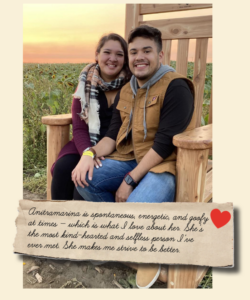
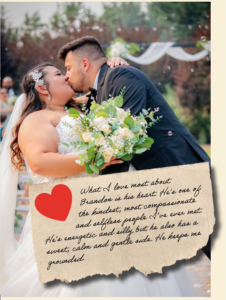
BRANDON AND ANITRAMARINA BERK

The first time Anitramarina Reyna met theman who would become her husband, she feltslightly taken aback.

“If you’ve met Brandon, you know he has astrong, confident handshake – and he’d already perfected his teacher’s voice,” Anitramarina said. “I felt immediately intimidated by this tall, confident guy.”

“I’m just good at hiding my introverted side,” Brandon said.

They were young – both high school seniors at a formal ceremony for the Act Six college scholarships they were receiving, both about to head to Heritage, he as a math major, she pursuing a nursing degree.

Whatever reticence Anitramarina first felt didn’t last. The two soon struck up a close friendship. Both were outgoing and dedicated to their studies, and they found it easy to spend time together.

“We basically lived at Heritage,” Anitramarina said. “We’d get there at 7:00 in the morning and stay through 11:00 at night. “We were always studying, but of course, there was some goofing off to alleviate stress. We’d have lunch, walk, play board games in the Barnhill Fireside Room.”

One winter, during a snowstorm, the two drove to campus early to get there before classes began. Once they arrived, they learned classes were canceled.“We decided to stay,” said Anitramarina. “It was just the two of us, studying in a room in Petrie Hall, with a YouTube video of a fireplace to distract us from the big snowfall outside.”

“Rumor had it,” Anitramarina said, that she may have had a crush on Brandon, even though they were technically just friends. But nothing came of it until 2020, after Anitramarina graduated from Heritage and Brandon, who earned his bachelor’s degree the year before, graduated from Whitworth University with a Master in Teaching.

Once they began dating, their days were full of hiking, kayaking and, soon, regular gatherings with both families.

They got married in the Yakima Valley in August 2023.

Today, they live in Cle Elum, where they both work for the Cle Elum-Roslyn School District. Brandon is a high school math teacher, and Anitramarina is a nurse in the school district. They have two cats, Roo and Mei.

They say the years they spent as “just friends” were a wonderful foundation for their marriage.

“We were best friends at Heritage before we even began pursuing a relationship,” said Anitramarina. “That was huge.”

Their future plans involve moving back to the Yakima Valley, buying a house, and starting a family.

Professionally, Anitramarina wants to continue to make a difference in children’s lives. Brandon imagines a future that includes adjunct teaching at Heritage.

“I’d love to give back to the university that helped shape me,” Brandon said. “And introduced me to the woman who would become my wife.”

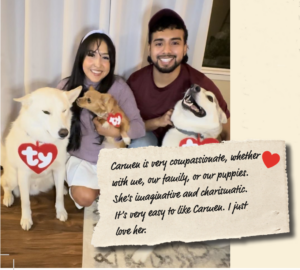
HEBER AND CARMEN MOLINA

They had the same Intro to Sociology course, saw each other around campus, and ultimately worked on student events together. However, Instagram, Snapchat and texting were the initial basis of Heber Molina and Carmen Mejia’s relationship.

What began with sharing comments and thoughts on virtual platforms soon became real, with much of it playing out on the Heritage campus. Heber was a criminal justice major, and Carmen was a social work major. Both have since earned their master’s degrees.

“Besides studying, we’d meet for lunch and sometimes watch movies together. Sometimes, toward the end of the day, we’d play flag football,” Carmen said.

The Heritage campus, where they felt so at home, seemed like the perfect setting for two invitations Heber would make to Carmen. The first came when the Student Government Association (SGA) was hosting a masquerade ball. Heber devised a scavenger hunt to ask Carmen to go with him to the event.

“With the help of some friends, he wrote clues for me to find around campus where we spent a lot of time,” Carmen said. “The last clue led to the library. Heber was waiting for me with flowers and an invitation to the ball.

“When I say Heber is detailed and thoughtful? You see what I mean.”

A couple of years later, Heber outdid himself. Carmen’s sorority organized a scholarship event called “Big Man on Campus.” As a raffle ticket emcee, Carmen called a number Heber “just happened” to have.

“I walked up to the stage and proposed to her in front of the whole crowd, including friends and family,” Heber said.

The couple married in 2018.

Student-focused events were a huge part of their Heritage life. Both the TRIO and Enactus programs gave them the opportunity to travel together. They’ve followed up those trips with some of their own—to the Olympic Peninsula rainforest and the Southwest, usually camping so they can bring their three dogs—Zeus, Atlas, and Kleo—who are family to them. They envision more travel to Mexico and the tropics.

Heber works for Highline Public Schools as a recruitment and retention program manager. Carmen is a student advisor at the University of Washington in Seattle.

Having recently purchased their first home in the greater Seattle area, they talked about their dreams for their future.

“We want to raise a family, maybe have our own business, maybe buy land to build our dream home.

“But more than anything,” said Heber, “we plan to continue to love each other.”

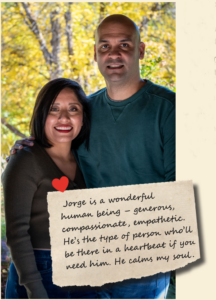
JORGE AND MIREYA BORUNDA

Jorge and Mireya Borunda are “opposites” personality-wise, but their values are cut from the same cloth.

They met at Heritage in 2009. Jorge was a computer science major. Mireya majored in business administration. Both were active in Enactus (formerly

Students in Free Enterprise [SIFE]) and recipients of the Mellon Mays Undergraduate Fellowship. Sharing meaningful experiences helped them become friends quickly.

“We were introduced by Leonard Black, who was a business professor and in charge of SIFE,” Mireya said. “He counseled me about school, about our relationship, about life. He is still like family to us.”

In 2010, Jorge asked Mireya to listen to the student address he was asked to give at his commencement. In it, Jorge talked about his experience of being a DREAMer.

“We were both DREAMers,” Mireya said, referring to the Development, Relief and Education for Alien Minors Act (DREAM) legislation that was introduced in 2010 as a way to give undocumented young people who were brought into the country as minors a pathway to citizenship.

“We both made it through college via private scholarships, and we kept our full-time jobs throughout our studies. We worked really hard.

“What Jorge talked about in his speech really resonated with me and my story. We both had to navigate the same struggle. That speech was a highlight of our time at Heritage.”

By commencement, Jorge had been accepted into his master’s program at the University of Washington. He and Mireya traveled extensively as they fought for the DREAMers Act, which brought them even closer. While the Act never passed, they were able to get some protection by getting DACA status.

Romance had crossed both their minds over the years. But Jorge felt there were so many things on their plate that anything beyond friendship would be challenging.

Ultimately, laughed Mireya: “I needed to make it more formal.”

Before Jorge headed to Seattle, she asked him over coffee if he wanted to be boyfriend and girlfriend.

“I played hard to get,” Jorge smiled. “But after we finished our coffees, I said yes.”

They dated for two years, as Jorge traveled between Seattle and Yakima. In 2012, they decided to get married right after Mireya’s graduation.

Today, the couple lives in Renton, Washington, where Jorge is a functional analyst in Costco’s data and analytics department. Mireya is the manager of Molina Healthcare’s healthcare broker team, advocating for the community and ensuring that Medicare agents follow appropriate guidelines.

“I think people are surprised we connect the way we do, but our life goals are very clear,” Mireya said. “We both value family first, and we always remember where we came from.”

Remembering their struggles, particularly during the second half of college, led the couple to work with Heritage’s advancement team to create a sustainable endowment to support students in their last two years at the university.

“We had so many projects and exams, and we kept our jobs so we could make ends meet,” Mireya said. “We want the endowment to help other students who are up against the same things we were.”

“We feel very strongly that it’s important to do what we can to help others, to pay it forward,” Jorge said. Heritage Eagle

From Farmworker to Pharmacist – Wings Spring 2024

From Farmworker to Pharmacist

Heritage alumna’s story of sacrifice, grit, perseverance, and a dream realized
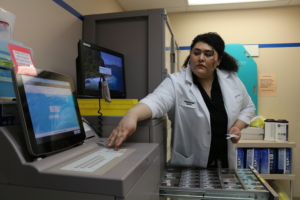
Heritage alumna Gardenia Contreras-Vazquez is very good at being first. She is the Contreras family’s first born. She was the first in her family to graduate from high school, as the valedictorian nonetheless, and the first to earn a bachelor’s degree, the first DACA student to enter Washington State University’s Pharmaceutical program, and the first to graduate. And she is the first Heritage DACA student to earn a Doctor of Pharmacy and return to her hometown to serve her community’s healthcare needs.

While being first comes with its own set of bragging rights, breaking new ground also comes with daunting obstacles that require a strong heart, steady mind and dogged commitment to your goal, traits that Gardenia has in spades.

“I was in middle school when I first started thinking I wanted to work in healthcare. I knew that my immigration status meant I would have to be creative in finding ways to make it all work. But, I never saw these obstacles as roadblocks, just challenges that I’d have to work around.”

COMING TO THE USA

Gardenia was born in Michoacán, Mexico. She doesn’t remember much about coming to the United States. She was only two years old when her parents packed up their baby girl and a few meager possessions to make the nearly 2,000-mile journey from their hometown to the US.

The move was risky. They were coming into the country without immigration credentials. However, the potential rewards far outweighed the risks they faced. In the USA, they would find better jobs. Their children could go to school, maybe even college, and they would grow up to have so many more opportunities than either parent ever had.

The young family first landed in California, where they lived for a year or two before heading north and settling in Sunnyside, Washington. Her parents went to work. Her mom went to work in the fruit industry, picking apples and cherries during the harvest and sorting fruit in warehouses. Her dad went to a dairy, milking cows 10 hours a day. While her parents worked, Gardenia and her younger brother and sister, both born after the family arrived in the United States, enjoyed a typical childhood—they went to school, played with friends, got involved in sports and clubs, all the things children do. Even though she looked and acted like every other typical American child, she was far from typical. Gardenia was undocumented.

EXPERIENCES THAT SHAPED HER

“I knew I wasn’t like other kids,” said Gardenia. “My parents always told me how important it was to behave and listen. Growing up undocumented, the fear of being deported was always in the back of your mind. You don’t dwell on it as you live your day-to-day life, but you make small adjustments so you don’t draw attention to yourself. You notice when you pull into a gas station, and there is a police car in the parking lot. You always go the speed limit and follow every small detail of the law. You kind of try to blend into the shadows.”

While she felt different, she was far from an outsider. Agriculture is the leading industry in the Yakima Valley. While technology has changed a lot about how crops are grown, harvested and processed, much of the work still depends upon manual labor. Often, that labor is done by immigrants and first-generation Americans, mostly from Mexico.

In the small town of Sunnyside, agriculture is king, directly employing more than a quarter of the community’s population. In comparison, the next largest industry is transportation and warehouses, the bulk of which is tied to ag support and employs another 14% of working adults. The nature of the industry, plus that of humans who tend to settle in areas where there is a familiarity, has shaped Sunnyside into a community where more than 80% of its population are Hispanic, and over a quarter are foreign-born. Among her peers, Gardenia’s story was very familiar.

“Growing up in Sunnyside, I had a lot of similar experiences with my classmates,” she said. “We didn’t come out directly and say, ‘Oh, I’m undocumented,’ or share our immigration status, but we knew our parents were all working in the fields and may be in similar situations. We were 13 or 14 years old, taking care of our younger siblings, cleaning the house, making dinner, helping parents with translation and filling out documents, and pretty much keeping the household running because our parents worked long, hard hours to provide for the family.”

They weren’t the only ones. From time to time, Gardenia would join her mom in the fields and sometimes work alongside her grandfather, who immigrated to the United States after Gardenia and her parents settled in Sunnyside. Though he had adjusted his status due toanother son who was a citizen, it was here, among the workers, that the teenager began to dream of becoming someone who would help people who often fell through the cracks.

“I saw my parents coming home so tired they fell asleep in their chairs. I saw the people in the fields working injured because they were too afraid to go to the doctor. If they did, they wouldn’t fill their prescriptions because the medicine was too expensive or they didn’t understand the gravity of not taking it. I knew something had to be done to help make healthcare more accessible.”

Young Gardenia’s assessment of the need was dead on. Among cultural populations in the United States, Hispanics, particularly those in immigrant households, have one of the highest rates of healthcare inequity. The reasons are as varied as the people themselves: Language and cultural barriers, socioeconomic disparity, a lack of adequate health insurance, predisposed views on healthcare and healthcare providers, immigration status, and fear of deportation are all among the influences that limit access.

While healthcare providers work to counteract these influences, such as hiring translators to assist with language barriers, making real strides involves bringing more Latinx, bilingual providers into the workforce.

“Pharmacists are both the most accessible and the most accessed member of the healthcare team. Traditionally, pharmacists have been local leaders and vital members of their community, and this remains true in rural, underserved, and smaller communities, which are usually served by caring, independent pharmacy teams,” said Joel Thome, PharmD, BCACP, associate professor.
“In areas with a significant Latinx population, Latinx pharmacists play a crucial role in bridging the cultural and language gaps, providing personalized care that respects the community’s unique health beliefs and practices. Their ability to communicate effectively in Spanish and understand the cultural nuances can enhance patient trust, adherence to medication, and ultimately, health outcomes. This is particularly important in addressing health disparities and promoting health equity in these communities.”

UNDOCUMENTED TO DACA

Education is something that Gardenia’s parents reinforced in all their kids from the time they were very young. As children, both parents were forced to quit school and go to work to help support their families. Her mother dropped out of high school, but later earned her GED; her father never made it out of elementary school. Still, the two understood that education was vital to their children’s futures.

“My parents always told me, ‘You have to get an education. It is the one thing nobody can ever take away from you.’ They’d tell me I needed to get good grades so I could get scholarships and go to college.”

That is precisely what she did. Her parents signed her up for the Washington State College Bound program when she was in middle school. College Bound is a guaranteed scholarship for low-income students who graduate from high school and enroll in an approved college or university. Gardenia started looking for scholarships during her freshman year and explored ways to earn college credits for free while in high school. Starting her sophomore year, she enrolled in College in the Classroom, giving her college credits for some courses while meeting her high school graduation requirements. For three years, she participated in her school’s science fair. She won a prestigious scholarship to attend Ohio Wesleyan University in her first year. While that scholarship wouldn’t ultimately help her, it would only have paid half of her tuition, and covering the other half as an out-of-state student without access to federal funding assistance was unfeasible; receiving the award was all the encouragement she needed to keep moving forward. By the time she graduated from Sunnyside High School, Gardenia had received enough scholarship support to cover her undergraduate degree, including Heritage’s Dreamers Scholarship.

Finding funding for school was just the start. Being undocumented brought with it a host of other challenges that could derail her dream, like not being able to be legally employed. In 2012, then-President Barack Obama initiated Deferred Action for Childhood Arrivals (DACA). The action protected young adults who were brought into the country as children and who met specific criteria for deportation and authorized them to work in the country for two years. The action was temporary but renewable. Gardenia’s parents immediately hired an attorney who applied for and got her DACA status. More than anything, this move was perhaps the most critical to Gardenia’s future. Without it, all that happened after earning her bachelor’s degree would not have been possible.
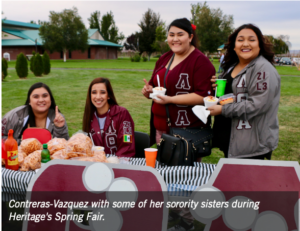
When Gardenia enrolled at Heritage, she knew she knew she wanted to prepare for a healthcare career, but she wasn’t sure about what exactly. It wasn’t until her senior year that she turned her attention towards a career in pharmaceuticals.

“Medical school was super expensive, and finding funding after undergraduate studies is difficult. I saw that WSU had a Doctor of Pharmacy program at PNWU (Pacific Northwest University of Health Sciences, which is in Yakima),” she said. “I really wanted to help people in my community access better healthcare and recognized that access to medication is critical.”

FROM BACHELOR’S TO DOCTOR

Gardenia’s application to WSU was about as stellar as they come. As an undergraduate, she was a university ambassador, Lambda Theta Alpha Latin Sorority, Inc. member, and president of the Medical Sciences Club. She completed research at Heritage University on “Urinalysis: A Comparative Analysis Between Automated and Manual Method.” She graduated from Heritage magna cum laude with two degrees: a Bachelor of Arts in Psychology and a Bachelor of Science in Biomedical Science, with a minor in Visual Arts. It was during the interview when Gardenia really nailed it! She spoke about her experiences growing up and how they shaped her perception of the need for people with her background in healthcare. She talked about earning her degree and staying in her hometown to work directly with the people who needed her help the most.

“After the interview, I was sitting in the waiting room when one of the interviewers came out to talk to me. She told me they loved what I had to say and wanted to offer me a position in the upcoming class but didn’t know if they were legally allowed to do so because of my status. She said they had to consult with the state attorney to ensure I could participate in the program.”

Gardenia left with what seemed like another barrier in front of her. A few weeks later, she was at Heritage in the Admissions office working when she got the call: SHE WAS IN!

“I remember stepping outside because I wasn’t sure what the state attorney had told the school. Then the person on the other line simply said, ‘How would you like to be a Coug?’ I was in shock! I couldn’t believe that this was actually happening!”

A few months later, in fall 2019, Gardenia started what would be a grueling four years of study. Just before she started, she took a part-time pharmacy assistant job at Rite Aid. Not only did this give her some insight into her future career, but it was also part of the initial requirements of the degree program. The program curriculum was extremely challenging; anything below 80% was considered a fail. Students had three tries to pass if they didn’t meet that requirement, but that would mean they had to study for a past lesson on top of studying the current lesson.
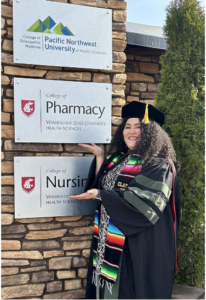
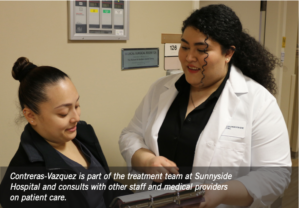
In May 2023, the former undocumented immigrant who worked alongside her family picking fruit and dreamed of a life helping people just like her live healthier lives was officially a pharmacist. She graduated with a Doctor of Pharmacy from WSU. In many ways, Gardenia’s life has come full circle. The child whose family risked everything to give her a chance at a life better than their own, the teenager who dreamed of helping farmworkers have better access to healthcare, the young woman who hit roadblocks and said, “What else,” instead of giving up is living the life she dreamed of having. Today, she is a pharmacist at Sunnyside Hospital and an essential part of the patient care team.

“Pharmacists are one of the most accessible medical providers in the community. Being bilingual, I can talk to patients in a language they understand so that I can fully explain their medications and treatment. I also understand the financial concerns that so many of our patients face. I help them look at available resources to pay for their medications. And, I feel like there is a level of trust that I have with patients because I come from where so many of these people are today,” she said.

“Sometimes I think, ‘Wow! I can’t believe this,’” she said. “I have my degrees. I have my career. I’m helping people in my community. It’s surreal to see how far you come. It wasn’t just me who did this. I got here because of the support of my family, my friends, the faculty/staff who believed in me, everyone around me who helped me along the way, and the scholarship donors and committees for taking a chance and believing in me. I also had four very special individuals who co-signed my loans, without whom I may not have been able to take out my graduate school loans. I definitely was blessed with a strong support system; I wouldn’t be here without them.” Heritage Eagle

 

DACA/DREAMERS STATE OF AFFAIRS

Gardenia’s story is very familiar on college campuses across America. Last August, the President’s Alliance on Higher Education and American Immigration Council released a report estimating that more than 408,000 undocumented students are enrolled in postsecondary education across the country. Unlike Gardenia, most do not have DACA status.

DACA stands for Deferred Action for Childhood Arrivals. It is an executive order issued by President Obama that provided temporary yet renewable protections from deportation for young people brought into the country as children. It also gave recipients the ability to work in the country legally. What it was not was a pathway to citizenship. At its height, more than 800,000 young people had DACA status.

In 2017, it was announced that DACA would be phased out. New applications for deferred status would no longer be accepted, and renewals would only be accepted through October 5 of that year. The resulting legal maneuverings from those on both sides of the issue brought forth ping-ponging injunctions that renewed, then halted, and partially reinstated the program several times over three years.

Behind the political and legal maneuvering, hundreds of thousands of young people were left in limbo. The most recent decision happened in September 2023. A federal judge in Texas ruled that DACA was unconstitutional and upheld the block to reinstate the program. Currently, no new applications are being accepted, and current recipients must reapply for protection every two years. Missing the deadline has dire consequences; the person would no longer be protected from deportation, would be unable to legally work in the US, and could not reapply. Appeals to the ruling are in the works.

While the DACA saga has been in motion, another piece of legislation has been trying to make its way through Congress. It has similar guidelines for eligibility but differs in that it provides a pathway to citizenship. That legislation is the Development, Relief, and Education for Alien Minors (DREAM) Act. At least 11 versions of the DREAM Act have been introduced to Congress in the last 20 years. The most recent iteration is the bipartisan DREAM Act 2023. This legislation would tie the pathway to citizenship for young people brought into the United States as minors to education, work, and military service and would apply to those with DACA status and those without. However, despite its bipartisan construction, it has not received enough support to become law.

As politicians continue their debates, immigrant workers, their families and the businesses and communities who depend upon them wait in uncertainty. The impact of these, or any other similar legislation, has implications that branch out much further than the undocumented person seeking legal status.

Immigrant workers play an integral role in the American economy. Some industries, like construction and agriculture, rely heavily on foreign-born workers, particularly in lower-skilled labor positions. In agriculture, estimates of how many undocumented workers are employed on farms and in the fields go as high as 50% of the labor force.

On an even larger scale, undocumented workers infuse the economy to the tune of more than a trillion dollars of spending power and nearly $10 billion in federal, state, and local taxes annually.

So, where does the current state of affairs leave undocumented students today? Coming behind the wave of DACA students who had some relief are hundreds of thousands of Dreamers whose futures are murky.

“So many of our young people are trapped in this web of uncertainty,” said Dr. Andrew Sund, president of Heritage University. “They’ve been raised here, educated here, are part of the fabric of our communities. They have great potential and a work ethic as strong as anyone’s but face daunting obstacles that block access to the resources to reach that potential.”

Sund points out that one of the most significant roadblocks is finding the money to pay for post-secondary education.Undocumented students, even those with DACA protections, do not qualify for any form of federal funding. Washington State has programs to help undocumented students pay for their education, including the Washington State College Grant and the College Bound Scholarship. Still, this funding alone isn’t nearly enough to cover college costs. Scholarships are critical to bridge the gap that is left after state funding is applied. Heritage has several scholarships that DACA and Dreamer students can qualify to receive, including the full-tuition Dreamer Scholarship. Most of these funds are made possible by contributions made to the university by generous supporters.

For those lucky enough to have DACA status, the back and forth of contrary legal decisions and worry about what will happen next adds anxiety on top of the typical day-to-day stressors of college life. Plus, the expense of legal and application fees for already cash-strapped students adds to the anxiety.

Heritage established the DACA Emergency Fund in 2017 when students were scrambling to manage expiring DACA statuses in the face of a shortened renewal application deadline. It provides financial assistance to help students cover the cost of application fees, eliminating this potential barrier.

“We want students to know there are people out there that believe in them and are here to support them,” said Sund. “It is essential that they don’t put their futures on hold and wait until elected officials in Washington DC devise a permanent solution. There are resources available and people who will help them get the education they need to secure their future.

“We need all our young people to be educated. We need them in our schools, businesses, social services, hospitals, and clinics to fill critical roles that benefit all of us. Our local, state and federal agencies benefit from the income their tax dollars bring through their employment and their increased purchasing power when they work in positions with higher wages,” he said. “Moreover, we need the stability that comes when our young people can plan for their futures with confidence and certainty.”

To help support the Dreamers Scholarship or the DACA Emergency Fund, contact the Advancement Office at 509-865-8587 or advancement@hertiage.edu. Or make your gift online at heritage.edu/giving. Heritage Eagle
Bringing the Real World to the Classroom – Wings Spring 2024

Heritage adjunct faculty are critical to the university’s programs – but more than filling a need, they bring vigor and perspective.

“Because I love it!”

In his own words, that’s why adjunct marketing instructor Aaron Welling teaches at Heritage University.

It is not an uncommon sentiment among the university’s adjunct faculty. Educated, highly experienced individuals often join Heritage’s adjunct faculty because they’re excited about their subject matter.

They also bring valuable real-world experience to their classrooms and to the students they teach.

“Many adjunct faculty hold full-time positions in addition to teaching, so they draw on their work experiences,” said Melissa Hill, Ph.D., provost and vice president of Academic Affairs. “Through their presence and instruction, students gain a deeper understanding of what to expect in their discipline.

“Heritage’s adjunct instructors bring a wonderful combination of their years of expertise, current experiences, and an energy that really serves their students.”

QUALITY FACULTY

Adjunct professors at Heritage comprise more than half the university’s faculty, making them critical to the success of its programs.

“There are about 80 adjunct faculty members teaching at Heritage at any given moment, and the list of what they bring to the student experience is just as long,” Hill said.

“Our criminal justice program has adjuncts who work as judges and police officers. In education, students learn from instructors who teach in area schools, some are even Heritage alums. Business courses are taught by executives and entrepreneurs. These are just a few examples.”

The instructors profiled here represent just a few of such examples.

Melissa Andrewjeski has held key positions with the state’s Department of Corrections for more than 30 years, including serving as superintendent over the largest adult male prison facility in the state.

Social work instructor Jacob Campbell was instrumental in developing and instituting the social worker role in his school district’s special education classrooms.

Education instructor John Kerr has received awards and accolades for his many years of teaching.

Nursing instructor Shameka Phillips was a solo provider in a busy, rural North Carolina clinic, a most “challenging and rewarding position.”

Business instructor Welling has developed marketing strategies for numerous Fortune 100 companies.

“When you’re out there executing theory and strategies, you have insight into what matters, as well as what happens when you learn you would have done something differently,” Hill said. “That’s a really valuable thing to bring to our students.”

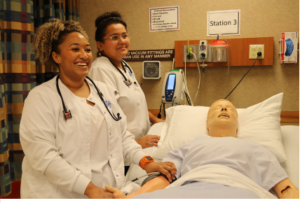
In nursing, said Phillips, current examples help students connect what they’re learning to what they’ll see during clinicals and as practicing nurses.

“We can offer guidance on navigating the current workforce environment and other career-related pursuits,” Phillips said.

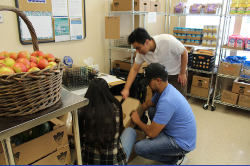
Sometimes, students even get the opportunity to visit their instructor’s workplace, as students in Andrewjeski’s criminal justice class do almost every semester. They tour Coyote Ridge Corrections Center, what Andrewjeski describes as “a safe, humanistic facility where people have opportunities to become better neighbors.”

“It’s helped students identify career goals and a path for their future, whether in criminal justice or social work or both.”

VIBRANT CLASSROOMS

Between the current perspective of adjunct faculty and the eagerness of the students who learn from them, adjunct instructors say there’s a positive energy in their classrooms.

Kerr brings the lively approach he takes with his daytime students at Granger High School into his evening classroom.

“I love the people and the students, and my classroom at Heritage is similar – cheerful, low-stress, and highly supportive,” Kerr said.

“If you really enjoy your work, that energy comes with you.”

Welling tries to make his classroom similarly enjoyable and engaging, livening things up with stories about companies he’s done marketing for and practical applications to what’s happening in the world today.

“We’ve talked about Southwest Airlines forgetting to put money into operations and watching their system melt on the busiest travel day of the year,” Welling said. “And Elon Musk taking a tried and tested brand that people love and changing it to something as esoteric as X.

“It’s engaging to talk about what’s happening right now and what we would do if we were in their place.”

In Phillips’s nursing classes, she and her students interact “like a big family.”

“We generally start each class with a mood check- in, a statement about this being a space of respect, equity, and compassion, that we will center active listening and mindful communication in our interactions with each other, staff, faculty, and others we may encounter.

“It helps us begin the day’s content with mindfulness.”

REACHING STUDENTS

Campbell teaches a class where students continue from the first semester to the next. At the end of the first semester, he asks students to reflect on the past semester and to share thoughts about the semester ahead.

“One student told me, ‘I like this class a lot, mostly because you make the environment feel like a safe space… It made me feel like my feelings and thoughts were important and also allowed me to think deeper.’ This is what I want,” Campbell said. “Class needs to feel safe and rigorous – that’s what allows students to grow and learn.” Heritage Eagle


SHAMEKA PHILLIPS, PH.D. is a Postdoctoral Fellow at the University of Washington School of Medicine/Seattle Children’s Research Institute. She is a first-generation college student who earned a Bachelor of Science in Nursing with university and nursing honors, a Master of Science in Nursing— Family Primary Care, and a Doctor of Philosophy in Nursing from the University of Alabama at Birmingham. Phillips joined Heritage’s nursing faculty in 2023.


JOHN KERR teaches science and career and technical education (CTE) in the Granger School District. He has advanced proficiency in Spanish and intermediate proficiency in Mandarin Chinese. He is a Tri-Cities Regional Crystal Apple Award winner and was the ESD 123 Regional Teacher of the Year in 2011. Kerr joined Heritage’s education faculty in 2022.


AARON WELLING is Co-Founder & CEO of Sonar Insights, a market research and strategy consulting firm based in Richland, Wash. He graduated from Brigham Young University with a Spanish degree and a communications minor. He graduated with a master’s in business administration in international management from Thunderbird, The American Graduate School of Business. Welling joined Heritage’s business and accounting faculty in 2018.
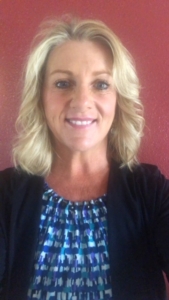


MELISSA ANDREWJESKI is the Assistant Secretary of the Women’s Prison Division for the Washington State Department of Corrections and is responsible for the division’s strategic vision and leadership. She has a bachelor’s degree from Eastern Washington University, focusing on social work and a minor in chemical dependency counseling, and a master’s degree in social work from Walla Walla University. Andrewjeski joined Heritage’s Criminal Justice faculty in 2009.
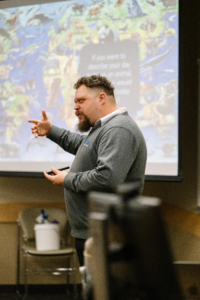


JACOB CAMPBELL, PH.D., is a social worker in the special education department of the Pasco School District. He also runs his own business, Locus of Transformation, which supervises licensed social workers and provides consulting. He earned his bachelor’s and master’s degrees in social work from Eastern Washington University and graduated with his Ph.D. in Transformative Studies from the California Institute of Integral Studies. Campbell joined Heritage’s social work faculty in 2013. Heritage Eagle