Beyond Shakespeare – Wings Fall 2025

Heritage’s master’s program in literature elevates multicultural voices with a focus on Indigenous and Hispanic literature, sharing of lived experiences, and empowering students.
In the fall of 2024, students in a new Heritage University course called “Writing for Change: Advocacy and Civic Engagement” spent the semester delving into the issue of food sovereignty — the right of peoples to healthy, culturally appropriate food that is produced using sustainable, ecological methods.
By the end of the semester, they’d gained insight into the process of issue advocacy based on thoughtful, systematic research and study.
Guided by Ann Kendall, assistant professor of literature and languages, they also learned how to become part of the civic process through communication designed to get to the point and capture a reader’s attention.
Several students’ opinion pieces were published in the Yakima Herald-Republic — three of them written by students in a master’s program that’s been recently “retooled” — the Heritage’s Master of Arts in Multicultural English Literature and Language program. Their opinion pieces began with strong points of view:
“For the one person out of nine in our country who is considered to be food insecure, a trip to the grocery store is a luxury.” – Jackie Bell
“Imagine an indigenous community without diabetes. Can you? Probably not. However, this can be an attainable future by giving Native Americans food sovereignty.” – Josefa Zarco
“How many times a week, or say a day, do you consider those who are harvesting the produce in your fridge? Think hard about how they produce products and the moral and human rights of those who harvest, pick, and pack each individual fruit.” – Anjuli Barragan
Over the years, perhaps only a few of these master’s candidates will write for a living. But all of them will need to communicate effectively as part of their work.
VALUING “GIVE AND TAKE”
Professors in Heritage’s Multicultural Lit program don’t teach a traditional canon of English literature to their students. There’s no focus on the traditional Homer, Shakespeare or Milton. Its core courses have been curated specifically for the students who take them.
Classes such as Hispanic Literature, Native American Literature, Women’s Literature, Memoir Writing, and Writing for Change: Advocacy and Civic Engagement speak to the Heritage student population.
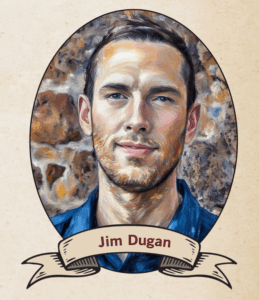
Jim Dugan
“We’re studying contemporary writing in literature, novels, short works and non-fiction, which is incredibly important in today’s world,” said James Dugan, chair of the Department of Literature and Languages.
“Virtually every literature selection reflects students’ lives and the lives of the people they know,” Dugan said. “They, in turn, bring their lived experience to the table, something that’s as important as what any professor has to teach.
”It creates an opportunity for people to actually be in community with other people whose narratives are represented in this literature.”
CHOOSING TEACHING FOCUS OR THESIS FOCUS
Most students come to the program already working in their communities. Their undergraduate degrees are in English, history, education and art. They are K-12 teachers, higher education instructors, professionals working for non-profit organizations, and people working in business.
“We specifically seek a diversity of backgrounds and perspectives, a cohort of learners that truly reflects the multicultural perspective of the program,” Kendall said.
Students select from two focuses: The Teaching Focus is for students already certified to teach in K-12 and interested in dual- enrollment programs or community college teaching. The Thesis Focus is for students most interested in pursuing Ph.D. or M.F.A. studies, community college or university-level teaching, and private/public sector opportunities.
“If you’re a teacher, we’ll help you figure out how to create lesson plans around, for example, the literature of Native American people from the area in which you teach,” Kendall said. “We’re also teaching how to find the literature you need, whether you’re back in the classroom or you need it on the job.”
“It definitely prepares someone who wants to teach,” Dugan said. “But people get the idea that if you study English, you’re going to become a teacher. That’s often not the case.
“The program is designed to help you navigate text, think critically about text, and communicate effectively with others, whatever your job.”
MASTER’S STUDIES MADE MORE ACCESSIBLE
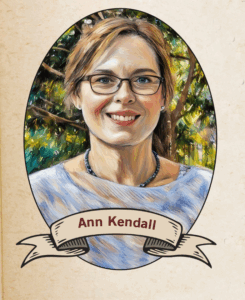
Ann Kendall
Master’s students learn early on that Heritage is all about relationships, Kendall said, and students don’t have to be on campus to experience that. They can attend classes virtually or in person.
Virtual attendance makes it easier to add graduate school to full-time employment and family responsibilities, a necessity for many. The foundational, warm Heritage welcome and support, wherever needed, is present whether a student is on campus or attending class virtually.
“We’re high touch, even if students are remote,” Kendall said. “That isn’t always the case with a lot of universities.”
Heritage’s small class sizes and low student-to-instructor ratio make it possible for instructors to be present for students, who often have a lot to juggle in addition to their studies.
It’s something Kendall knows first-hand. As a non-profit executive for two decades, she’d always dreamed of being an English professor. She just needed her master’s.
“I lived in Seattle then and started looking around for something that would work with both parenthood and my full-time work schedule,” Kendall said. “I hit a brick wall.
“Then I found Heritage, and I said, ‘Well, this is completely different.’ I enrolled.
“Students don’t even have to leave home to be part of this program.”
DISSECTING THE LITERATURE TOGETHER
What takes place in these classes, said Dugan, “is that we’re really dissecting the literature together.
“Students have considerable lived experience. They’re not just coming in like sponges waiting to hear things. Our discussions are eye-opening, and they can be very humbling for me.”
Recently, a master’s student who is a full-time teacher shared what she calls her “mantra” with Dugan.
“She said, ‘If you’re working harder than your students, you’re doing it wrong,'” said Dugan. “That doesn’t happen at Heritage. Everyone is really involved in the conversation. We’re all learning, all the time.” 