
RADLab – Digital Storytelling of Rural America
 Rural America. It’s not just country music and acres upon acres of farmlands. It’s a complex stewpot of people from different cultures and ethnicities. It’s multi-million dollar agribusinesses that communities depend upon for their economic prosperity. And, sadly, it’s communities that struggle to deal with the same social ills that impact larger cities–poverty, crime, violence, substance abuse–but often without the resources necessary to make a difference.
A joint project between Heritage University, Whitman College and Seattle-based PopUPJustice gave students a voice to tell the story of rural America through their eyes. Called Rural American Digital Lab (RADlab) students became filmmakers, producing short documentaries on topics of social justice that impact their communities.
RADLab invited 11 students from Heritage along with 11 students from neighboring Whitman College in Walla Walla, to come together to learn, in person and across campuses, how to leverage digital technology to shine a light on the fabric of
life in rural America. The goal said Aurora Martin, the founder of PopUPJustice, was not just to introduce students to the conferencing from the Whitman power of digital technology and storytelling to affect societal change, but also to build bridges and community across two very diverse student bodies.
For Heritage students, RADLab was an opportunity for many to tell their own stories because they or their family members were the subjects in videos that dealt with compelling topics including domestic violence, gender issues, homelessness and immigration status.
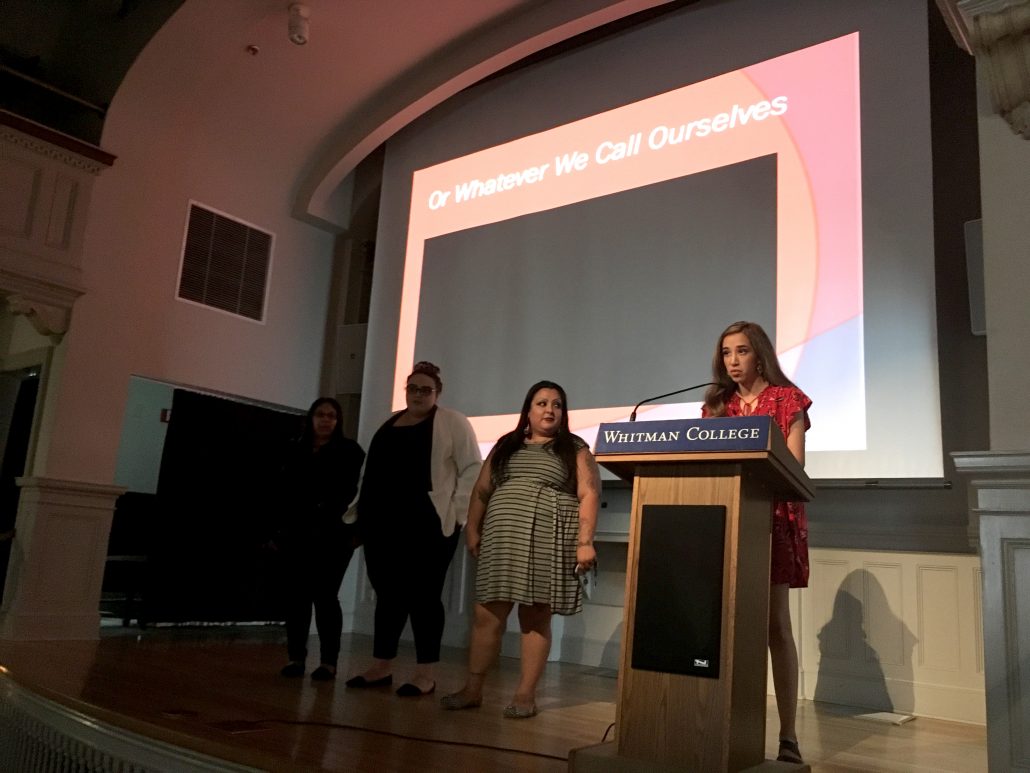
(Pictured left to right) Heritage students Cecilia Vizcaino, Noemi Sanchez, Madeline Alviso Ramirez and Maria Soto present their project at Whitman College.
The structure of RADLab was intense–19 days packed with training on advanced digital equipment and audio and video editing software. Every morning, Heritage students, whether in person or through video conferencing from the Whitman campus, heard lectures from subject matter experts about rural issues, ethics in storytelling, podcasting and video log best practices, and more. Every afternoon, the students were let loose to brainstorm, conduct interviews with their subjects or shoot supplemental footage, and edit their project.
Maria Soto, a third-year Heritage student who is double majoring in social work and history, said the quality of the speakers exceeded most students’ expectations. “We did not know there would be such a strong team from all over Washington,” she explained. “We heard from a YouTuber, a Ph.D., and filmmakers who taught us technical skills, like ways to shoot from the back to protect identity. And the importance of moral responsibility and content in storytelling because this is someone’s life.”
FILMS EXPLORE IDENTITY, CHALLENGES IN RURAL AMERICA
The students were broken into groups, and Soto’s group created a project based on the poem, I am Joaquin by Rodolfo Gonzalez. It explores the complexity of Mexican-American identity. Her group filmed the stories of four individuals, and two group members were featured in those stories, which dealt with the challenges of gender identity, undocumented students, farm workers, and a cholo who is giving back to the community.
“I was born in Mexico but have spent the majority of my life here,” explained Soto, noting that she, too, has struggled with issues of Mexican and American identity. “I learned it’s okay to be both. And that we are all part of the same ethnic group, but we can be all of these different things, too.”
Noemi Sanchez is a junior history major who participated in RADLab and also appeared in the video, sharing her experiences as a queer and non- binary student in a conservative rural area.
“For me, one of the skills I further developed was navigating conversations about social justice with people who are not affected by it,” noted Sanchez, who said sharing her story was scary but also liberating. “I didn’t have much experience filming or adjusting audio, but these skills have also helped me produce flyers and short videos for other student organizations and community groups I’m part of.”

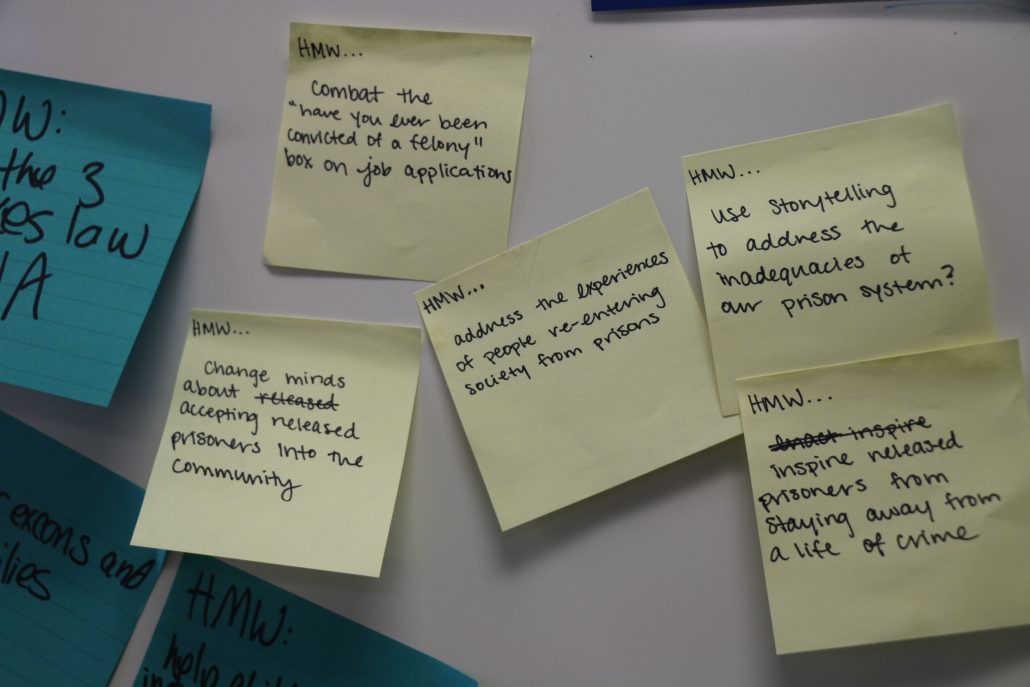
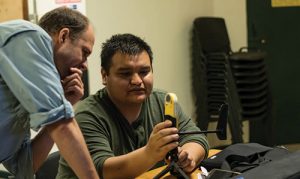
Noemi Sanchez and visual arts major Anthony Tzib start their initial research for their RADLab project.
This is exactly the vision that Kimberly Bellamy-Thompson, chair of the Social Sciences Department, had for RADLab, which took almost a year of planning and conference calls to put into motion. “Journalists haven’t been paying attention to rural America, and I’m concerned about the repercussions of not having a voice,” said Bellamy-Thompson. “Here we are just two hours from Seattle by car and from San Francisco by plane, and yet, we have such disparity in digital technology in rural America.”
Thompson said RADLab allowed these students to bring attention to their stories while also gaining job skills and showcasing what they could do when given the resources in a hands-on, experiential learning setting.
Martin, whose organization helps to consult and incubate innovation and social connections, saw RADLab’s mission to be two-fold. “At the end of the day, RADLab was a community-building experiment that sought to plant seeds of innovation starting with the stories of why.” Explaining further, Martin said that because they worked with a shoestring budget that required innovative thinking just to launch the program, they were forced to strip away many extraneous factors and focus on those who could best inform solutions – end users who actually live the problem and who benefit from solutions.
“For me, this was a story of grit and grace,” said Martin. “The ideas are there; they just need the resources.”
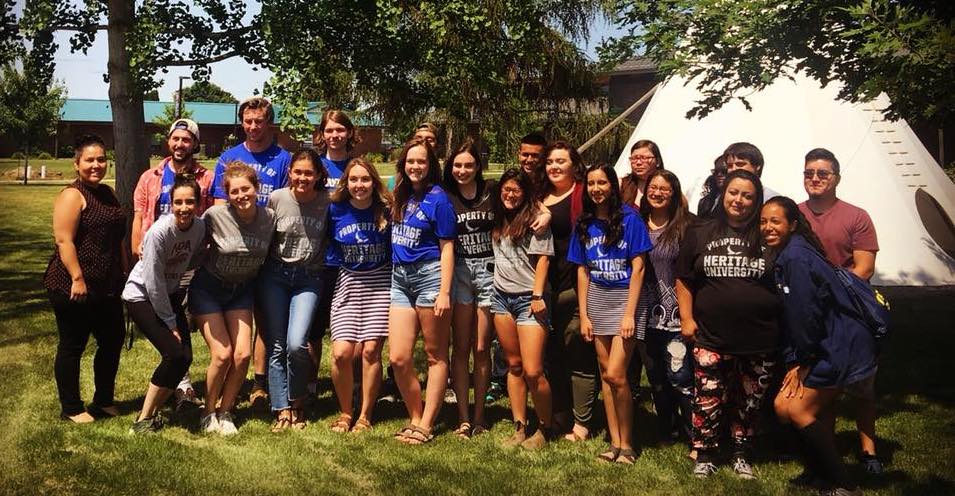
Bridging the diverse cultures between the Heritage University and Whitman College students was a key element of RADLab.
Blake Slonecker, chair of Humanities at Heritage and a member of the RADLab design team, said one of his goals for his students in any learning experience is that they leave asking different questions than when they started. For one Whitman student, that meant overcoming a fear of the homeless and being willing to see them as a people with a story of their own. For Heritage students, it was transforming the way they saw the power of digital technology to produce words and images that told a story in ways that can impact hearts and minds for change.
“During the very last few days, we got together with the Whitman students, and we watched all of the videos,” said Sanchez. “And even from the people in my small group, I learned so much I didn’t know.”


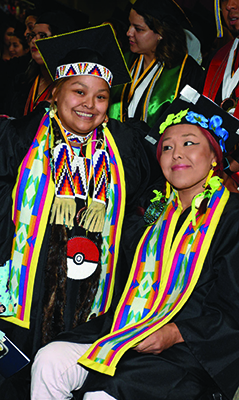
 After years of sacrifice, of late night study sessions and countless hours spent in the library and computer labs, Heritage graduates celebrated earning their degree at the 2018 Commencement in May.
 The Violet Lumley Rau Outstanding Alumni Award was given to Colleen Sheahan for her work establishing and running a private Christian school in Yakima. Fifteen graduates received the Board of Directors Academic Excellence Award, which is given to undergraduates who completed their degree with a perfect 4.0-grade point average. This year’s recipients were: Aryell Adams,Social Work; Kayli Berk, English/Language Arts; Aimee Bloom, Education; Meagan Gullum, Social Work; Tifanny Macias, Education; Daniela Medina, Education; Itzamary Montalvo, Education; Debra Olson, Education; Alexandra Orozco, Social Work; Perla Perez, Social Work; Karima Ramadan, Early Childhood Studies; Filipp Shelestovxskiy, Education; Jessie Shinn, Accounting; Ana Tapia, Social Work; and Ashley Zahn, Education. The President’s Student Award of Distinction, which is given to an undergraduate with a distinguished record of academic excellence and service to the university, was given to Aleesa Bryant, Biomedical Science.


 A whirlwind of events in March brought together a campus and a community to celebrate the

 In the evening, Heritage hosted the President’s Inauguration Jubilee at the Yakima Seasons Performance Hall. It was an arts and cultural event that celebrated the richness of the Yakima Valley and the people who call this area home. This multicultural repertoire of music, poetry,
 the Yakima Symphony Chorus, traditional Native American dancing by The Four Seasons Travelers, pop and rock music by the Latino band Avión, and contemporary indie music by Naomi Wachira.
 The celebrations capped off with the formal installation during a ceremony steeped in academic tradition. The event began with the grand procession of regalia-clad faculty, visiting dignitaries from other colleges and universities, members of the platform party, student representatives, and the Yakama Warriors color guard marching across campus from the Kathleen Ross snjm Center to Smith Family Hall in the Arts and Sciences Center. They marched down the aisle to a recording of the “Heritage University Tribute Anthem,” composed for the university by Joan McCusker, IHM and performed by the Yakima Symphony Orchestra. Davis Washines, chair of the Yakama General Council and Dr. Kathleen Ross, snjm each presented an invocation and Dr. Keith Watson, president of Pacific Northwest University of Health Sciences, and Norm Johnson, WashingtonState Representative, 14th District (R) presented greetings.
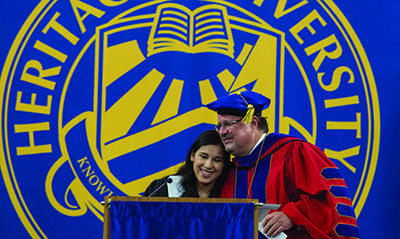
 Before representatives from the Student Government Association, Faculty Senate, Staff Educators Senate, and university alumni make their remarks, students from the Wapato High School Choir “En Vox” performed an interlude of choral music. They later sang the university’s alma mater Lift High the Banner! , written by Dr. Curtis L. Guaglianone and arranged by Aaron L. Jameson. David Cordova, friend and former colleague of Dr. Sund, made the introduction before Heritage Board of Directors Chair Pat Oshie presented Dr. Sund with the chain of office during the Ceremony of Investiture.
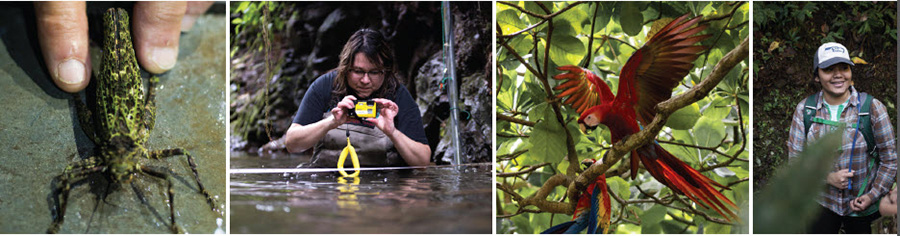 Steve Dupuis, the IMSI director at Salish Kootenai College in Pueblo, Montana, reached out to Dr. Jessica Black about the trip, which he had done the year before. It was structured to bring tribal students in the sciences together from colleges across the country. Heritage University’s participation was made possible by a partnership with the All Nations Louis Stokes Alliance for Minority Participation program, in conjunction with the Organization for Tropical Studies.
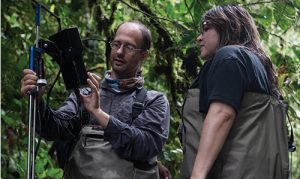
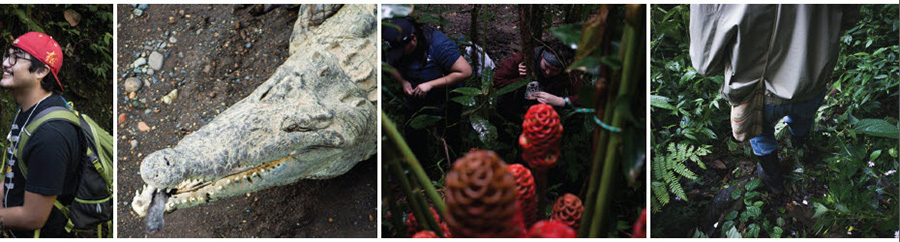 Kimberly Stewart and Zane Ketchen were two of the students invited to travel to the Central American country. When Stewart received the text from Black, she was immediately intrigued – not just about the chance to dig into field work in such a rich environmental location but also because she would meet and work with other Native American students from around the country. “I had traveled, but never to Central America,” said Stewart, a junior who is interested in working with the Yakama Nation Department of Natural Resources when she graduates. After an 11-hour flight to San Jose, the team hopped aboard a bus for the six-hour journey into the Talamanca Mountains the next day. Taking the coastal route, Ketchen had his first look at Costa Rican wildlife, including crocodiles, macaws, and Black’s favorite, the toucan!
 FIELD WORK GIVES STUDENTS HANDS-ON RESEARCH SKILLS
 MAKING CULTURAL CONNECTIONS WITH LOCAL TRIBE