Board Member Tag Team – Wings Spring 2025

A man in a grey tweed blazer, blue jeans, and brown shoes stands in front of a grey tiled wall. He is wearing a light blue button-down shirt and glasses.

Ken Smith

Past and present Heritage board members Ken Smith and his son, Steve Smith believe in, work for, and promote Heritage University, now in service totaling 12 years — and counting.

When Ken Smith talks about why he’s an active supporter of Heritage University, he often quotes his wife Sharon.

“Sharon says if you want to fully understand the Heritage University mission, go to commencement,” Ken said. “You see how excited and proud everyone is. And it’s not just the students, it’s their parents and families, because they’re often the first in their family to get that college degree.”

Ken, Sharon, and their grown children all enthusiastically support Heritage. Ken decided to join the Heritage board in 2010 after talking with friends who were board members. He served on the board for three, three-year terms, retiring in 2019; a few years later, Steve was nominated and confirmed, following in his dad’s footsteps.

“I thought being on the Heritage board would be a very good way to support the families and communities of the Yakima Valley,” Ken said. “As someone who spent their career in agriculture, I thought I could, among other things, identify some companies and individuals in the industry who might be potential supporters.”

“AG” INDUSTRY EXPERIENCE TRANSLATE INTO SERVICE

The image features a man standing confidently in a modern interior space. He wears a black zip-up hoodie over a light blue collared shirt, emphasizing a casual yet polished look. His jeans are of a standard blue wash, paired with brown shoes that add a touch of warmth to the outfit.

Steve Smith

Growing up on a dairy farm in Vancouver, British Columbia, it was a natural for Ken to major in plant science at the University of British Columbia. Following graduation, he went to work for the Wilbur Ellis Company, “a large privately owned company with divisions in Agribusiness, Specialty & Ingredients, and Feed. In 1961, Ken was relocated to the U.S. He worked for Wilbur Ellis his entire 43-year career, the last 12 of those as CEO of its agribusiness division.

Ken’s long tenure in business proved beneficial to the Heritage board. He served on the advancement, external affairs, governance, and business advisory committees, where he deemed his business experience would be most helpful.

Ken’s message to prospective donors always centered on Heritage’s unique mission and the value of its graduates to businesses in the Yakima Valley.

“Heritage’s location in the Valley allows students to live at home, which is very important for their life outside school because most of them work in addition to attending classes,” Ken said.

Growing existing donor support is key to growing Heritage’s important work on behalf of its students, Ken says.

“Most need financial help, and the number of scholarships available has been robust. We work to help keep it that way.”

Ken believes the quality of a Heritage University education is evidenced by the frequent acceptance of its grads into master’s, legal, or medical degree programs at nationally recognized universities.

“I think the most important work for Heritage now is to maintain its financial stability so it can continue to provide that quality education for its students,” Ken said.

“To keep up the good work.”

FAMILY COMMITMENT TO SERVICE

Ken’s son Steve Smith has spent his entire career in agriculture, too — working in the fresh apple, pear, and cherry industry of the fertile Yakima Valley. Steve is the Vice President of Marketing at Washington Fruit Growers.

Steve believes one of the University’s greatest strengths is in being uniquely able and willing to provide the personalized guidance and support many of its students require.

“There’s nothing like the way a Heritage education guides and supports motivated students toward graduation and employment,” Steve said.

“What makes Heritage unique is its care for each student who wants to enroll. Shepherding them through the financial aid process, providing scholarship opportunities, academic counseling, career counseling, and help with childcare — all the things Heritage does — are critical to students’ ability to succeed in college.”

Steve says giving students the skills to move into management positions, HR roles, communications jobs, and more via the degrees they earn at Heritage is an important key to their continuing post- university success.

“If they’ve got communication skills or a background in economics or business, we can teach them anything they need to know about the crop,” Steve said. “And it’s these students we most want to hire. They’re from the Valley, and many want to stay in the Valley.”

Many Heritage students come from families with a background in agriculture; the focus on providing educational options that can work in the agriculture industry right in the Valley makes sense.

“Having students whose roots are in the Valley stay right here as they pursue their education makes them much more likely to stay and seek careers here,” Steve said. “And that also provides tremendous support for local business.”

A person wearing a sunglasses and a hat listens to another person wearing sunglasses.

With fellow board member Ellen Wallach, Steve Smith led a tour of the Washington Fruit Warehouse during the Yakima Valley Tour in August 2024.

Steve serves on the finance, governance, and tribal relations committees and has been most involved with the finance committee.

He hopes to see continued expansion of majors and programs that are needed for jobs in the area.

“It’s important that Heritage continues to grow, expanding both bachelor’s and master’s degree programs,” Steve said. “That’s not always easy, as large financial commitments are necessary years before students start filling chairs in the classroom.

“But expanding degree programs should, correspondingly, expand the student base, which will be a long-term positive for Heritage.”

BEING INSPIRED, INSPIRING OTHERS

Like the commencements Ken and Sharon have attended, Steve and his wife Kirsten have been present at Heritage’s biggest fundraising event, the Bounty of the Valley Scholarship Dinner, which takes place every June.

Part of the evening’s program each year includes a student who talks about the experience of making their way to Heritage and finding success through their own diligence and the University’s meaningful support.

“What they say is so inspiring,” Steve said. “As a board member, you feel good about it. You feel uplifted about the work we get to do.”

Though Ken Smith’s time on the Heritage board is past, he continues to promote the University. He enjoys wearing a small lapel pin featuring Enzo, Heritage’s eagle mascot.

“I think that’s got to be the biggest Heritage PR thing that I do now,” Ken said. “I have more people ask me about it and, when they do, I get to give them the lowdown on Heritage.”

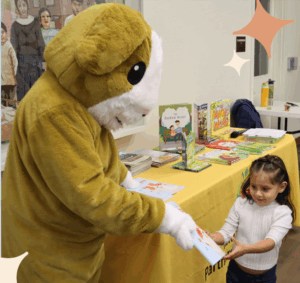
A group of people holding books accompanied with a mascot wearing a yellow and brown costume

Ken and Sharon Smith (right), with their daughter Christan Connors and Lily Ferguson, who was one of the second-grade authors of Houdini Was, at the launch of the book’s republishing at the Early Learning Center

Throughout his career, Ken lent his expertise to agriculture-oriented non-profits, the majority with a focus on helping young people. As chair of the Yakima Rotary’s World Community Service Committee, he spearheaded the successful International Rotary Grant application and assisted in construction of a wheelchair-accessible tree house at a school for children with disabilities in Honduras.

Ken also had the children’s book Houdini Was – which was selected as a national winner in the Scholastic annual children’s book competition reprinted in English and Spanish. The book chronicles the simple life lessons a pet hamster taught the second graders whose classroom she occupied.

“Our daughter Christan Connors and her students wrote the book in 2010, which won the Scholastic Inc. competition,” Ken said. “Christan, Sharon, and I were glad to have the message shared with more children in the Valley through the Early Learning Center at Heritage.

“To do that, it needed to be printed in Spanish as well as English. Now it’s being shared with young students all over the Valley through Heritage and the Yakima Valley Libraries programs.

“I think it’s very important to young people to get a good start,” Ken said. “Our whole family believes that.”Heritage Eagle

Legacy of Leadership – Wings Spring 2025

"Heritage University President Andrew Sund, Ph.D., wearing academic regalia, smiles during a graduation ceremony. The image features a headline reading 'LEGACY OF LEADERSHIP' and text discussing his upcoming departure after eight years of service."

Heritage University President Dr. Andrew Sund

LEGACY OF LEADERSHIP

President Andrew Sund looks back at his eight years at Heritage University.

In June, as the last academic year was winding down, Heritage President Andrew Sund, Ph.D., made an announcement that would change the course of the university moving forward—2024/25 would be his last year at Heritage. He was stepping down from the presidency after eight years of service.

Now, with only a few more months left at the university’s helm, we sat down with Dr. Sund to get his thoughts on the university, its people, his time here, and his hopes for the future.

Dr. Sund, it’s been eight years since you accepted the position of Heritage University president. What made you decide to do so?

I had known of Heritage because I’d met both my predecessors in a variety of settings. I came from a university in Chicago with a primarily Latino community, and I knew the two institutions shared some similarities, primarily in their focus on marginalized communities. That resonated with me and continues to resonate with me. So, I often thought that Heritage was an institution I would love to work at. When the position opened up, I decided to apply.

What did you feel was special about Heritage?

The university’s mission to serve underserved populations, particularly the Native American community and Heritage’s location on the Yakama Nation. I thought I could contribute to the mission and grow as a person and as a professional. Also, being in a rural community seemed quite unique and inviting to me.

What growth opportunities did you see for Heritage?

I saw opportunities to grow enrollment by focusing more strongly on Heritage’s original mission. Previously, there was an effort to bring in other populations that weren’t part of the original mission of serving the people of the Yakima Valley. I felt that by focusing strongly on the mission and providing the proper services to students, we could grow those student numbers. The groundwork had been laid that we could take to the next level. Heritage’s focus must always be on serving people who are first-generation college students, who come from low-income backgrounds, face cultural obstacles, and who need financial support to achieve their goals. It’s a unique mission, and Heritage says, ‘This is who we are. We exist to serve this population.’ Whether that’s helping a student with a flat tire, providing some emergency funding for gas, or having a food pantry that allows students the ability to take food home – at Heritage, students are never a number. Students and faculty work together for students’ well-being. They share their cell numbers and text each other anytime, day or night, for academic or other reasons. It’s rare, really special, and it’s all part of our focus. I often say Heritage is what higher education should look like everywhere. We should be the norm, not the exception. Higher education was created in Europe back in the Middle Ages to serve elites – we challenge that, and we are willing to change processes, systems, anything we can so that students can have access and success but never compromise the quality of education.

What goals have been accomplished in your eight years?

Alt text: "The exterior of a modern Heritage University building with large glass windows and a banner displaying the university's name and logo. A sign above the entrance reads 'ENTRANCE.' Overlay text describes the university's 2023 expansion in the Tri-Cities, offering full four-year programs in six majors, including Business Administration, Accounting, Social Work, Psychology, Criminal Justice, and Education."

Heritage University Tri-Cities in Kennewick, Wash.

Well, we’ve developed a closer relationship with the Yakama Nation, something I’m very proud of. It’s important because it’s the root of the institution. We were founded to ensure access to higher education for the people of the Yakama Nation, to meet them where they are, and to bring them to the level they want and need. So, the first accomplishment is that we are proud of our mission and who we serve, and it’s important that we never question that.

From that, we’ve grown Native enrollment from eight percent to 14 percent. Doubling our number of Native American students during my time here is a major achievement. Tribal council members have commented many times on how closely I’ve worked with them, and that’s a major source of pride and accomplishment for me.

What are the specific programs you’ve been part of realizing?

There are new majors we’ve brought to the University, like the Master of Social Work and the Master of Mental Health Counseling. Those address the actual needs of people in the Valley, so that’s significant. Of course, we expanded Heritage’s reach a couple of years ago through our new Tri-Cities location. It’s a work in progress that’s hopefully going to bring great results for many years to come.

The Heritage University Yakama Nation Full Circle Scholarship is another meaningful program because it makes it possible for qualifying students to earntheir undergraduate degree with no out-of-pocket tuition costs. It’s unique in that it covers tuition that remains after other scholarships and grants, and it’s renewable for up to six years.

The Ross Institute for Student Success will help establish the University as a center for teaching methodologies for first-generation college students, which is our expertise. This really formalizes it in an entirely new and significant way.

And finally, Yakima Valley Partners for Education (YVPE) was one of the first initiatives I was part of establishing at the University. YVPE lets Heritage be part of a collaboration with schools and communities to improve educational outcomes for all youth, cradle to career.

Indoor shot of a hospital hallway, likely a pediatric ward.

Heritage University and Seattle Children’s Hospital
strengthened their partnership to give students a
high-quality pediatric rotation and to graduate a
more diverse pool of nurses to enter the workforce. A
generous $4 million gift allowed both entities to create
endowments to support the partnership in perpetuity.

How do you think faculty have developed during your tenure?

I’m very happy with how we’ve been able to maintain and grow the quality of faculty at Heritage University. We’ve had people join our institution with PhDs from the most prestigious institutions in the Pacific Northwest and the nation, including two professors who were undergraduates at HU, went off to earn their PhDs, and are now back at HU as professors.

Any unexpected bumps in the road?

The pandemic, of course. I was so proud of everyone who worked together to manage the effects of the pandemic on our students. We don’t have the resources of larger universities. Yet, we pivoted, and it was the great work of many people, especially in the IT department, who had to make sure everything happened. Faculty and staff worked very hard to make sure students could continue, and students managed to do it despite many difficulties in their personal lives.

Eight years since you came to Heritage, how is the university doing financially?

Perhaps one of the accomplishments I might be remembered for most is that we basically doubled our endowment in my time here. Fundraising has been a major success and as I said, it’s not something I take credit for fully because fundraising is the result of years of work and making sure you’re telling the Heritage story, sharing the mission, and developing connections with people who can support that mission. I did some of that, but I also continued relationships that were built by my predecessors and others, so I am very grateful for them and very happy I was able to continue with that. We received some very big gifts recently – a six million dollar gift and the latest one $10 million. It’s remarkable for a small institution like Heritage that we have that level of support.

Widening the lens, what challenges does higher education face today?

Dr. Sund stands beside Sr. Kathleen Ross, the founding president.

Founding HU president Dr. Kathleen Ross stands with HU President Dr. Andrew Sund

We’re facing a crisis of ‘value.’ It used to be understood you’re paying for something that’s going to bring you future rewards. That does not exist as it had. Many people are questioning whether it’s worth the ‘sticker price’ to earn a degree – though it’s always funny to me that many critics of higher education want their own kids to go to college.

But, as a sector, the cost of higher education is way too high, making it very difficult for people to attend if they don’t have the resources. Pell grants have not grown the way they should. State support hasn’t kept up. There’s inflation. We need to continue fundraising to make up those differences. And we must always demonstrate our value proposition – in other words, what you get out of a Heritage University education. Heritage was the lead agency that formed the Yakima Valley Partners for Education in 2019 as a measure to mobilize communities around improving educational outcomes for youth from cradle to career.

The cost challenges are what’s made me lose sleep. Yet at Heritage, we have worked to keep tuition significantly lower. We’ve been successful where many small institutions have closed in the past few years due to the high cost of keeping the infrastructure going while at the same time experiencing lower enrollments.

What inspires you about Heritage students?

I think about how, in the wintertime especially, I see students coming in when it gets dark early, probably after having worked an eight-hour shift somewhere. They’re devoting their time trying to further their lives through education, which, of course, is the most powerful tool to overcome obstacles in life — and that is inspiring to me. It’s their determination despite difficulties they may be facing in their personal lives. Anytime I’m having a hard day, I just need to look at our students and how hard they work.

Full indoor shot of a preschool classroom, with several children engaged in various activities.

Children playing in the new Early Learning Center at Heritage University

What inspires you about Heritage faculty?

Our faculty are here because they want to be part of this; they’re committed to our students’ success, and they’re willing to work with all sorts of innovative teaching practices and the sort of close- touch contact that we were talking about earlier. They could be elsewhere, but they’re here because they believe in the mission and our students.

Who else inspires you?

Those who share their time, their expertise, their monetary support, which is so important to Heritage. I’ve always been so impressed with the commitment of the community towards Heritage, whether it’s through board service, or volunteering in other ways, or through their financial resources. It really shows several things – that people in the Yakima Valley and in the Seattle area truly understand there’s a question of equity here. They know that providing opportunities is a fairness issue.

Full indoor shot of a group of children and adults gathered on a blue rug in a classroom.

Heritage was the lead agency that formed the Yakima Valley Partners for Education in 2019 as a measure to mobilize communities around improving educational outcomes for youth from cradle to career.

Further, there’s a tremendous understanding that, beyond equity, this makes sense for the Yakima Valley. Our students – the Latino population, the Native American population – they’re becoming the majority in the Valley. They’re going to hold the future jobs. We need professionals. We need people to be in education, business and the public sector. So, there is a great understanding also of the economic impact that Heritage has on the Yakima Valley. It’s a very thoughtful group and one that has tremendous pride in Central Washington and understands the great privilege of having a university for this community right here in the middle of the hop fields.

What are your continuing hopes for Heritage University?

To continue to develop master’s degrees that are needed in the community. That could be very powerful for the institution. And more research opportunities, showing what we do at Heritage that brings scholars from other areas so they can learn from us, and we can learn from them.

What’s next for you, Dr. Sund?

It’s a fluid situation, but I’m looking forward to flexibility in my work life, perhaps as a consultant, and to work in my areas of expertise. So guiding leadership or in accreditation, in work that revolves around helping students who have had limited access to higher education. I want to keep using the skills and knowledge I’ve developed. I’m looking forward to having flexibility so I can travel. I would like to be – what do you call it? – a snowbird because I have a home in Chicago where my sons are, but when it’s February in Chicago, I want to go back to Chile.

A large group of people, mostly young adults, are seated in rows, likely in a courtroom or similar setting.

A partnership project designed to boost the number of people of color serving as lawyers in Central Washington kicked off in 2022. The Law School Admission Council Prelaw Undergraduate Scholars Program partnered Heritage University with the law schools at Seattle University, University of Washington and Gonzaga University.

What will you miss about living here?

I will miss the people. I will miss many colleagues who I’m very happy to consider my friends, and now stronger friends in some ways because I’m not going to be their boss anymore. I will miss Tim’s cooking in the cafeteria. I’ve really enjoyed the weather here — it’s so pleasant for so many months. So I’ll miss driving through the hop fields and the beautiful scent in the air at different times of the year, the apples, the mint. I’ve so enjoyed early morning walks at Cowiche Canyon, when it’s quiet and still with the breeze and the peace and quiet all around you.

Close-up of a person, likely a young man of Indigenous descent, wearing a patterned headband.

Among the ways Dr. Sund has strengthened the
university’s relationship with the Yakama Nation is the establishment of the Full Circle Scholarship, which provides funding to enrolled tribal members, allowing them to attend Heritage at no cost for tuition.

I love the relaxed lifestyle in the Valley and the wonderful social and dining scene of the restaurants and wineries. Yakima, where I live, has this sort of small-town feel even though it’s not such a small town: the civic clubs and the involvement from so many people here who are so civic-minded. You get to meet people here, and that’s what I’ve really enjoyed.  Heritage Eagle

It’s a Family Affair – Wings Spring 2025


Full shot of three Indigenous women, likely Native American, dressed in traditional clothing.

Three women, two generations of Heritage Eagles, all pursuing their college degrees. Right to left: Lateet Olney, “Takiisha” Tamara Stevens, and Lisa Renee “Waptas” Olney.

Ask freshman Lisa Renee “Waptas” Olney about how old she was when she first came to Heritage, and you might be surprised by her answer.

“I think I was 12,” she said with a smile. “My mom used to bring me with her when she went to class. She’d set me up on a computer or have me follow along with the class, working on math problems. Sometimes, my sister and I would wait outside the Harry Kent Building while she was in class or meeting with her advisor.”

Her mom is HU alumna “Takiisha” Tamara Stevens, and her sister is Heritage sophomore Lateet Olney. Together, these three Yakama women are living proof of Heritage’s mission: empowering students to overcome obstacles and create lives filled with opportunity.

TAKIISHA: THE MATRIARCH
Takiisha has always been candid about her rebellious teenage years. “I was a bit of a defiant teenager,” she said. “It took me two years longer than most to graduate from high school. My dad was sick at the time, and he kept telling me, ‘Go to school. With an education, you can live in the traditional world and work in the non-traditional world. An education will allow you to create your own legacy.’”

But her adventurous spirit had other plans. Instead of heading straight to college, she joined the Army after high school and served in the Middle East. When her military service ended, she returned to the Yakama Nation and lived a life similar to many of her peers. She worked for the Yakama Nation, moved between positions, fell in love, started a family, and eventually left the workforce to raise her five children. When that relationship ended, she returned to work as a single mom.

Full shot of a woman, identified as Tamara Stevens, in a graduation gown and cap, walking toward a podium. She is smiling and appears to be in the process of walking up the steps or a ramp towards a speaker's platform.

“Takiisha” Tamara Stevens marches proudly to the
podium to present her undergraduate address during Commencement 2012.

It wasn’t until her late 30s that Takiisha decided it was time to return to school. Two key things made her decision clear: First, her aunt, Martha Yallup, a founder of Heritage and Takiisha’s supervisor, gave her some advice that stuck. “I was in my first supervisory role at Camp Chaparral,” Takiisha recalled. “Martha sat me down and explained why education was so important. She told me to imagine a stack of job applications. ‘The ones without education go straight to the bottom.’”

The second was a call from the Veterans Administration, reminding her of the GI Bill she signed up for when she joined the Army, which covered her tuition.

“They called me three times before I finally listened,” Takiisha said. “I kept thinking about my dad’s words about legacy. And then I thought, ‘It’s time.’ I enrolled at Heritage as a freshman.”

Despite the GI Bill covering her tuition, Takiisha’s journey wasn’t easy. She juggled being a full-time mom, a full-time student, and a full- time employee, all while ensuring her kids didn’t miss out on childhood moments because of her busy schedule.

“Waptas is the youngest. There were days when I wouldn’t see her until the evening,” she said. “I’d wake her up for school, and then, when I got home from class, I’d bring dinner and snacks. We’d spend as much time together as I could, even if it meant doing homework late at night.”

Takiisha’s efforts paid off, as her kids never saw her struggle as anything out of the ordinary. “We’d go to class with Mom sometimes or see her doing homework late at night. We didn’t think it was any different from what other families experienced,” said Lateet.

In 2012, after years of hard work, Takiisha graduated with a Bachelor of Arts in Business Administration. She went on to work at the Yakama Nation’s Tribal Employment Rights Office (TERO), a program dedicated to creating employment and training opportunities for Yakama tribal members and other Indigenous peoples, where she eventually became the program director.

“TERO is vital for our community,” she explained. “It connects us with opportunities, and I even got my kids involved. Waptas became a laborer, my son William, an ironworker, and Lateet joined the carpenters’ union and became an authorized OSHA instructor.”

After many years at TERO, Takiisha decided it was time for the next chapter in her life. “Graduate school was always my goal. But over time, it became harder and harder to leave my job,” she said. “But after a difficult divorce and a conversation with my daughter, I realized it was time to follow through on my dreams. She told me, ‘What about you, Mom? ‘When are you going to stop talking about getting your master’s and just go do it?’”

Today, Takiisha is just three classes away from earning her M.B.A. in Business Administration with a specialization in marketing from Washington State University.

THE OLNEY SISTERS

There’s an often-heard truth in higher education: children of college graduates are more likely to attend college. But the Olney sisters’ path proves this doesn’t always follow a straight line.

Waptas was a bright teen who took college prep courses and earned good grades. But life had other plans, and she found herself pregnant with her first daughter at a young age. A serious illness kept her out of school for two months, which caused her to fall behind. She ended up dropping out of school.

Over the next few years, Waptas moved between White Swan, Tacoma, and Montana, working off and on while raising her daughter. Four years ago, she had her second daughter. But the idea of returning to school always lingered in the back of her mind.

“I used to tell my mom, ‘When Baby is in Head Start, I’ll go back to school,’” Waptas said. “Then, Lateet started going to Heritage, and I ran into a friend who got her GED through Heritage’s HEP program. My mom said, ‘Baby is in Head Start. You have no excuses.’ She was right. I enrolled in the HEP program.”

Waptas’s goal was clear: get her GED, then continue to Heritage. She started HEP in April 2024, completed it in June, and began her freshman year at Heritage in August. Like her mother, she’s pursuing a degree in business administration.

“I want to make an impact in my community,” she said. “I live in White Swan, and it’s neglected. Most programs are based in Toppenish. I want to help my community, the place and the people I care about.”

Lateet’s path to Heritage was similarly non- linear. She, too, dropped out of high school as a teenager after becoming a mom. When her daughter was a few years old, Lateet got her GED and began working as a laborer in traffic control. She later joined the labor union and became a journeyman.

“I had so many people telling me, ‘What are you going to do? Swing a sledgehammer all your life?’ I knew they were right. I needed something more,” she said. After working for a while, Lateet decided to travel the powwow trail and see how other tribes were flourishing. She wanted to help her tribe do the same.

In the fall of 2023, Lateet enrolled at Heritage, declaring a major in American Indian Studies. Next year, she plans to add business classes to her schedule.

EDUCATION: THE TIE THAT BINDS

It’s not every day you find two generations and three family members in college at the same time. For the Olney family, being academic peers has kept them all focused and motivated.

“When things get tough, we lean on each other for support,” Takiisha said. “We study together, or send each other texts saying, ‘You’ve got this.’”

The family sees their journey as an inspiration for the next generation, especially Lateet and Waptas’s daughters, who are around the same age as they were when they accompanied their mother to Heritage.

“My daughter loves coming to Heritage. She tells her friends, ‘I’ve been to college.’ She gets so excited. For her, being on campus means she’s been to college,” said Lateet. “I love that she can see herself in college and is curious and excited. I feel like we’re lighting the way for them.”

Waptas shares a similar sentiment: “My oldest had a school assignment where she had to write a letter to a college. She wrote to Heritage, listing why she should be accepted. She said she wanted to study ‘ELA’—English Language Arts.

She’s only 12 but already thinking about college. I love that!”

As the Olney family works toward their degrees and returns to the workforce, their hard work and sacrifice will ultimately benefit the Yakama Nation. As Takiisha’s father and grandfather used to say, “Get an education so you can come back and take care of your nation.” Takiisha hopes their example will inspire young people to follow their own paths to college and create their own legacies. Heritage Eagle

News Briefs – Wings Fall-Winter 2024


HU gives Seattleites insiders tour of the Yakima Valley

While the Yakima Valley is only a few hours east of Seattle, its rural geography, high-desert climate and agricultural dependence can make it seem as foreign as a visit to another land. In September, supporters from the greater Puget Sound region made their way east of the Cascades for an insider’s tour of Yakima, its arts and culture, agricultural industry, and Heritage University.

A group of people pose for a picture outside a building

Visitors from western Washington outside the Student Services Center at Heritage University with two HU student ambassadors.

Fourteen visitors toured a private Native American museum, an apple packing warehouse, and the artist community Mighty Tieton. They watched artisans working on one of their mosaic projects and met with Heritage alumna Rosie Saldana, the organization’s artistic director. The guests dined at the private homes of Heritage supporters and former board members, where they sampled wines and beers from the region and learned about its history.

“The Yakima Valley is a rich and diverse community with wonderful people from all different walks of life,” said Elizabeth Perera, regional development director for western Washington. “Most people passing through the region, or even stopping to visit for a long weekend, only get to appreciate what it offers.

A woman looks over an apple processing machine

HU Board Member Ellen Wallach looks over an apple processing machine during a visit to Washington Fruit in Yakima, Wash.

“The tour gave our visitors a much more in-depth perspective on the region and the people who call this place home. They better understood Heritage’s life-changing role in our students’ lives and the community itself.”

This is the fourth year of the tour, which serves as a fundraiser for the university. This year, the event raised $20,000 in student scholarships.

The year-over-year response has been so positive that work is underway to build next year’s event. It will take place one weekend mid-September. For more information or to reserve your space for the 2025 tour, contact our Advancement Office at advancement@heritage.edu. 


Largest class in seven years starts at Heritage this fall

Heritage University welcomed its largest group of new students since 2017. A total of 347 new freshmen and transfer students started their educational

Students walk along a path at Heritage University

Students walking a path between Petrie Hall and the Kathleen Ross Center at Heritage University.

journey at the university this fall. This achievement came despite the challenges faced by students and families this year in securing college funding in a timely manner. The federal government’s troubled revamp of the Free Application for Federal Student Aid (FAFSA) left many students nationwide unsure how much, if any, financial aid they would receive to help pay for their schooling until only a few months before classes began. Heritage’s Office of Financial Aid doubled its efforts to get financial aid packages to incoming and returning students as soon as their FAFSA applications were processed. Additionally, university donors stepped in to fill any financial gaps, ensuring that no student was left behind due to financial constraints.


Seattle University School of Law expands access to legal education at Heritage

Two men sit at a desk signing papers while people stand behind them.

HU President Andrew Sund and Seattle University School of Law Dean Anthony Varona sign papers establishing a law school partnership between the two higher learning institutions.

In September, Heritage and Seattle University entered a partnership to help aspiring lawyers earn a degree while staying in the Yakima Valley. Called the Hybrid Hub, the partnership opens up Heritage’s campus to Seattle University law students who are attending classes remotely through their Flex JD program, giving them access to an academic setting for studying as well as to other campus resources, such as high-speed internet and the library. Additionally, Heritage will serve as an in-person meeting area where the students can network with their peers in the program as well as Seattle University Law School alumni, and members of the local legal community.

The Seattle University Flex JD program allows students to attend law school part-time in a hybrid online setting.


New board members bring wealth of leadership and career skills to Heritage

Six new members joined the Heritage Board of Directors this year. They are leaders in their respective fields and join 24 other directors who volunteer their time and resources to ensure the university’s success.

CONNIE FALON, CEO of Compass Financial Network LLC, has more than 30 years of experience in financial planning. She is a Chartered Retirement Plans Specialist who manages wealth for individuals, families and businesses. Her expertise includes broad-based investment planning and portfolio management. Falon is a long-time friend of Heritage, having volunteered for many projects over the past 20 years.

ALLISON PARKER, Principal, Peake Impact, joined the board in January. She is a seasoned social impact strategist with nearly 25 years of experience, focusing on channeling flexible, long-term capital to under-resourced communities. She advises individuals and foundations in strategy, impact investing, and complex asset gifts. Prior to founding Peake Impact, she spent more than 16 years at the Seattle Foundation, where she most recently served as Managing Director of Philanthropy Strategies, leading a team responsible for creating new funds and launching a donor-advised impact investing program. Her career began as a staffer to U.S. Senator Patty Murray, specializing in federal funding, where she first encountered Heritage University.

DEREK RED ARROW, Litigation of Counsel, Kilpatrick Townsend & Stockton, is an enrolled member of the Nez Perce Tribe. He advises tribal governments, enterprises, nonprofits and businesses on matters involving treaty rights, land-back projects, inter-tribal trade, taxation, and other aspects of Federal Indian Law. Prior to joining his current firm, he co-founded the American Indian Law practice group at a Yakima-based firm, served as a staff attorney for the Yakama Nation, and clerked for Chief Judge Brian M. Morris of the U.S. District Court for Montana. He has been recognized as one of “America’s Best Lawyers: Ones to Watch” in Native American Law, he has received the NCAIED National 40 Under 40 award for his leadership and contributions to Indian Country and was named a “Successful Indigenous Role Model” for Nez Perce Tribe’s Lapwai School District.

RAUL SITAL, Assistant Superintendent of Operations and Supports, Pasco School District, has been in his current position for three years. His leadership in this capacity contributed to the effective functioning of the district’s operations and support systems. While at Pasco School District, Sital served as a teacher at McLoughlin Middle School, a program teacher and manager at Discovery Middle School, and as Principal of New Horizons High School and Pasco High School.

He earned his teaching credential at Central Washington University and holds a Master’s in Teaching and Learning degree from Heritage University. He is passionate about education because he believes in providing the opportunity for every child to reach their dreams and goals.

DR. MARIA VERDUZCO, Clinical Medical Director, Yakima Valley Farm Workers Clinic, was born and raised in Yakima. She earned a B.A. in Biology with a minor in Chemistry from Central Washington University in Ellensburg and went on to obtain her Doctor of Medicine degree from the University of Washington School of Medicine. Verduzco completed her residency at the Central Washington Family Medicine Residency program in Yakima. She is bilingual in Spanish and English and has dedicated her career to enhancing patient health, especially withinunderserved communities.

ELMER WARD, Associate Judge, Yakama Nation Court, has worked in Native law for his entire legal career in a variety of roles for several tribes. He received a Bachelor of Arts degree from Harvard University and a Juris Doctorate from the UCLA School of Law. He has served as a board member for People for People, the Yakima Valley College Boardof Trustees and the Providence Foundation Board.


Honoring Our Elders – Wings Fall-Winter 2024


Native American Elders

Native American elders being honored this year (2024) include (clockwise from top left) Warren Cloud, Carol Craig, Esther Moses-Hyipeer and Elmer Schuster


November is Native American Heritage Month. Each year, Heritage University kicks off its celebration by honoring four Yakama elders for their lifetime contributions to their communities. This year we recognize Warren Cloud, Esther Moses- Hyipeer, Carol Craig, and Elmer Schuster.

WARREN CLOUD, LUXKULKIST dedicated his life to hard work, always using his hands to ensure the job got done. As a trucker, he transported fruit from the fields to the processing center, ensuring that families received nourishing food. As a logger, he carefully brought trees from the forest to help build homes. He worked tirelessly as a heavy equipment operator to keep waterways flowing, providing essential water for crops and animals to thrive. When the call came for him to serve as a tribal leader for the Yakama Nation, Warren answered with a heartfelt “yes.” As the Yakama Nation General Council Chairman, he leads with a deep respect for tradition and a steadfast commitment to safeguarding the principles of the Treaty of 1855. Warren’s leadership embodies a legacy of service and devotion to his community, inspiring others to honor their heritage and work together for a brighter future.

“TALEETS” ESTHER MOSES-HYIPEER grew up deeply rooted in her culture, surrounded by the rich stories and history of those who came before her. From an early age, she learned the importance of gathering and preserving the traditional foods. From the medicine men in her family line, she learned to nurture her community with instilled values. These lessons would guide her throughout her life. Her unwavering commitment to the Yakama people shines through her work across various entities, including the Yakama Nation Tribal School, Higher Education, and the Language Program; the Yakama Nation Gaming Commission; and the Yakama Nation Tribal Council. Taleets has led impactful initiatives that honor veterans, provide transitional housing for homeless families, and tackle the challenges of drug and alcohol addiction. Additionally, she’s led the call for tribal healthcare programs to work together to address the holistic mental and physical health of individuals and families. In every endeavor, she carries the wisdom of her elders and the principles of the Treaty of 1855, allowing their teachings to illuminate her path of service. Taleets embodies the spirit of community and resilience, inspiring those around her to uphold their heritage and support one another.

CAROL CRAIG NUKSHÁY XWÁAMI is a storyteller and educator devoted to sharing the truths of Native people, the environment, and treaty rights. Her impactful work at the Columbia River Inter-Tribal Fish Commission and Yakama Nation Fish and Wildlife has raised awareness of tribal efforts to restore dwindling salmon runs while educating non-tribal communities about the significance of the fishing rights granted to the Yakama people through the Treaty of 1855. As a reporter for the Yakama Nation Review, Carol ensures her community has access to honest and accurate information about issues that affect their lives. Her unwavering commitment to her people and the environment fosters a deeper understanding of their heritage and rights. Carol’s work empowers her community and inspires future generations to honor and protect these vital connections.

ELMER SCHUSTER, TOMIITH’S life’s work has left an indelible mark on the landscape and the people of the Yakima Valley. A skilled carpenter since the 1960s, he has helped construct vital infrastructure, including highway overpasses that facilitate the movement of people and goods, and irrigation dams that ensure the flow of precious water to the crops that nourish our nation. Moreover, he has helped craft longhouses that preserve cultural traditions through meaningful ceremonies and constructed youth camps that foster lifelong memories and impart invaluable lessons. Under his leadership at the Yakama Nation Housing Authority, he led the teams that built the homes that shelter hundreds of tribal members, providing a foundation for community growth and resilience. Elmer’s contributions are not just physical structures; they are enduring symbols of strength, tradition, and hope for future generations.

The four elders were each featured in ads that ran in the Yakama Nation Review and were honored during a special ceremony at the university on November 6. This is the tenth year that Heritage has honored Native American elders. Portraits of all of the recipients are on a permanent display in the Violet Lumley Rau Center.


El Grito de Independencia – Wings Fall-Winter 2024


The richness of the Mexican culture was out in full color in September when the campus community hosted its 5th annual El Grito celebration.

El Grito is an important traditional celebration in Mexico that commemorates the start of the country’s war for independence. Each year on September 15 at 11:00 p.m., Mexico’s president rings a bell at the National Palace in Mexico City and shouts out a call of patriotism based on the Cry of Dolores, the call out made two centuries ago by Miguel Hidalgo y Costilla that started the war for independence. This call is replicated in cities and towns throughout Mexico, with the highest-ranking government official making the call. For theMexican people, it is as sacred as the 4th of July is to Americans.

A man holds the Mexican flag as a woman holds a microphone to his face

Miguel Hidalgo y Costilla waves the Mexican flag as he recreates the El Grito with HEP Director Jennifer Renteria holds a microphone for him to speak into.

Heritage started hosting this cultural event in 2018. It is both a time to celebrate the heritage shared by a significant portion of the university’s student body and a way to bring the community to the campus. With September 15 landing Sunday this year, the university broke away from the tradition a bit by celebrating the day before on a Saturday and reenacting the Cry of Dolores earlier in the evening at 7:00.

The event featured traditional dancing and music, including a performance of Aztec dances, folkloric dance by Grupo La Esperanza, and a night dance led by local band Los de la Z. Community organizations participated in a resource fair, and children and families enjoyed traditional crafts and games. Mexican Consul Representative Oscalin Figueroa led the crowd through the Cry of Dolores.


A collage of scenes from the El Grito celebration at Heritage University, September 14, 2024

Scenes from the El Grito celebration at Heritage University, September 14, 2024

Counter Culture Academics – Wings Fall-Winter 2024

Closeup of a denim jacket decorated with metal studs, letters in a fancy font with the words Counter Culture Academics written in red on a black patch


What does Heritage University have in common with punk rock music? Alumnus Brian McShane. McShane graduated from Heritage with a B.A. in English in 2014 and an M.A. in Multicultural English Language and Literature in 2017. Last year, he completed his Ph.D. in Composition and Rhetoric from Texas A&M University, where his dissertation focused on punk music.

On the surface, his dissertation seemed about as far away from mainstream academics as one can get. Producing Activists: A Punk Rock Counter story was the culmination of years of study on organized efforts in the punk rock music scene to mobilize youth to participate in the election process.

For many, putting the words academia, punk rock, and get out the vote in a single sentence seems to make as much sense as a bird living underwater. They are concepts that live far afield of each other. Punk rock, after all, is the antithesis of conformity. It’s known for its in-your-face, hard-pounding music, screaming vocals, and anti-government, anti-religion, pretty much anti-anything mainstream lyrics.

For some, the very idea that punk rock has a place in academia seems ludicrous. For die- hard punk rockers, the very thought of being part of the political process that they’ve spent so much time rebelling against is equally ridiculous. Yet, in the aftermath of September 11th, some of the most-followed punk rock bands of the time orchestrated a campaign that shifted thinking, mobilized a fan base, and made the perfect fodder for an up-and-coming doctoral student to study.

THE EDUCATION OF MR. MCSHANE

Headshot of a man with a goatee and glasses wearing a shirt and tie

Brian McShane

Growing up, McShane was the picture of teenage angst in the 1990s. At fourteen, he was hanging out in skateboard parks listening to the anti-establishment punk rock music of bands like Green Day, Social Distortion, and Bad Religion. He was slightly awkward and an avid reader who did well in his New Jersey high school but didn’t have much thought about what would come next.

McShane graduated in 2002 and enrolled in a technical school but dropped out shortly thereafter. Over the next few years, he floated about, taking a course here and there without any real direction. He was living in N.J., attending a small college outside Pittsburgh, Pennsylvania, online. He needed a specific English literature course that was not available at his college in the upcoming semester. Luckily, he found an online class at a university 2,444 miles away in Toppenish, Washington.

Long before COVID-19 forced all college classes online, Heritage’s English program developed a way to take classes remotely. McShane enrolled in one of these classes. He was one of the first undergraduate students to take advantage of this new learning method at Heritage. That single class sparked an idea.

“I thought, ‘Could I really do this for a living?” he said. “Of course, I knew that there were teachers who taught English in high schools, but for some reason, it never really clicked with me that there were careers that could come out of English degrees.”

It was 2005 when McShane transferred from the Pittsburg-area school and enrolled full-time at Heritage.

“Heritage’s online class – specifically the way forums worked – more closely approximated the experience of being in the classroom. Interaction with classmates was more organic, easier to get engaged with, and the instructors were attuned to the ways technology could facilitate that more than any online class I’d ever taken.”

A year and a half later, McShane had his bachelor’s degree from Heritage. The next academic year, he enrolled in the university’s master’s program. His plan was to finish his master’s degree and start teaching at the college level. That is exactly what he did. In fact, he became a member of Heritage’s adjunct faculty, teaching online from his home in Ocean County, NJ. He quickly realized that he needed to earn a doctorate to advance his career in the way he wanted. His Heritage advisor, Dr. Loren Schmidt, suggested he look at Texas A&M.

“I was informed of the school’s stellar job placement rate and the faculty focus on genre- based study. Having just written a science fiction thesis, this appealed to me greatly, as I wasn’t interested in returning to the old canon for the Ph.D.”

DIVING INTO THE COUNTERCULTURE

At the start of McShane’s doctoral program, he thought he would find a nice, safe, classical study area to focus his dissertation. Then, he took a class on composition and rhetoric and was reading someone’s work on the cultural relevance of lobotomies in horror movies.

“Academia has changed a lot over the years,” he said. “It used to be exploring things like science fiction or children’s literature were frowned upon. You had to do the cannons, like Mark Twain. Really, it’s a matter of who sets the standards. Coming here to Texas A&M was great because they encourage you to take on nontraditional things. The program is very current, and we were reading really leading- edge stuff as part of our coursework.”

He considered focusing on science fiction when a class assignment changed his direction. He was presenting a poster as a visual depiction of the value of punk rock music to his class. His professor and mentor, Dr. Shannon Carter, said, “That’s your dissertation topic right there.”

Close up of a man and woman with their faces in red

Brian McShane and his wife enjoy the occasional punk rock concert.

At the same time, McShane was reading Asia Martinez’s book Counterstory, the Rhetoric and Writing of Critical Race Theory as part of his Ph.D. studies. It dawned on him that many of the canons put forward in this book were found in the punk music of his youth—things like rebelling against racism and sexism, questioning conventional wisdom, and highlighting marginalized voices. He decided to look at the music through the lens of Critical Race Theory.

McShane explained that when researching your Ph.D., you need to focus your studies narrowly on a specific topic area. He chose to narrow in on the time directly after 9/11 and the relationship between patriotism after a national tragedy and protest music. He examined the rhetoric of the Bush administration surrounding the war effort, punk music’s response to the messaging, and the grass-roots movement that changed a counter culture from disengaged resentment to organized activists engaged in the political process. At the heart of his research was a political literacy campaign called Rock Against Bush with its voter drives, punkvoter.com website, the organization of bands to produce protest music and the corresponding albums and concerts where the music was heard.

“Punk has always been political. As far back as you can trace it, you see music raging against the government and against the establishment,” he said. “But this was a time when things shifted. It was a time when punk music went from ‘everything sucks, burn it down” to “everything sucks, let’s change it,’” he said. “Their goal at the time was to vote President Bush out of the White House. While they didn’t accomplish that particular goal, they did succeed in bringing thousands of young people into the political process to share their voice.”

It took McShane six years to complete his Ph.D., three years of coursework, and another three years of researching and writing his dissertation. In his work he found an academic passion that he hopes to revisit for future projects. He’s also found a way to connect with his students today. During his adjunct teaching days, he would share his experiences completing his research with his classes.

“I’d tell them the bands that organized the movement I studied were the Rage Against the Machine before they were born,” he laughs. “I tell them to look at what is being said in the music they listen to and how it reflects what is going on in the world around them. It is something they can relate to, and they love it.”

McShane started his first full-time teaching position this fall at Paris Junior College in Texas. There, he is teaching Freshman Composition.

Breaking Barriers – Wings Fall-Winter 2024


Breaking Barriers title banner


The story of the impact of higher education is frequently told through the lens of students—the personal changes that come through more opportunities, the increased earning potential throughout their lifetimes, and the generational impact as children of college graduates are more likely to earn degrees and access the benefits of doing so. The story that isn’t told as frequently is the community impact made through college attainment.

Spring semester 2024 was the start of a new graduate degree program at Heritage. The Master of Arts in Mental Health Counseling began as a direct response from schools and community health agencies needing more master’s-level practitioners from diverse backgrounds. The stories of the agencies involved, their employees earning their   degrees, the people they serve, and the existing need embody the value of higher education to communities at large.

THE NEED IS VAST

Like so many communities large and small across the United States, the greater Seattle region is grappling with a social crisis. Drug addiction, particularly to opioids, is on the rise, with the number of overdoses more than doubling between 2020 and 2023.

Homelessness is up, too. The Unsheltered Point-in-Time Count conducted by King County this year showed the number of homeless individuals rose by 23% in the last two years. Statewide, it’s estimated that more than 1.2 million adults have a mental health condition, with more than half of these people unable to receive treatment.

It’s easy to look at statistics like these and forget that behind the numbers are very real people suffering. They are some of the communities’ most vulnerable individuals in desperate need of assistance. Yet that assistance can be difficult to access. There is a real shortage of service providers. It’s estimated that 2.8 million Washingtonians live in communities without adequate access to mental health care. Plus, internal factors, such as the stigma surrounding mental illness and addiction, cultural beliefs, and inadequate or no health insurance make many people in need of assistance reluctant to seek it. Further complicating the issue is a lack of diversity in the mental health and dependency workforce. Nationally, only 12% of mental health counselors are people of color.

Genell Hennings, director of education enhancement programs at the YMCA in King County, who worked closely with Heritage as the university developed its master’s degree program, explains that this lack of representation is a critical barrier.

“People who are seeking therapy want to see people who look like them, who can identify with them,” she said. “There is a level of trust that comes when we are sitting across from someone who shares our cultural background. When I am coming to you as a Black woman, I don’t want to have to explain my Blackness. A Black provider will be able to identify with me. We are all more comfortable when we are with others who share our cultural norms.”

That trust, she said, is crucial. It’s difficult to build and maintain. If a person seeking treatment has a negative experience, the chances of that individual seeking or accepting help in the future are diminished, as are their chances of conquering their demons.

She further explains that community mental health, which predominately serves people who are low-income and on Medicaid, operates by assigning those seeking services to a provider. This makes building and maintaining that trust much more difficult. The ability to choose a provider that you are comfortable working with is a luxury reserved for those who can pay out of pocket for services or who have private-pay insurance.

RESPONDING TO THE NEED

Donnie Goodman, Executive Director of Behavioral Health Services at the YMCA of Greater Seattle, conceptualized this program in 2008. In 2022, a King County MIDD (Mental Illness & Drug Dependency) funding opportunity presented itself that aligned with the program’s mission of increasing capacity in community behavioral health. Goodman and Hennings worked with leaders from multiple community behavioral health agencies to create this program that focuses on encouraging individuals from historically marginalized groups – specifically people of color, those living with a disability, and members of the LGBTQIA+ and BIPOC community— who are working in mental health and chemical dependency to return to school to earn a master’s degree. The program would pay for the students’ college tuition in exchange for their agreement to remain at their place of employment to provide therapeutic care for at least four years after graduating. At the same time, Heritage was building a new master’s degree program in mental health counseling. The university later received a $6 million grant from the US Department of Education to create a program that would prepare students to become licensed mental health counselor-associates in Washington state and increase the number of mental health professionals working in area school districts. The program was being designed with working professionals in mind, with classes being held synchronously one day a week. Like the YMCA’s developing program, its intent was to prepare underrepresented students to enter the field to diversify their profession.

“We know that our Yakima Valley community, as well as others across the state, are desperately in need of mental health providers. This is especially true for folks who are either uninsured or on state insurance – it’s an equity issue,” said Amy Nusbaum, chair of the Department of Psychology. “Our proposed solution was to create a new and innovative partnership that would address the urgent mental health needs that adversely impact our communities across the state.”

The timing was perfect! The YMCA secured grant funding to support their program for two years and partnered with Heritage to provide the hybrid online master’s degree program. The first cohort of 23 students from six agencies (Catholic Community Services, Center for Human Services, Community House, Therapeutic Health Services, and Transitional Resources YMCA of Greater Seattle) started classes in January 2023. Among them are Deidre Smith, Kenny Smith (no relation to Deidre) and Jungwon Yoon. While each enrolled in the program for different reasons, all three are committed to serving their clients and communities more deeply after graduating.

ON THE FRONT LINE

A portrait of a woman with shoulder-length black hair with red streaks wearing a checkered black and white jacket

Deidre Smith

Deidre is a substance use disorder professional at the YMCA Social Impact Center in Auburn, Washington. The center provides wraparound services for youth and young adults, including counseling, employment training, educational support, and a shelter, as well as counseling and suicide prevention for individuals of all ages. Smith provides outpatient substance abuse counseling to a caseload of 30-45 people. She decided to enroll in the master’s program to get the credentials she needs to serve her clients’ mental health as well as addiction treatment needs.

“So many of my clients have dual disorders and need mental health therapy along with their dependency treatment. The way my license is now, I have to hand them off to someone else to provide mental health counseling. That creates another barrier for them. Trust is not easy in this field. When I hand them off, they have to build trust with someone else and tell their story to someone else again. I want to be able to serve them holistically,” she said.

Kenny is a co-occurring disorder mental health clinician at Catholic Community Services in Seattle. He works with many homeless individuals through two different shelters and with people living in a permanent supportive housing facility. He knows firsthand what his clients are going through. Their road is one that he walked for many years.

“I’m transparent with my clients. I tell them, ‘I was where you are, man. If I can do this, you can do this.’ It gives them a sense of motivation, I tell them it is a rough road, but if you stick with it, you can make it.

Close-up of a man with glasses wearing a long white sleeve and a black vest

Kenny Smith

“A lot of them are pulling your chain and telling you what they think you want to hear. I know because that is what I used to do. But it is important that we don’t give up on them because, eventually, the one pulling the chain will want to be saved.

“I’m in the master’s degree program because I want the training and the information that comes with it. I have no plans to become a manager. I’m a boots-on-the-ground guy.”

Yoon is a clinical manager working at the Catholic Community Services Matt Talbott Center in the Belltown region of Seattle. The center provides recovery and treatment services for individuals who experience challenges with substance abuse, mental health and homelessness. Her program serves nearly 100 people, a majority of which are engaged in intensive outpatient treatment. “The opposite of addiction isn’t recovery,” she said. “The opposite of addiction is connection.”

Yoon explains that, for many of their clients, the center is their community. Church is held there on Sundays, and community events take place there throughout the year.

“They are very protective of us,” she said. “When there was a week of unrest near us a few years back, our clients surrounded the center and protected it.

“When we see people using substances are sleeping in our back alley, we feed them and give them water, and we tell them, ‘maybe, one day, we will see you at our front door.

Portrait of a woman with long black hair wearing a white top and green jacket outside

Jungwon Yoon

“For us, it’s not just about getting them to stop taking drugs. It’s about helping them thrive, reunite with their families, and being happy. Everyone deserves to be happy. I think this is why people love our place and have such a sense of ownership.

Yoon’s goal is to bolster further the forms of treatment and services offered by Matt Talbot Center after she earns her master’s degree.

THE IMPACT MULTIPLIED

Deidre, Kenny, and Yoon’s stories demonstrate the bigger picture. They are just three people in a cohort of 23 in this first class alone. This fall, a second cohort of 18 students from an additional five agencies (Asian Counseling and Referral Services, Consejo Counseling Services, Evergreen Health, Vine Maple Place and WAPI Community Services) started the program. Another 25 students are expected next year. In just three years, 66 master’s-level mental health practitioners from diverse backgrounds will be in the field in the King County area working with thousands of vulnerable community members.

On top of these numbers are the Yakima Valley students who are not part of the YMCA grant program. The first cohort of these students started attending classes in person on the Toppenish campus this fall. Future classes will enroll annually, and in two years, a steady stream of graduates will start filling vacancies in area schools and community health agencies where, like their western Washington counterparts, they will work with people with the greatest need for assistance.

This is the impact of higher education on communities!


A Lifetime of Service – Wings Fall-Winter 2024

A Lifetime of Service title banner


When Heritage University Professor Gregorio Ochoa walks into his first Introduction to Social Work class each semester, he writes his name and the letters “MSW” after it on the chalkboard.

“I ask my students, ‘What does the MSW stand for?’” Ochoa said. “Invariably, they say, ‘Masters in Social Work.’

“And I say, ‘It stands for “Mexican social worker.”’ Yes, I’ll tell you eventually how I got my master’s and how it all came together for me, but for now, I want you to know that part of our bond is that we’re mutually Mexican.”

That has meaning for his Latinx students in particular as they approach the work of their chosen field, said Ochoa, because their work will be all about helping people, likely fellow Latinx people.

At 70 years their senior — he turned 90 on November 20th — Ochoa is forthright about the challenges they will face. But his indomitable spirit, his cheerful way of discussing life and one’s ability to make a difference in other people’s lives is ageless.

DETERMINED TO GET AN EDUCATION

He’s lived through years of social tumult, he’s experienced plenty of racism, and he’s seen the face of actual evil up close. Yet Ochoa’s life has been filled with immense personal growth, learning, and purpose — all of which began with a very intentional pursuit of education.

Born and raised in California by a Mexican mother and Native American father, Ochoa’s parents were focused on the value of work and making a living, not education.

“My parents thought you should just get a good-paying job, like the job I had at one point working in the Wyoming oil fields,” Ochoa said. “I made $150 a week.”

It was good money at the time, and his parents thought work like that was all one needed to live a decent life, Ochoa said. But he didn’t agree.

So he joined the US Navy at 17 — knowing the GI Bill would be his path to a college education. He’d been enrolled in the seminary from age 11 to 15, during which time the value of education was instilled in him by the priests who taught him there. Ochoa eventually left the idea of being a priest behind but took the love of education with him.

He married at age 22, and his wife Donna gave birth to a daughter the next year. When she experienced severe postpartum depression following the birth, Ochoa assumed responsibility for their daughter.

“I felt I l had lost my wife to this awful thing,” Ochoa said. “She was sad and distant. I didn’t understand why, but I needed to find out.”

It would be the beginning of a lifelong interest in mental health.

FASCINATED BY LEARNING

In the college classroom, Ochoa felt intense interest in many subjects. “I was enthralled with my history course, and I wanted to be a historian,” he said. “And then I would take a biology class and was amazed by science, so I wanted to be a scientist.

“I was just moved all over the place with the learning that was going on and how interesting it all was to me.”

Ultimately, Ochoa was most fascinated by sociology and psychology. As he pursued his coursework, he also took jobs from which he could learn. During his freshman year at San Luis Obispo Junior College, he got a job as a psychiatric technician working with patients who were identified as “sexual psychopaths and the criminally insane” with the California State Department of Mental Health. It was a tough job that paid very little, he said, but he learned a lot about people and the world of psychiatric care.

He soon enrolled at California State University at Northridge and graduated with a bachelor’s degree in social work. Planning to acquire his master’s degree, he applied to eight universities and was accepted into each. He earned his Master of Social Work from the University of Southern California in 1966.

Ochoa credits college professors and mentors as well as supervisors in his various jobs with helping him along his educational and professional paths.

“I think in social work, what can make a difference is if you have a supervisor who is willing to teach what they know,” Ochoa said. “I always had that.”

Ochoa said his supervisors always seemed to want to promote him to administrative positions, but he wanted to work directly with people.

“That was and is what I love best,” Ochoa said. “What matters more to me than anything is working directly with people who need help.”

A professor sitting at a table across from three students in a classroom.

Social Work professor Gregory Ochoa talks with students following a class at Heritage University

FINDING A PLACE AT HERITAGE

Ochoa’s life’s work has taken him from California to Arizona to Washington, from senior and lead clinician positions at various mental health organizations — Central Washington Comprehensive Mental Health and the Yakima Valley Farmworkers Clinic among them — to faculty positions at UCLA, Arizona State University, the University of Washington, and now Heritage since 1990.

Ochoa remembers his children’s reactions as they drove through eastern Washington State, what would come to be home for them and for Ochoa for the next 35 years and counting.

“Going over the Snoqualmie Pass, they exclaimed they had never seen so many Christmas trees,” Ochoa smiled. “And, unlike California, all the rivers had water in them.

“This was the place that was right for my family.”

A few months after beginning his work in Yakima, WA. in 1989 at Comprehensive Mental Health Services, a colleague told him she was teaching at a small liberal college in Toppenish called Heritage College.

“She said they had two classes without an instructor and asked if I might be interested in helping them out,” Ochoa said. “I asked her what the courses were, and because they were Multicultural Counseling and Family Therapy, which resonated with me and I enjoyed teaching, I told her I would be able to help them.

“I’ve been at Heritage ever since,” he smiled. “They keep giving me new contracts.”

DECADES OF CHANGE . . . SLOW CHANGE

Looking back, it can appear Ochoa has led a charmed life. He’d tell you it’s been his attitude and his strong beliefs that have made the real difference.

He discovered what interested him in life. He did well in college and succeeded professionally, having support from professors, mentors and job supervisors, and he earned advanced degrees.

Jobs seemed to come his way, with growing responsibilities and professional gratification. He was helping people he felt called to help, and he was able to make a difference in people’s lives.

But Ochoa came of age in a time that was both evolving and tumultuous — a time that had a direct effect on his life — and his determination to be of service to others through social work.

Ochoa was taught English by two nuns in elementary school where he studied. Both thought it was important to teach him English in such a way that he would not have an accent.

“So Immigration Services wouldn’t arrest me, they told me,” he said. “That’s how it was then, and it’s no different today with the political talk about gathering all the immigrants and returning them to where they came from. It’s a huge amount of déjà vu.”

In 1966, at the University of Southern California, 75 students were admitted to his class. Among them, was one Mexican, one Asian, one Native American, and one Black student. “But there were hundreds of thousands of Latinos in Los Angeles County alone,” Ochoa said. “That has changed and is different today, depending on the university.

“The amazing changes in populations in various states where half the people are Latino, that brings to bear a significant number of students that are going on to higher education. It’s hard to ignore a population that is so huge — and that is some progress.”

In 1969, in Southern California, Ochoa’s focus was on helping young people, yet that positive focus sometimes met with complications from people whose interests were malevolent. His therapy group was visited by some who sought to take advantage of people who were seeking help — among them, Charles Manson, whose cult “family” went on to murder nine people across Los Angeles over two nights.

“He came there to prey on vulnerable individuals,” Ochoa said. “I told him he was not welcome, though no one could ever have imagined what he would have gone on to do.

“My whole life I have protected the vulnerable. That is what this was.”

Social Work Professor Gregory Ochoa during one of his glasses at Heritage University

In 1971, when he visited the School of Social Work at the University of Washington in Seattle, the School’s dean was locked in his office.

“Students — Latino students — had nailed his door and windows shut,” Ochoa said. “It was an act of defiance by minority students who were not going to leave until the department hired a Latino professor.

“That was a point in time where things were changing for minority students. That dean interviewed me through a window. I had my résumé with me and handed it to him, and a few months later they offered me the position.

“Progress,” Ochoa said.

In 1989, when Ochoa accepted a supervisory position at a mental health organization in Yakima, there were two PhD-level clinical psychologists on staff. A few weeks after he’d started the job — as their boss — one of them handed Ochoa his resignation.

“I asked him why, and he said, ‘I like your ideas, but I just can’t work for a Mexican.’ I told him, ‘I have no choice but to accept your resignation. There’s nothing I can do about being a Mexican.’

“We change what we can, and sometimes you just have to accept things you cannot change, such as other people’s attitudes.”

AFFECT WHAT YOU CAN

Ochoa has waited for the world to change while changing what he can. Always he’s decided to focus on the good.

“My whole career, in every role, I focus on reality but also on possibility and fighting for what is right,” he said.

Just as his professors and other leaders helped him chart his course and find success, he works to do the same for his students as the “Mexican social worker” he is.

“It makes a difference to students to see leaders and instructors who look like them, talk like them, and have experiences like theirs,” Ochoa said. “That’s who I am, and I am here to help them.”

Ochoa believes that one of the most critical needs in social welfare/social work education today is that universities continue to hire more faculty that look like their students of color.

“Heritage does very well with this,” he said.

Not even contemplating retirement, Ochoa said his commitment to helping students learn how to protect people, especially Latinx, Native and other marginalized people, is as strong as ever.

“I see it as my commitment to social justice that sometimes people need to be confronted,” Ochoa said. “Many of our people are like lambs, and some people are like wolves, and we need to make it clear that they are unwelcome.

“That’s really the way I saw it throughout my life, and I have had to, at times, say it out loud.

“I think probably my whole life I’ve been doing that. I’ve been defending and helping people who need it.”

Agentes de Cambio – Wings Fall-Winter 2024

Agentes de Cambio title banner


When Heritage opened its doors a little over 40 years ago, the diversity of the professional community in the Yakima Valley didn’t reflect the communities they served. In communities where most of the population was culturally Hispanic, Latinx, or Mexican, few teachers, social workers, business leaders, and other professionals shared that culture. With more than 11,000 graduates, we are seeing some demographic changes. But there is still a lot of work to be done.

Judi Montes

Judi Montes

Today’s Heritage University student is tomorrow’s community leader. They are the change-makers. Here are a few of their stories.

Sophomore and criminal justice major Judi Montes is not just preparing to be a community leader; she is one already. As a dedicated volunteer and organizer in her hometown of Granger, Washington, Montes is actively involved in the Chamber of Commerce and Granger Lions Club. She has helped organize and volunteered at initiatives such as the local schools’ PTO, holiday parades, and the annual Cherry Festival. After raising three daughters, she is pursuing her dream of earning a college degree to further contribute to her beloved community.

Granger is a small agricultural town with a population of under 4,000, predominantly Hispanic. In this tight-knit community, residents rely on each other to solve problems and support one another. Montes’s journey from a single mom to a community organizer reflects this spirit.

“Everything started with my daughters,” Montes explains. “As a single mom, I was determined to help my daughters succeed. I volunteered for their schools and enrolled them in sports, always helping with whatever activities they were involved in.”

Her commitment to her children led her to the Inspire Development Center, where she became one of the most active volunteers. Her involvement was so significant that she was invited to Washington, D.C., to discuss the importance of early learning programs for migrant families with legislators. “It was fascinating to see the national efforts to secure funding for these centers,” she recalls.

As her engagement deepened, Montes recognized that her community faced challenges beyond those she encountered through her children’s activities. After starting a full-time job at Inspire, her activism intensified. She interacted with many families and began understanding her community’s broader issues, including immigration problems and neighborhood safety concerns.

“People often come to me and share the challenges they’re facing, whether it’s struggling with immigration, accidents, or issues they notice in the community. I’m always here to listen and truly value when others feel comfortable approaching me with their concerns or suggestions. It’s important to me that they know their voices are heard, and together, we can work towards finding solutions,” Montes said.

In 2023, she was asked to run for a position on the Granger City Council. “Things in our community were not going well, and it was time for a change. Parents work late, and there’s little for children to do—no pool, no youth center, and gang activity is increasing. We need action,” she said. Montes ran for office and won with 63% of the votes.

Starting her council position coincided with her second semester at Heritage. “I’ve always wanted to be a lawyer. The law is power, and it will enable me to do more for my community,” she explains. “Getting my degree and becoming a lawyer will help me build my network and make a difference.”

Montes emphasizes the importance of community collaboration: “We are here to help others. Getting things done isn’t just about money; it requires people—those who can initiate and sustain change. I want to be that person.”

Yadira Cuellar is passionate about her Mexican heritage and committed to helping young people overcome mental health challenges. Currently a student in the Master of Mental Health Counseling program, she aims to dismantle the barriers that hinder individuals from living fulfilling lives.

“In my community, there are many stigmas and misconceptions surrounding mental health,” Cuellar said. “The Mexican culture often views mental illness as a sign of weakness, but that’s not true. The brain is an organ; like any other, it needs treatment when it’s unwell.”

Yadira Cuellar

Yadira Cuellar

After graduating, Cuellar returned to the Yakima Valley, where she became a case manager for young people involved in the foster care system, juvenile justice centers, or transitioning out of drug rehabilitation. “Many of these young individuals have endured traumatic experiences. They often struggle with behavioral disorders, come from broken homes, and find it difficult to move past their trauma,” she said.

As a case manager, Cuellar plays a vital role in the therapeutic team, connecting participants with essential services such as drug treatment, housing assistance, and mental health support. While she enjoys her current role, she aspires to have a more personal impact on young people’s lives. Earning her master’s degree will enable her to provide one-on-one counseling, allowing her to address the underlying mental health issues that hinder individuals from living independently and productively.

There is a pressing need for mental health providers from diverse backgrounds who can relate to the demographics of their communities. In Yakima County, which is 51% Hispanic, there is a significant shortage of Latinx behavioral health clinicians. “When someone Mexican walks through the door and sees that I am also Mexican, there’s a level of trust,” Cuellar said. “That shared background and understanding of similar beliefs, values, and traditions help foster a relationship of trust.”

Currently, in her first semester of the master’s program, Cuellar balances her studies with her work as a case manager. She expects to graduate in May 2026 and plans to continue her career in the Yakima Valley as a therapist for young adults.

Cuellar’s journey is a testament to her dedication to breaking down cultural barriers in mental health care, ensuring that future generations have the support they need to thrive. Through her work, she honors her heritage and paves the way for a healthier, more understanding community.


Being a Mexican means breaking a lot of things. Breaking cycles, breaking down obstacles, breaking through prejudice and out of limited expectations.

For a man in his early twenties, Salvador Ayala Vaca has wisdom beyond his years. It was learned through triumphs and tragedies, lots of hard work, and sage advice from his late father. Ayala was just a few months from graduating from high school when his dad passed away.

“My dad used to tell me, ‘We’re not rich. But you have something in your hands, an American citizenship, that will open many doors. Use it, and you’re going to see lots of good things.’”

Salvador Ayala

Salvador Ayala

Now a senior majoring in computer science, his academic résumé rivals any Ivy League school student. He has completed eight research experiences, including stints with Amazon, the Department of Energy in Washington, D.C., and collaborations with leading agricultural companies. He’s mentored students in the College Assistance Migrant Program and the CRESCENT program and is a tutor in the Academic Skills Center.

Ayala was sixteen when he and his family immigrated to the United States from Mexico. They were a hardworking family. In Mexico, Mom, Dad and the two brothers worked in the fields, often more than 13 hours a day, every day. Coming to America meant Ayala and his brother would have a better chance at a better future.

“When we came to America, we weren’t scared,” said Ayala. “We knew how to work hard. We knew that, in America, we could find jobs that pay better, and my brother and I could get a better education.”

The challenges he and his family faced when they moved to the United States—racism, difficult manual labor, low expectations of others, learning a new language, and finding his place in a new country—motivated him to excel in education.

“I want to inspire others who immigrate to this country. They can accomplish their goals. They can get an education. If you have the passion and the motivation, nothing can stop you.

“I see the sacrifices of my people every time I drive to Heritage. I see them in the fields picking apples, pears, and hops. It’s an honor to be Latino. My people are the ones who bring food to the table; without us, this country would be very different.

“I also know that this work is hard and dangerous. People are out there working in 100-degree-plus temperatures. We can do things through technology to make their jobs better and safer. I want to be part of the work that creates technology to improve their working conditions. With a degree in computer science, I can help companies collect and analyze data to improve their processes.”

Ayala is set to graduate this spring. He plans to enter the workforce and return to school after a few years to earn a master’s degree.


Being the oldest child in a traditional Mexican family comes with a lot of responsibility, especially when you are the oldest daughter. For junior  and education major Jackie Martinez, being the oldest is a position of honor and one that prepared her for her future career as a teacher.

“I’m glad I have the privilege of being the oldest. It is definitely not a burden,” she said. “I developed a caring, nurturing personality because I grew up caring for my younger siblings. I feel like that will help me when I have my classroom one day.”

Jackie Martinez

Jackie Martinez

Martinez knew very early on that she wanted to be a teacher. When she was in the fifth grade, a little boy, Eduardo, started school in the middle of the year. He had moved with his family from Mexico, and he didn’t speak a word of English. Her teacher didn’t speak Spanish. She asked Martinez if she could sit with Edwardo and help him with his lessons.

“It felt good helping out and seeing Edwardo start to grasp what we were studying and start to fall in love with learning,” she said. “Through him, I could imagine what it must be like to go someplace new where you didn’t know the language and then find that one person who guides you and helps you feel comfortable and safe. I knew then that I wanted to be that person.”

While her teachers were a big influence on Martinez throughout her K-12 years, it was the ones who shared her Mexican heritage that really inspired her to do well in her studies and strive for a college degree after graduating.

“Sunnyside is a Hispanic community. When I was in school, the only people I saw who looked like me and shared my cultural heritage worked in the fields. There weren’t a lot of Hispanic teachers in my school.

“I was in the eighth grade when I had my first Hispanic teacher. She was my hero. She looked like me. She knew my culture and what it was like to have parents working in the fields. I could relate to her.

“That kind of connection is important,” said Martinez. “It helps children feel safe in their classroom and more open to learning when they feel like the teacher can relate to what is going on in their world. Plus, it helps them see themselves in roles outside of farmwork. I want to be that person for my students.”

When Martinez graduates, she wants to return to the school system that raised her and teach the children in Sunnyside.

“There is a lot of work to be done in my community if we want to break the cycle that keeps our kids from prioritizing education,” she said.

Heritage senior and business major Christian Verduzco wasn’t out of elementary school when he started his first business. The tiny tot entrepreneur wanted to earn a little extra money, so he sold his shoes. In a few months, if all goes to plan, those won’t be the last pair of shoes he’ll sell. Verduzco dreams of leveraging his business and marketing degree enter the big business of sportswear. And, he has a hook, his culture.

Christian Verduzco

Christian Verduzco

“Hispanic employees bring a lot of benefits to their employers,” said Verduzco. “We have great empathy, a strong work ethic, dedication, discipline and loyalty.”

Not to mention, he said, with Hispanic households being one of the fastest growing demographics both in their numbers and their purchasing power, bringing employees with this cultural background into management positions in companies large and small makes good business sense.

“Having focus groups can only get you so far,” he said. “Nothing beats having someone of the culture to market to the culture. There are so many nuances to being Hispanic that people get wrong. Just look at how we see Mexican, Hispanic and Latino used like they represent the same group of people. They don’t. When businesses make assumptions and get them wrong, it’s obvious and can negatively impact their bottom line.”

For Verduzco, business success is as much about personal accomplishment as it is about being a role model for young people growing up like he did—the children of hardworking immigrants who sacrificed education for survival.

“There were not a lot of role models for me in Sunnyside,” he said. “There was a lot of violence and expectations that I would just go into the workforce after high school. I was lucky that my parents always pushed me to get an education. My mom would say, ‘You’re really smart, son. I want you to do something more than I got to do.’”

With graduation half a year away, Verduzco is starting his job search. Where he will end up remains to be seen, but what he will accomplish and the significance of that accomplishment to his family and community is indisputable.

“Me and two of my siblings are the first in my family to earn a degree,” he said. “The first to have a wide path of opportunities ahead of us.

“A message I have for future students is to believe in yourself, trust in God, fight for your dreams. You may not have it all figured out but keep working, have that faith that it will all come together. ¡Si se puede raza!”