Transpacific Teaching – Wings Summer 2025

A graphic with writing


“When you have an education, you can do anything you dream of doing,” Maria Batarao’s parents told her and her brothers.

It’s been the through-line in Batarao’s life, from her years as a classroom teacher, to two positions as school principal, to her role since 2022 as executive director of instructional technology and assessment in the Wapato School District.

A person smiling at camera

Maria Zavic Batarao

And it doesn’t end with her Yakima Valley community: Beyond her “day job,” Batarao supports a school for 25 children in the central Philippines.

Batarao grew up in Solano Nueva Vizcaya, a small town in north central Philippines, with her mom, dad, and four brothers.

The family came to the United States in 1999 when Batarao was 20 years old.

Her parents worked in education their whole lives — her dad was an engineer and university professor, and her mother was an executive assistant to a university president. They went to work as AmeriCorps volunteers as soon as they arrived in the Yakima Valley, believing it would be a good entry into the area workforce.

“Teaching in AmeriCorps was a bridge in a new country,” Batarao said. “They pushed themselves — and they pushed us children as well.

“Our parents always said we had just a few choices for what to do,” Batarao said. “‘You work on a farm, you work in a grocery store, or you go back to school.’

“They always said, ‘If you have your diploma, wherever you go, that can never be taken away. There is always a career waiting for you. The more education the better.”

At age 20, just before the family came to live in the United States, Batarao graduated with a bachelor’s degree in mass communication from Manila’s Far Eastern University. Once in the U.S., following in her parents’ footsteps, she went to work as an AmeriCorps volunteer working with second, third, and fourth-grade students in need of reading intervention at Whitney Elementary School in Yakima. Two of her brothers enrolled at Heritage University. A person pointing at a screen

Batarao’s first experience working with young children established her career trajectory.

“I vividly remember the first day I met my third graders — I was so excited, and they welcomed me with great warmth and enthusiasm,” Batarao said. “I went home that day and told my family, ‘I already love this!’

“It was incredibly fulfilling as time went on to witness their confidence grow alongside their reading skills.

“I knew I wanted to be in the classroom full-time.”

Just as her students inspired her, Batarao also found herself inspired by the education leaders she saw around her at Whitney.

HERITAGE PROVIDED NEEDED MEANINGFUL SUPPORT

Batarao knew that pursuing an advanced degree would be an important next step in her work in education. Having first seen the Heritage University experience through her brothers’ time there, Batarao also chose to study at Heritage, pursuing a master’s in education in professional development.

“My brothers’ professors at Heritage really supported them and provided meaningful opportunities to grow within the classroom and beyond,” Batarao said. “That was especially important for us with the language and cultural challenges we had early in our time in the U.S.”

Batarao found similarly positive experiences at Heritage with three education department advisors, citing three mentors in particular: Pam Ruth, Caroline Mason, and Jack McPherson.

“I was getting my teacher certification credits, I was a full-time student in the master’s program, and I was doing my research work, and there was so much of the educational jargon, budget discussions, and law issues that I was completely unfamiliar with,” Batarao said. “But when I would say it was too hard, each of them would tell me, ‘You can do this, Maria.’ They were very hands- on and provided connections to many resources, which was what I needed.

“Those Heritage role models were kind and patient, and they would always tell me I had the potential to be a leader. For that, I am forever grateful.”

Batarao wanted to inspire students the way her mentors inspired her.

“Because of them and others who’ve inspired me, I am passionate about making sure students know they, too, are capable, they are supported, they can absolutely achieve their goals — sometimes even more than they imagine.”

A PASSION FOR WORKING WITH CHILDREN

By 2001, Batarao had her master’s. She taught for seven years, then spent two years as an instructional coach. In 2013, she became principal at Camas Elementary, and in 2018 became principal at Simcoe Elementary.

She began her current role as Executive Director of Instructional Technology and Assessment for the Wapato School District in 2022. In that role, Batarao oversees technology, assessment, the Highly Capable program for high achieving- potential students, the High School and Beyond Plan that helps students from disadvantaged backgrounds, and other areas.

“In my current role, I help create a positive school culture, I support teachers in doing their best work, and I can help make sure every student feels seen, supported, and set up for success,” Batarao said.

“I’ve seen how leadership decisions can make a difference, and impact an entire school community. It’s all about making school a place where both kids and staff can thrive.”

Across every role, what she’s loved most is interacting with her students. “I love getting to know each child, understanding them and where they come from, and creating important connections,” Batarao said.

“That’s always been at the heart of my work, no matter what position I’m in.”

Batarao feels her work impacts the entire Wapato School District and the larger community.

“When we build strong, consistent systems that make life easier for everyone — staff, students, and families — in the process and in the end, we are building a better, stronger Wapato community.”

CONNECTING THROUGH COMMUNITY

Batarao has always sought to build connections and support for children who need it.

A group of people in dresses When she arrived in the Yakima Valley at age 20, Batarao found community in Yakima’s Wapato Filipino American Youth Group, which like a home away from home.

A year later, she and her brother Rogelio established a group for young people known as the Batang Wapato Group. Through the group, Filipino-American youth connect with their roots through traditional and folk dance.

“It started as a dance group,” Batarao said. “But it was and is so much more than that. It’s a living classroom of culture, community, character — and connection.”

In 2015, Batarao launched a small scholarship initiative at a rural school in the Philippines. It began with a simple goal of supporting young students by covering essentials like tuition, uniforms, shoes, and school supplies.

Over time, that small effort has grown— expanding to a neighboring town, touching even more young lives.

Each month, Batarao sets money aside from her earnings; each year, she provides 25 children with full scholarships to the school she established. Every spring, her mother goes to the Philippines to meet with the teachers and students, learn how they’re doing, and find out what they need. She orders uniforms, shoes, school supplies, and backpacks for the coming school year.A group of children holding bags

Batarao hopes to be able to visit the children and their teachers in the Philippines next year. In the meantime, “her kids” send her photos on Facebook Messenger and let her know when they’re on the honor roll and what they’re doing in sports.

“There are a lot of poor children in the Philippines, especially in the rural areas where the government sometimes cannot reach them,” Batarao said. “They’re smart kids who just need some help. I help them however I can.

“I love kids. They are the hope for our future, and that’s why I do everything I do. I just want to make a difference in these young lives however I can. “They’re able to thrive, and that’s what matters.” Heritage Eagle

Being Boundless – Wings Summer 2025


A person in a graduation cap and gown Millie Land enrolled at Heritage University as an English major, thinking she would prepare for a career in copywriting, marketing, or teaching— though she wasn’t sure a K–12 classroom was the right fit. Then she took an ethnic literature class and discovered the possibility of becoming a college professor.

Land was selected as a Leadership Alliance Fellow and spent the summer at Johns Hopkins University in Baltimore conducting independent research. The experience revealed a future in higher education. She completed her undergraduate studies in December and became a tutor in the Academic Skills Center and adjunct English teacher. This fall, she’ll begin a master’s program in English at Central Washington University, focusing on literary studies and teaching. Ultimately, she hopes to earn a Ph.D. and teach at the college level.


A person in a graduation cap and gownDiana Vargas came to Heritage University after earning her high school equivalent diploma through the HEP program. She majored in Business Administration with a concentration in Finance, juggling her studies with her responsibilities as a dedicated single mother. During her studies, Diana worked through the work-study program for two years as a Financial Aid and Business Office assistant, gaining practical, hands-on knowledge.

Just before her senior year, she completed an internship at Domex Superfresh Growers, where she expanded her professional skills and gained real-world insight into the industry. Shortly after, the university hired her as the Financial Aid Coordinator. Diana was promoted to Assistant Director of Financial Aid just one month before graduating with her degree.


A person in a graduation cap and gownWhen Jesse Blackburn first arrived at Heritage University, he was uncertain about his path. That changed when he experienced the loss of his best friend. Determined to turn his grief into purpose, Jesse chose to major in criminal justice, driven by a desire to make a difference in the lives of others. Shortly after, he added a second major in psychology to deepen his understanding of human behavior and the mental health factors that often intersect with criminal activity.

Jesse plans to begin his career in local law enforcement, gaining hands-on experience while continuing to serve his community. After a few years in the field, he hopes to return to school to pursue a master’s degree in either criminology or mental health counseling. Ultimately, his goal is to work at the federal level in criminal investigation.


A person in a graduation cap and gownVieria Henn, a graduate of West Valley High School, earned her Bachelor of Science in Accounting from Heritage University. A recipient of the Moccasin Lake Scholarship, she arrived at Heritage as a freshman, knowing she wanted to become an accountant. “I like the way everything comes into balance,” she said.

During her senior year, Henn interned as a staff accountant during tax season, which sparked her interest in tax work as a long-term career path. The hands-on experience deepened her understanding of real-world accounting challenges and strengthened her professional goals.

Henn will begin her master’s in accounting this July and hopes to earn her CPA within two years. Ultimately, she aims to support small businesses and their owners in the Yakima Valley.  Heritage Eagle


Eagles Launch – Wings Summer 2025

A person and person shaking hands


With emotion and excitement filling the Yakima Valley SunDome, Heritage University celebrated 202 graduates during its 2025 Commencement Ceremony on Saturday, May 10. The ceremony marked not only the end of an academic journey for these students but also the beginning of new chapters filled with promise, purpose, and impact.

This year’s Commencement was especially significant as it featured the graduation of the university’s first cohort of Master of Social Work students—an important milestone in Heritage’s growing slate of advanced degree offerings. These graduates are poised to make meaningful contributions in communities where compassionate, culturally responsive social workers are critically needed.

A person wearing a feathered headdress Yakama Nation leader JoDe Goudy delivered a powerful and reflective keynote address. As the founder of Redthought, a Native-owned organization promoting sustainable living and respect for the Earth, Goudy spoke of intergenerational responsibility, cultural identity, and walking in balance with creation. His words resonated deeply with the diverse group of graduates and their families.A collage of people wearing graduation caps and gowns

Two graduates earned the prestigious Board of Directors Academic Excellence Award for maintaining a perfect 4.0 GPA: Vanessa Moran- Tapia (B.S.W., Social Work) and Melissa Nicole Land (B.A., English). Moran-Tapia was also honored with the President’s Student Award of Distinction for her outstanding academic achievement, leadership, and service to the university community.

A collage of several people wearing graduation capsStudent speakers Miranda Maravilla (B.A., Business Administration) and Peyton Hart (M.I.T., Elementary Education) inspired their classmates with heartfelt stories of perseverance and personal growth. A touching tribute was made to Peyton’s sister, Aspen Hart, who was awarded a posthumous honorary degree in education following her tragic passing early in her academic journey.

The Violet Lumley Rau Alumna of the Year Award was presented to Maria Batarao, M.Ed. (2001), a longtime educator and role model who continues to uplift her community. Heritage Eagle


A collage of graduates in graduation gowns with a list of graduates


Dance, Drums and Tradition – Wings Summer 2025

A collage of people wearing traditional clothing


The steady beat of drums reverberated across the Heritage University campus on Saturday, April 19, as hundreds gathered to honor Native American culture at the annual All Nations Student Social Powwow.

The free event, hosted by the Heritage University Native American Club (HUNAC) and sponsored by the Johnson Scholarship Foundation, drew dancers, drum groups, families and vendors from throughout the region for a day of vibrant cultural expression. Traditional, fancy, jingle and grass dance styles filled the arena, with performers ranging in age from toddlers to elders.

“This has really become an annual tradition — a time when we share our culture with the broader campus and local community,” said Anany Scott, HUNAC president and lead organizer. “The support we’ve received this year has been incredible, and the turnout speaks volumes about how this event continues to grow.”

A person wearing a colorful headdressOne of the day’s most poignant moments came with a tribute dance honoring Missing and Murdered Indigenous Women, a solemn and powerful reminder of the injustices facing Native communities nationwide.

Beyond the dancing, children in attendance were treated to a festive Easter egg hunt, adding a family-friendly element to the day’s programming.

Now in its fifth year, the powwow has become a cornerstone event for the university and the surrounding community, drawing families year over year. Organizers confirmed that planning is already underway for next year’s celebration.Heritage Eagle

From Nursing Student to Nursing Chair – Wings Summer 2025

FROM NURSING STUDENT TO NURSING CHAIR

Heritage’s new Gaye and Jim Pigott Endowed Chair of Nursing knows the student experience at the university better than most. After all, she was part of the second cohort in the Bachelor of Nursing program when it started 10 years ago. Now, she brings a passion for educating more nurses from underserved populations and improving healthcare for rural communities in the Yakima Valley.

Two people treating a patientThe new chair of Heritage University’s nursing department, Shelby Clark, Doctor of Nursing Practice (DNP) — is home, exactly where she wants to be.

Home is the Yakima Valley. Home is the Yakama Reservation. Home is Heritage University. It is where she knows she can make the most significant difference in the health and lives of marginalized communities.

Clark is an enrolled member of the Yakama Nation and the first Native American graduate of Heritage’s Bachelor of Nursing program. In high school, she dreamed of being a helicopter pilot and, later, a flight nurse in the military. She’d travel, have adventures, and save lives.

Today, Clark is in a life-changing — and life-saving — adventure of another kind; she’s leading a program making its mark on the face of healthcare in rural central Washington. Instead of impacting one person at a time, she is multiplying that impact by training nurses who will return to their home communities to provide care.

Her work heading Heritage’s nursing program focuses on recruiting and training students from more underserved populations — primarily Native American and Latinx. What she is most excited about is the possibility that many of them will stay in the Yakima Valley and care for the underserved communities in the region.

A person smiling at the cameraGROWING UP-SEEING THE NEED

Clark grew up in the small town of White Swan. Its population is just under 600; most residents are either Native American (67%) or Hispanic (14%). The poverty rate is nearly double that of nearby Yakima and three times the overall average in Washington state. Additionally, there are limited medical services in the immediate area. Indian Health Services operates a medical clinic staffed by a physician assistant and an emergency ambulance service.

The combination of low incomes and limited health services contributes to a community health crisis that is hard to miss. Growing up, Clark saw people struggle with a litany of chronic, serious, and often life-threatening health issues. This hasn’t changed much since she was young.

In her community, Clark’s family was better off than most. She was young when her mother and father pursued their education. Ultimately, her father became an electrician and her mother a teacher. Some of her other family members also achieved professional success: Her grandmother and two aunts were nurses, and other family members served in the military.

These relatives inspired her. In high school, Clark decided to join the military and become a critical care flight nurse. After graduating, she set her plan in motion and enrolled at Yakima Valley College for her first two years of study, and she started looking for schools to earn her bachelor’s degree. She applied to various programs, including Heritage. Dr. Christina Nyirati was the chair of the program then. She invited Clark to visit campus and talk about the program.

“Dr. Nyirati always tells me she remembers me walking into her office clearly stating I was going to be an ICU flight nurse,” Clark said. “I was determined — but something else was meant to be.”

Nyirati described the nursing program, its goals, and how it was established to create nurses for the community and provide meaningful help for the Yakama Reservation and the Yakima Valley patient populations.

“You would literally be fulfilling our mission,” Nyirati told Clark.

Clark knew she had found her place.

“People at Heritage looked like me,” Clark said. “I knew it was where I belonged.”

As part of her education, Clark did rotations in women’s health and public health, both at Indian Health Services (IHS)the Department of Health and Human Services (HHS) agency that provides health services to Native Americans. Public health focuses on disease prevention, promoting health, and protecting the health of populations through organized societal efforts.

Clark was familiar with IHS and the care they provided. It was where her family had always gone for their health care. Working at the clinic in patient care gave her a new appreciation for their service and the importance of training more Native American and Hispanic nurses.

As a nursing student, Clark experienced greater trust and welcome from patients than some of her counterparts, “because I looked like them, I talked like them, some of them knew my family,” she said.

She explained that the historical mistreatment of Native Americans has built deeply rooted mistrust of those from outside of the culture in members of her community.

“There’s a lack of ability to trust caregivers when you feel misplaced.”

That, she said, can be a significant barrier to healthcare.

Seeing how she was able to connect to patients and the impact she made in the short time she worked at IHS changed her direction. She set aside her plan to work as a flight nurse and focused on public health.

FROM THE UNIVERSITY OF WASHINGTON BACK TO HERITAGE

As Clark neared graduation, she researched graduate programs for her next step, ultimately landing on the University of Washington Doctor of Nursing Practice (DNP) program, ranked number one in the country.

She started the UW’s program in the fall after earning her bachelor’s degree. There, she was trained to look at, discover, and identify problems within populations that could be part of improving outcomes through program planning and evaluation. The focus aligned perfectly with her goal of returning home to the Valley and doing work that would directly improve the health and lives of people on the reservation.

Clark graduated with her Doctor of Nursing Practice (DPN) in Population Health & Systems Leadership in 2022. She applied to various jobs and kept in touch with Nyirati, who ultimately offered her the Nursing Student Success Retention Specialist position at Heritage. In that position, Clark worked closely with nursing students, especially as they prepared for their state license exam.

“I had thought that perhaps my next role would have been with one of our tribal health systems or that I would work for the State

Department of Health,” said Clark. “I ended up loving working with Heritage students. I never intended to enter academia, but I decided this was where I could have the biggest impact.”

A group of women in blue shirts doing a medical exam

WHAT MATTERS IN NURSING: CONNECTION

Nursing professionals need to listen to patients and, when working with Native and Hispanic people, to understand their communication style, circumstances, and history, Clark said.

“From the time of triage and admission to a hospital unit and ultimately discharge, nurses spend so much time with patients. We are usually their most trusted advocates. We can get to the root of many of their issues, so we have the potential to provide the most meaningful help.

“But we must meet them where they are, and for Native and Hispanic people, having care providers who are like them and understand them is critical. Because I am a brown person, I am more welcomed in their space than others.”

Clark explains that this familiarity impacts care when the patient is in the clinic and extends into their homes and lifestyle choices. Nurses can come up against some challenges when it comes to empowering people to take an active role in their healthcare.

“That requires a mindset that begins in childhood and includes a lot of public education and recognition of the importance of self-advocacy — as well as that comfort level with their health care providers.

“We need nurses who look like the people in our community, and we need nurses who understand that because we are rural and unique, our patients think about and approach problems differently. We can have a big impact on many people, like at what point in a health-related situation they decide to seek care, and what can happen after discharge that can improve outcomes.”

HERITAGE’S IMPACT

While Heritage is helping to make a difference, change takes time. Nine people were part of the first nursing cohort to graduate seven years ago. This year, there were 17 graduates. More than 100 nurses earned their B.S.N. from Heritage, most of whom were Latinx.

Clark has taken on a personal challenge to grow these numbers even higher, especially when recruiting and training Native American nurses as part of the cohort.

“Ultimately, I want better health outcomes for all communities. We can make great strides, but more is needed, especially in Native communities. We need to train and graduate more Native American students to fill the need,” she said. “The nurses we train today will be the nursing professionals who will improve our health care systems for all of us.

“I know that most of the work I put into this may not significantly impact outcomes in my lifetime, but we can affect it for the generations that are coming.”Heritage Eagle


Soul Story Service – Wings Summer 2025

A person holding a microphone

Long before he ever stepped into a university boardroom, Dr. Chris Gilmer learned the meaning of leadership on a red dirt road that led to nowhere—unless, of course, you counted faith, family and fields of cotton and corn as destinations. He was born and raised on a barely mapped stretch of land in rural Mississippi. It wasn’t even a town, just a scattering of small farms, a handful of country churches, and the humble homestead of his paternal grandparents.

For Gilmer, his simple home and humble beginnings had everything he would ever need to understand leadership. “The good people who raised me taught me the essentials,” he said. “They had little formal education, but they knew how to tell the truth, to be brave, to give more than they took. They taught me I was as good as anybody— and better than nobody.”

The family farm provided subsistence. His grandfather worked a bulldozer in the timber industry to bring in a bit of cash, supplementing what the soil couldn’t provide. These weren’t just stories of poverty; they were lessons in perseverance, love, and hope. They were the foundation for a life that spans journalism, literature, nonprofit management, and higher education, and now bring Gilmer to the presidency of Heritage University.

A LEGACY OF DETERMINATION

Gilmer’s story was shaped profoundly by his mother, who was born on the kitchen table of a sharecropper’s shack. Though she was the valedictorian of her high school, she did not get to accept the college scholarship she won. Poverty and family obligations pulled her dreams in another direction. But she never let go of learning. As she carried Gilmer, she read the great works of literature aloud.

A person in a blue shirt shaking hands with another person.

“She was determined I would go where she could not,” he said. “And she made sure I knew the power of education.”

Another guiding force was his paternal grandfather—an unlettered man who never got past the first grade but was resolute that his grandson would graduate. Gilmer was the first in his family to cross the stage a college graduate, diploma in hand, a triumph shared by everyone who’d poured their hopes into him.

“When first-generation students walk across that stage,” he said, “their families are right there with them. They own those degrees, too. I may come from a different geography and culture than most of Heritage’s students, and I do not claim any life experience that is not my own. Still, I believe that we have a whole lot in common.”

THE POWER OF EDUCATION AND STORYTELLING

As an undergraduate, Gilmer double-majored in English and journalism, not yet knowing how those passions would shape his future. He worked as a fry cook at a local burger drive-in during his community college years and as a newspaper reporter to put himself through graduate school. Later, he earned a Ph.D. while working full-time.

“Writing was a means to an end, but it became much more than that,” he said.

It is a skill that’s served him throughout his career. Over the years, he’s written newspaper columns connecting universities to communities, weaving his storytelling into the fabric of higher education and community life, and been published in several books alongside Nobel and Pulitzer Prize winners.

But his teaching was where the magic happened. Many of his students, going back 25 years, are still in close touch, and he routinely involves them in his social justice work. He recently hired one of them to fill a leadership role at Tougaloo College, bringing an alumna home to her alma mater, and two of his former students are now on Tougaloo’s governing board of trustees.

“A good teacher wants students to accomplish even more than the teacher ever will. I always tell my students this: education should move in both directions. I teach you something. You teach me something at the same time. Then we will be connected forever,” he said. To those former students who call him their role model, he replies by calling them his inspiration.

“Life,” Gilmer reflected, “is a series of small moments. Maybe none seems huge alone, but together they create a tapestry that can change lives.”

A person in a suit speaking into a microphoneA LIFE OF DELIBERATE CHOICE AND ADVOCACY

Gilmer’s professional path has never been random. He’s served in leadership roles at historically Black colleges, Hispanic-serving institutions, and schools rooted in Appalachian communities. He made those choices deliberately.

“I was raised by a mother who, in a racially divided, male-dominated South, demanded equal rights for all races, for women, for the LGBTQ+ community, and others,” he said. “Advocacy came naturally to me.”

That commitment to access, equity and social justice brought him to Heritage.

“It felt like the job description was written just as I would have written my own dream job description. I was in love with the place and the people before I even got here,” he said. “More than 80% of Heritage students are first-generation. I know what it means to carry the dreams of your family with you. Heritage believes, like I do, that education is an inalienable right if you’re willing to work for it.”

The mission of Heritage, built on Yakama Nation land and shaped by Hispanic and Indigenous cultures, resonated deeply with Gilmer.

“Social justice isn’t the spice sprinkled on top,” he said. “It’s the main course.”

COMING HOME TO HERITAGE

Gilmer wasn’t searching for just another job. He was looking for a calling. He was working as the vice president for strategic initiatives and social justice at Tougaloo College in Mississippi, often called the Cradle of the Civil Rights Movement. It was a position he took after leaving his presidency at West Virginia University Potomac State College to return to Mississippi to help care for and spend quality time with his ailing father. “I figured what are the odds the place I want most to go will also want me, but I have to try for Heritage. As I continued to learn more, the move felt right, and here we are.”

A person holding pom poms

“When I came out for the interview, there was a warmth, a generosity of spirit I hadn’t felt anywhere else. And when I met the students, and we shared our stories—there was electricity in that room. I wanted so much to be their champion. I knew it felt like home.”

As he steps into his new role, Gilmer plans to call Heritage a family. Not just because it sounds good but because it is already a family where he hopes to earn a seat.

“Trust is earned,” he said. “And I’m here to listen—to everyone who’ll share their dreams for this university. I want to earn the right to become a storyteller-in-chief for Heritage, its biggest cheerleader. That’s what a president should be.”

THE ROAD AHEAD

Gilmer envisions Heritage as a place where bold ideas continue to take root. He wants to chart a path toward greater financial sustainability with less dependence on state and federal funds. “Those funds will always be important and foundational,” he said, “but we need to continue diversifying the funding base.”

“Money follows purpose,” he said. “And we’ve got a purpose people believe in—that I believe in.”

That belief includes preserving and expanding academic programs, supporting underserved students and those who serve them, and elevating Heritage’s voice on the national stage.

“I want to build on what’s already strong here. The ideas will not be mine alone—I want to listen to the community, refine ideas together, and take action.”

LEADERSHIP WITH A LIGHT HEART

Despite the seriousness of the work ahead, Gilmer brings a spirit of joy to his role. “I take the work seriously—but not myself too seriously,” he laughed. “I’ll be raising money in Seattle one day and singing karaoke with students the next. There’s no reason you can’t lead with joy.”

Students and the entire community, he said, will find in him someone approachable, safe and real.

“I’ve got your back,” he said. “My job is to protect and uplift others. And I’ll do it with love.”

A GRATEFUL HEART

As he takes the helm of Heritage, Gilmer carries the teachings of his grandmother: “Start and end with gratitude.” For him and his spouse, David, the opportunity to serve this university is no small thing. Even their standard poodles, Vestal Pearl and Ruby Wynette, seem excited about a new beginning.

“It’s the biggest thing in our life,” he said. “We are profoundly thankful and humbled.” Heritage Eagle


Printing Impossible – Wings Summer 2025


Imagine the day when getting a human heart for a life-saving organ transplant is as simple as hitting “print.” Science fiction? Not according to Rory Korathu-Larson, chief science officer at RPrime Labs. His brainchild, the Axial Growth Printer (AGP), is poised to revolutionize how the medical industry treats patients with traumatic injuries and those who need organ transplants.

RPrime’s AGP is a prototype 3D printer that uses a mix of liquid substances, affectionately called “goo,” to layer and build extremely detailed replicas of everything from computer parts to replacement meniscuses and human noses— complete with capillaries and life-like skin texture. Like constructing a skyscraper, the process begins with a digital blueprint. The printer then builds the structure layer by ultra-thin layer, dipping into almost any substance that can go from liquid to solid – some proprietary, some simple. Each layer builds upon itself, leaving voids where things like capillaries appear and matching the tissue density differences between skin and bone. When the printer is done, the item is an exact rendering of the computer model.

Where the magic really comes into play, said Korathu-Larson, is the ability to incorporate a patient’s DNA into the goo, allowing the part being produced to be an identical match, thus reducing the risk of rejection of the part and the need to rely on things like cadaver bones and donated organs.

“The applications for this are enormous,” he said. “We’ve been working with a surgeon on replacement meniscuses. There is a patent pending on this project. We can see military applications helping to address some of the most common soldier injuries, like losing a nose, ear or arm.

Ultimately, he said, he would like to create parts where patients’ cells take over the printed organs, effectively allowing the body to “regrow” damaged organs that work as well as, or in some cases better, than the ones nature gave them.

“We are at the point in the project where we are ready to work with partners for viability testing, innovation testing and design iterations.”

This, said Korathu-Larson, is where Heritage University comes into play.

In May, the team from RPrime brought the AGP printer to Heritage. Computer Science, Biology, and other science students will join the project team starting this fall. They will work with the printer in various applications, such as continued testing on the patent-pending meniscus. Students will report their progress and make suggestions on everything from design modifications to possible new applications. The RPrime Labs team will meet with students regularly and mentor them through their work. Ultimately, RPrime will take the students’ suggestions and what they learned through the process to fine-tune the prototype printer and prepare it for going to market.

The decision to bring the printer to Heritage was as much about the university and its students as it was about bringing technology into the Yakima Valley.

“One of the things that impressed us the most was when we talked to the faculty and staff at Heritage, they were always talking about the students. It wasn’t about how the project could benefit the faculty or what faculty could bring to the project,” said Garr Larson, RPrime executive director.

RPrime envisions a new era of prosperity and economic mobility, empowering Heritage students— in the age of innovation—to thrive in a robust local tech economy. It is partnering with Heritage University to build Central Washington’s first rural tech economy ecosystem.

“The Yakima Valley is a wonderful place to live. It’s beautiful and affordable. We want to make it so that people don’t have to leave the community to follow a dream—they can stay here and do it. We see our partnership with Heritage as a way to bring cutting-edge technology into Central Washington and help to create a thriving technology boom in the region,” said Larson.


Professor Jessica Black, Ph.D., who will oversee the students in the program, said the partnership will add significantly to the student academic experience at Heritage.

“STEM students will be directly involved in testing breakthrough bioprinting technology, gaining invaluable real-world experience,” said Black. “This collaboration exemplifies our commitment to bringing transformative, cutting-edge technology to South- Central Washington, ensuring our students can build successful careers in emerging fields right here in their home community.”

For the next few months, until classes start again in the fall, the RPrime team will continue to finetune the printer set up at the university so students can get to work starting day one.

“We are excited to see what students do with this project and the applications that they come up with that we never thought of. We don’t expect them to be proficient; we want them to be adventurous, to ask themselves, ‘What if the impossible was possible,’” said Korathu-Larson.Heritage Eagle

RPrime Foundation is a nonprofit organization that aims to impact the world by bringing affordable, cutting-edge technology to other nonprofits in Washington state. The foundation funds the labs to develop for-profit and nonprofit intellectual properties. They take on a spectrum of complex problems and solve them with unconventional intellectual property. They currently hold 22 patents and have more than 100 identified.


Generational Legacy – Wings Spring 2025

BILL AND RHONDA DOLSEN

Generational Legacy

One family, four decades of giving


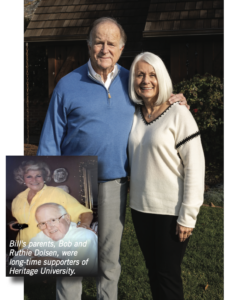
A man and woman standing in front of a picture of another man and woman

Bill Dolsen’s parents, Bob and Ruthie Dolsen, were long-time supporters of Heritage University.

The Dolsen family’s support of Heritage University goes back more than 40 years. It is a testament to the strength of a family legacy that extends beyond one lifetime to generations and its impact on generations to come.

Longtime supporters Bill and Rhonda Dolsen were first introduced to Heritage in the mid- 1990s. The couple had recently returned to the Yakima Valley, and Bill was working for the family business, The Dolsen Companies.

“Dad called me to his office and said, ‘There is a woman you have to meet.’ In walked Sr. Kathleen Ross. Dad told her, ‘I don’t have much time. How much do you need?’ He was like that,” Bill laughed. “He was a very busy man and very supportive of the university. Then he had Kathleen tell me about Heritage.

“Of course, I had heard about the university in passing but had never heard about it, as Kathleen described it and the students they served.

“I was spending a lot of time down in the Lower Valley. I saw the need there and the people and how they adored Sr. Kathleen. At that time, we didn’t have much money, but we knew how important it is to have a college accessible to students with different life challenges.”

The Heritage story resonated with Bill and Rhonda on many different levels. They grew up in the Yakima Valley and have great reverence for their community and the people who called it home. From a business perspective, they also understand how important having an educated workforce is to the prosperity of the community they love. Moreover, they built personal connections with students like those who attended Heritage when they were in college. Bill and Rhonda were non-traditional students who returned to college later in life. They were married with two young children when they decided it was time to finish their degrees. They enrolled at Western Washington University, selecting that college in part because it was family-friendly.

“When we went to Western, we saw so many students who were there because they had figured out how to find the resources to pay for their schooling. Not everyone has that opportunity,” said Rhonda. “Our communities have some really bright people who deserve an education. They shouldn’t have to be satisfied with less just because they were not born into families with the resources to pay for their schooling.

“This is what we love about Heritage; they help these students—farmworker kids, Native American students from the Yakama Nation, and people who can’t leave the Valley to go to school. And many of these students graduate and stay in the Valley.”

Bill and Rhonda’s support of the university grew over time as their circumstances changed. Then, in 2005, Bill’s father, Bob, passed away. Bob and his wife Ruthie (who passed away in 2020) had been supporters of the university since the 1980s. They gave generously, both personally and through The Dolsen Companies. The couple had been a fixture at the university’s annual Scholarship Dinner, attending almost every year since it began. They created the Dolsen Family Scholarship, an endowed scholarship that will award funds to Heritage students in perpetuity. Additionally, their gifts helped build the university’s infrastructure, including most of the buildings that make up the campus, and they made the cornerstone gift that helped create the Ross Institute For Student Success.

“Heritage University was such a big part of Dad and Mom’s life. Until we lost Dad, we mostly supported the university through the business. When he and Mom passed, we started looking at things differently,” Bill said. “It was important to us that we carried on the work that they started at Heritage.”

After losing the family patriarch, Bill and Rhonda took a more personal and active role in supporting the university. They bolstered
the family-named scholarship and created an additional endowed scholarship to help nursing students. They, too, became Scholarship Dinner fixtures and supported the capital campaign that built the university’s Arts and Sciences Center.

“We have been very blessed in our lives because of this community. It is important to us that we repay the community by supporting local organizations like Heritage,” said Rhonda.

From the student perspective, the family’s commitment has an immense impact. Their support was instrumental in growing the campus from its humble beginnings of a collection of recycled portable buildings to what it is today—48 acres of state-of-the-art facilities housing classrooms, study spaces, computer labs, the library, cafe and student areas. Their scholarship support, and that of other like- minded supporters, has made college accessible for more than 11,000 graduates so far. That number will continue to grow as more students enroll at Heritage.

“I’ve never really thought of this as a family legacy, but I guess it is,” she said. “Now I see how our sons are involved in their communities, in things that are important to them. It is fulfilling to know that they value serving the community as much as we do and find joy in that service.”

“I’m proud of how our sons have embraced giving back to the community,” said Bill. “They saw the joy it gave us to be able to do things to help others and have implemented this service in their own lives.”

In reflecting on the Dolsen family’s enduring support for Heritage University, it becomes clear that their commitment goes far beyond financial contributions—it is a testament to a deep-rooted belief in community, education, and opportunity. Over the course of decades, the Dolsen family has strengthened the university’s foundation and shaped the lives of countless students who have gone on to make a difference in the Yakima Valley and beyond. Their story, one of legacy, service, and love for their community, will continue to inspire future generations of students and supporters. Heritage Eagle

News Briefs – Wings Spring 2025

Tri-Cities regional site director named a person of influence

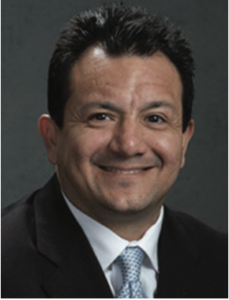
Martin Valadez headshot

Martin Valadez

The Tri-Cities Area Journal of Business recognized Tri-Cities Regional Site Director Martín Valadez as one of 25 People of Influence. Honorees were recognized as “decision-makers who helped shape the Tri-Cities region in the past year.” They are “thought leaders and industry innovators who give back, both in the business world and the community at large.”

Valadez and the other honorees were recognized during an awards ceremony in March at the Zintel Creek Golf Course in Kennewick.Heritage Eagle


Professor making a name for himself in the chess world

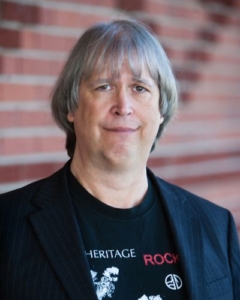
Loren Schmidt

Literature and Language Professor Dr. Loren Schmidt is a master chess player whose prowess on the board is turning heads. After taking a hiatus from playing, he recently returned to over-the-board chess. After a year and a half of playing, he currently ranks 7th out of the top 100 players in the Over 65 (regardless of country, residence or federation) category, and 29th out of 100 in the Age 50 and Over (regardless of country, residence or federation) category by the United States Chess Federation. The federation configures members’ ranking based on their performance in tournaments played against other rated players. Wins against stronger opponents increase their rating, while losses to weaker players decrease ratings.Heritage Eagle

Professor publishes book on challenges of child-free K-12 educators

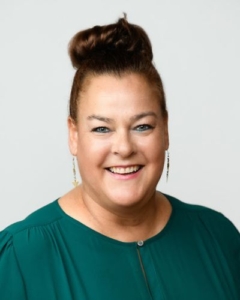
Headshot of Catherine Zeisner

Catherine Zeisner

Educational Administration program chair Dr. Catherine Zeisner’s new book, Experiences of Child-Free PK-16 Educators: Bias, Perspectives, and Assumptions, was released in paperback in January. The book delves into child-free educators’ challenges, highlighting biases and societal expectations in education, psychology, and gender studies. The publication is available through Amazon and other online academic booksellers.Heritage Eagle


Remodel of Kathleen Ross, SNJM Center underway
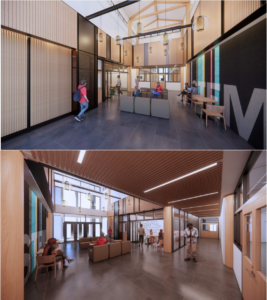
Artist renderings of Kathleen Ross Center remodel after completion

Renderings of the STEM Learning Center remodel in the Kathleen Ross, SNJM Center. Top picture is the view towards the Don North Library; bottom shows the view towards the entrance to the left and the Academic Skills Center to the right.

Heritage launched an ambitious remodeling project for the Kathleen Ross SNJM Center in December. This is the first major remodel of the building, which was constructed in 1993. While the library will remain untouched, the rest of the building is being revamped to house the new Adelante STEM Learning Center. The center will include new math and computer science classrooms, a maker space and study rooms.

“The remodel will enhance STEM education opportunities,” said Dr. Melissa Hill, vice president of academic affairs and provost. “The new Adelante STEM Center will significantly improve the university’s offerings in STEM fields, providing state-of-the-art math and computer science classrooms with the latest teaching technology. These upgrades will foster a more conducive learning environment for STEM students, helping them gain practical skills and hands-on experience.”

When completed, the Adelante STEM Learning Center will be adjacent to the Academic Skills Center, allowing easy access to tutoring, collaborative workspace and technology to students in both areas.

“The remodel will create a more modern, functional space for academic work, research, and community engagement, improving the overall campus environment and student experience,” said Hill.

The remodel is expected to be completed in mid-April. Departments and classes that were previously housed in the building have been temporarily relocated on campus.Heritage Eagle

HU and WSU joint robotics project garners award for students

A group of men and a woman standing in front of a machine

Six Heritage students were among a group of 10 to receive the Excellence in Small Farms Technology Award during the Farm Robotics Challenge at the University of California.

Osmar Alvarez, Apol Medrano, Salvador Ayala, Robert Barragan, Bethany Navarro, and Michaela Dodsondance were part of a joint project between Heritage and Washington State University. The team of 10 was charged with developing a robotic solution to address issues that impact the agricultural industry. The students worked with Washington state tree fruit growers to learn about theefficiency of collecting harvested fruits in the orchards. From their conversations, they developed a robot that would move autonomously through the orchard, picking up bins full of fruit, taking them to a central collection location, and repeating the process until all the fruit was gathered.

Heritage students specifically worked on the visual, mechanical and design aspects of the project.Heritage Eagle

Mother Daughter Colleagues Alums – Wings Spring 2025

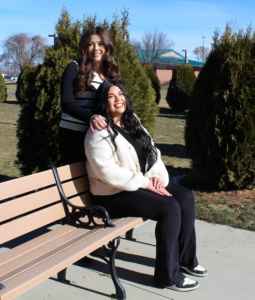
Two women sit on a park bench surrounded by neatly trimmed bushes, enjoying a sunny day outdoors. One has her hand on the other's shoulder.

Dioselina Verduzco and Brianna Cardenas

Heritage University staff Dioselina Verduzco and Brianna Cardenas have a lot in common. They share a commitment to Heritage University, its mission, and the students it serves. They are both alumni with degrees in business administration who chose to start and build their careers at Heritage to help others achieve their dreams of earning a college degree, just as they did. However, their relationship goes much deeper. They are mother and daughter, and their story begins like that of so many Heritage students and alumni with the spark of an idea that college could be possible.

A MOTHER’S NON-TRADITIONAL PATH

Verduzco, the seventh of 10 children, never thought she would one day be a college graduate working for a university. She dropped out of school in the 8th grade and started her family shortly thereafter. She spent many years struggling while she worked in the fields and warehouses, taking the odd side job here and there before a health challenge forced her to stop working and be a stay- at-home mom for a few years.

“I got tired of struggling,” she said. “I knew when I returned to work that I wanted more than returning to the fields or working in a gas station. I enrolled in the GED program at Heritage. One of the university’s admissions counselors met with us to talk about enrolling in Heritage after we earned our GED, and it got me thinking that maybe I could do it.”

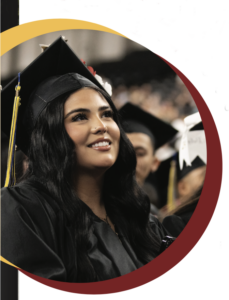
A close-up portrait of a woman wearing a graduation gown and cap. The woman has shoulder-length, wavy light brown hair. She is smiling and looking directly at the viewer. Her makeup appears to be well-done, with noticeable eye makeup and a light blush on her cheeks and lips. She is wearing gold-colored earrings that resemble clusters of grapes or small, round jewels.

Dioselina Verduzco

Enrolling in college was a massive leap of faith for Verduzco. Throughout her childhood and teen years, college wasn’t just not discussed; it was actively discouraged.

“For as long as I can remember, I was told I wasn’t smart enough,” she said. “I wanted to challenge myself and embrace every step of the journey, no matter how long it took. Completing my degree through hard work, resilience, and determination would open doors for me and my children. I wanted them to see me as a role model, proof that their dreams are possible, and to know that I would always be there to support them.”

Verduzco started her college career in 2005, taking pre-college courses. To help fund her schooling, she took work-study positions in the College Assistance Migrant Program (CAMP) and Academic Affairs. She was then hired for a full- time temporary position for a staff member who went on maternity leave in Academic Affairs and later in the President’s Office.

“Shortly after I started working in the President’s Office, I divorced. I was now a single mom. I couldn’t manage everything that was involved with working, raising my kids, and going to school, so I paused my education for a few years,” she said. “But the goal was always to earn my degree.

“I never wanted my kids to see me give up. I wanted them to see me doing something to better myself. To see me struggle and sacrifice to earn my degree when I was a single parent, so they understood how important it was for them to do what they needed to do before becoming a parent.”

Verduzco returned to school in 2012, attending part- time. She continued to work as an administrative assistant for the university throughout her studies. She was active in the university’s Enactus organization, an international student organization that promotes entrepreneurship to create social change. In 2016—eleven years after she started her first college class— Verduzco graduated with a Bachelor of Arts in Business Administration.

She transferred from her administrative assistant position in the President’s Office to the College of Arts and Sciences, where she eventually became the executive assistant to the college’s dean and the director of Enactus.

“This is where my life really changed. I took on a leadership role that helped me become who I am today. It forced me to put myself out there and build my confidence.”

For the next six years, Verduzco worked closely with students in the Enactus program. She guided them as they developed community outreach programs and supported them through presentations and competitions. Along the way, she became a trusted confidante for the students, partly because she was once exactly where they were and understood their challenges.

Today, Verduzco serves as the Executive Assistant to the Provost and Vice President for Academic Affairs, providing senior-level administrative support and managing complex tasks. She coordinates special projects, oversees daily operations of the Academic Affairs office, and handles faculty hiring and contract renewals. Working closely with the Provost, she trains and coordinates administrative staff to ensure smooth operations and effective teamwork.

PAVED THE WAY FOR A DAUGHTER’S TRADITIONAL PATH

Close-up of a woman wearing a graduation gown and cap. She is smiling and looking directly at the camera. Her hair is dark and long, styled in loose waves. She appears to be of Hispanic or Latin American descent. The graduation cap is black with some decorative elements. Her gown is a dark, likely black, academic robe.

Brianna Cardenas

Cardenas’s connection to Heritage goes back further than her memories can take her.

“I think I was three,” she said when asked when she first started coming to campus. “I honestly can’t remember a time when Heritage wasn’t part of my life.”

Her story couldn’t be further away from that of her mother’s. College is something she always knew she would do and something that she prepared for. During her middle school years, she took part in the Enactus summer camp for kids, Camp S.E.E.D., where she and her classmates built micro businesses and sold their wares to faculty and staff on campus. She loved it so much that she continued volunteering for the program when she entered high school.

“I knew all along that I was going to go to Heritage. It felt so much like home to me,” she said. “I saw all my mom’s opportunities here, and it just felt right.”

Cardenas enrolled in the university in the fall after she graduated from Toppenish High School. She immediately declared business administration as her major. Like her mother before her, she took part-time work-study positions in offices on campus, including an internship with the First Nations MESA program.

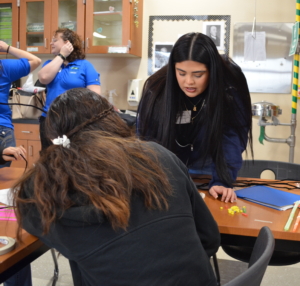
She graduated with a Bachelor of Arts in Business Administration in 2024 and was hired by MESA as the program coordinator. MESA stands for Mathematics, Engineering, Science Achievement. It is a college preparation outreach program that works with K-12 students in math and science- based activities to encourage them to prepare for college and explore STEM-based careers. Heritage’s MESA program works with students within the boundaries of the Yakama Nation and its ceded lands.

“I truly wanted to stay at Heritage,” she said. “I was elated when the job opened up, and I got to start my career here.”

UNDERSTANDING THE STUDENT EXPERIENCE

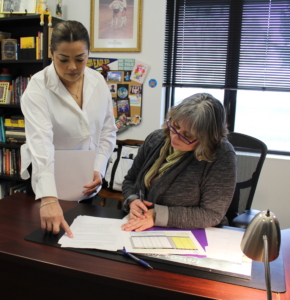
Two women sit at a dark wooden desk in an office or study, reviewing documents. The woman on the left, with shoulder-length brown hair and a white blouse, leans forward, pointing at the papers. The woman on the right, with graying hair, glasses, and a dark sweater with a light scarf, also leans in, focused on the documents. Behind them, a bookshelf, bulletin board, framed artwork, and a window with blinds provide context. A black office chair and a desk lamp are also visible.

Dioselina Verduzco (standing) and HU Provost Dr. Melissa Hill

Individually, Verduzco and Cardenas’s stories are representative of that of many of Heritage’s students. With its 43-year history building inclusivity and breaking down barriers that keep people from accessing higher education, Heritage has served many students like Verduzco who were ill-prepared for college, discouraged from ever pursuing a degree, or had no other options for higher education available to them. Many of these were non-traditional students whose children, like Cardenas, watched them prioritize their education, struggle, grow, and succeed. They learned the value of higher education at their parents’ hip. They grew up seeing the path to college and the path to Heritage, and they never doubted their place in academia.

Both Verduzco and Cardenas see themselves in many of the students they serve.

“When working directly with students, I used to share the challenges I faced as a student. I wanted to help them understand that we all have struggles and things that we must overcome. In the end, how you respond to those struggles and stay focused on your goals is what matters,” said Verduzco.

“I’ve been at Heritage in one capacity or another for 18 years now,” she said. “I’ve seen our students grow and show appreciation for all we’ve worked for together throughout their college careers. They are stronger for their experiences.”

“One of the things that I’ve found with our students is how it isn’t necessarily about having the same life experiences that brought us to Heritage; it’s the familiarity of being from this community. We grew up together, and we have an appreciation for the struggles that others go through. We understand one another,” said Cardenas.

Brianna Cardenas at Union Gap School

THE PATH MOVING FORWARD

With one woman firmly embedded in her career at Heritage and the other just starting hers, both can’t imagine working elsewhere.

“I can’t imagine working any place other than Heritage,” said Verduzco. “I’ve worked in several departments and learn something new each time I move somewhere else. I’ve been here for 18 years, but it doesn’t seem long.”

Cardenas looks at her mother’s career path as inspiration.

“I’m less than a year into my work at Heritage and love what I’m doing,” she said. “There is so much to learn and ways to grow. I enjoy working with the students and watching them find joy in learning and, hopefully, start to think about their place at Heritage. I can’t wait to see one of the kids I’m working with today at Heritage on their first day of college.” Heritage Eagle